Export controls or strategic trade technology control has been used as a significant tool to impose sanctions on Russia, for its military operations in Crimea and Ukraine.
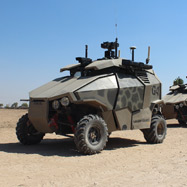
The confluence of technologies like Artificial Intelligence, Machine Learning and Cloud Computing with Unmanned Ground Vehicles has created enormous opportunities for creating intelligent autonomous systems both in the commercial and defence sectors.
With the proliferation of Artificial Intelligence, the weapons of war are becoming more technologically equipped, which is changing the battlefield scenarios, as seen in Russia’s current incursion in Ukraine.
The recent eruption of the submarine volcano and the resultant shutdown of Tonga’s telecommunication, has cast light on the impact of natural disasters on the global communication systems, especially in the tiny and distant islands.
To sustain its historical interest and influence in the UN peacekeeping operations, India should provide technical assistance to the missions while continuing to contribute troops, rather than a complete transformation from being a traditional troop contributor to a technology contributor.
With India’s current semiconductor demand of $40 billion expected to rise to $100 billion by 2025, the time is indeed right to begin production of semiconductors within the country.
China’s proposal for a new Internet Protocol (IP) is a reflection of its desire to revamp and mould the Internet. This is in line with its ambitions to rise to the “commanding heights” of the scientific and technological competition.
Given India’s dependence on imports for 90 per cent of its telecom equipment, the decision to allow Huawei to bid for 5G should be in line with the national interest, rather than taking sides and constraining options.