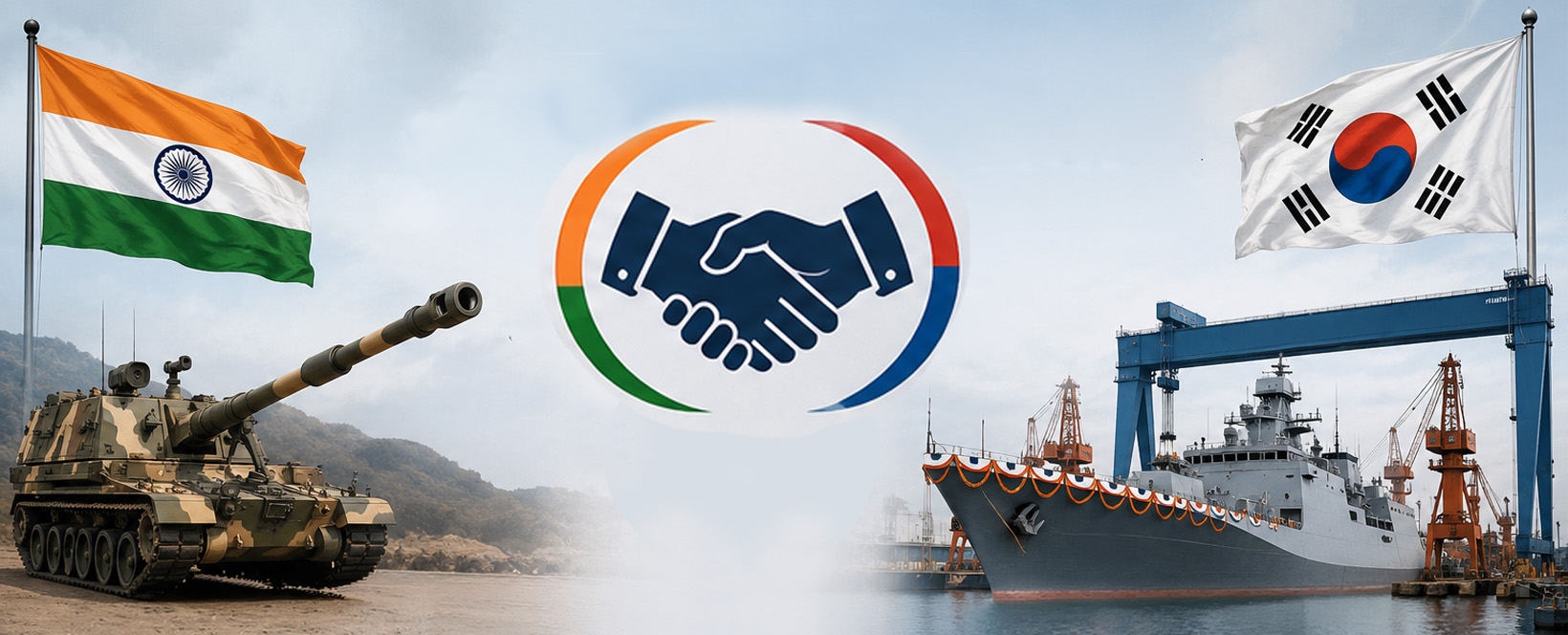
South Korea’s rapid rise as a manufacturing powerhouse and a leading export-oriented economy was made possible due to the active role of the ‘developmental state’ in the country. Despite adopting several neoliberal policies after the devastating Asian financial crisis of 1997, the South Korean state did not fully abandon its role in the country’s economic development. In recent years, selling of military hardware has emerged as one of the ‘new engines of economic growth’ for this export-oriented nation. Furthermore, South Korea’s economic and strategic relations with India have developed significantly, particularly after the end of the Cold War. The arms trade between the two countries has also grown notably. While India’s developing economic and strategic relations with South Korea are well-documented, there is a lack of literature on New Delhi’s increasing arms trade with Seoul. This article explains the challenges and prospects of South Korea’s trade of weapons with India.
Lee Jae-myung’s election as South Korea’s President has ended the period of political instability that began with the imposition of martial law in December 2024.
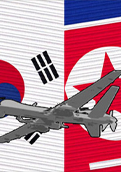
The interest in the production and export of drones from both South and North Korea in the wake of the Russia–Ukraine war may increase tensions on the Korean Peninsula, going forward.
The South Korean support to the designation of the Sado mine as a UNESCO World Heritage Site in July 2024 is reflective of the recent conciliatory approach of South Korea towards Japan with regards to the colonial history.