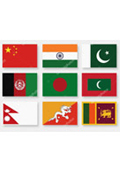
Regionalism in South Asia continues to evoke intense academic interest among scholars. SAARC, an organization that was conceptualized in the early eighties, evinced both hope and despair. A hope to overcome the factitious past and move onto the path of prosperity, and the despair that was embodied in its inability to achieve its potential. The fight against poverty and the path to prosperity has mostly been an individualistic journey among countries.
South Asia has a common history and celebrates its great cultural and linguistic overlap. However, the South Asian experience in building cooperative security architecture has been mixed. India on its part remains committed to strengthening cooperative security in the region.
If Baghdadi has possibly moved toward the east, then the proclamation of an Indian branch flashes a note of caution for the security and intelligence agencies.
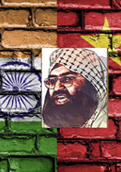
With China now willing to discuss issues of mutual interest with India, a well-structured bilateral dialogue on regional and global terrorism may go a long way in convincing Beijing of the need to put pressure on Islamabad to act against terror
The Sri Lanka Easter bombings has allowed ISIS chief Abu Bakr Al Baghdadi to launch a public relations offensive and enunciate a dangerous new strategy.
Doklam brought into perspective the fractured relationship between India and China on the global stage and increased fears of China’s growing unilateralism as it inexorably broadens its interests and sphere of influence, especially in South Asia.
The article argues that the contours of a security architecture are becoming slowly visible in South Asia. This process is nurtured by two developments. First, since the 2000s, India has increased its security cooperation with nearly all its neighbours in South Asia. Second, since 2013 governments in New Delhi have promoted the concept of India as a security provider in the region and the Indian Ocean.