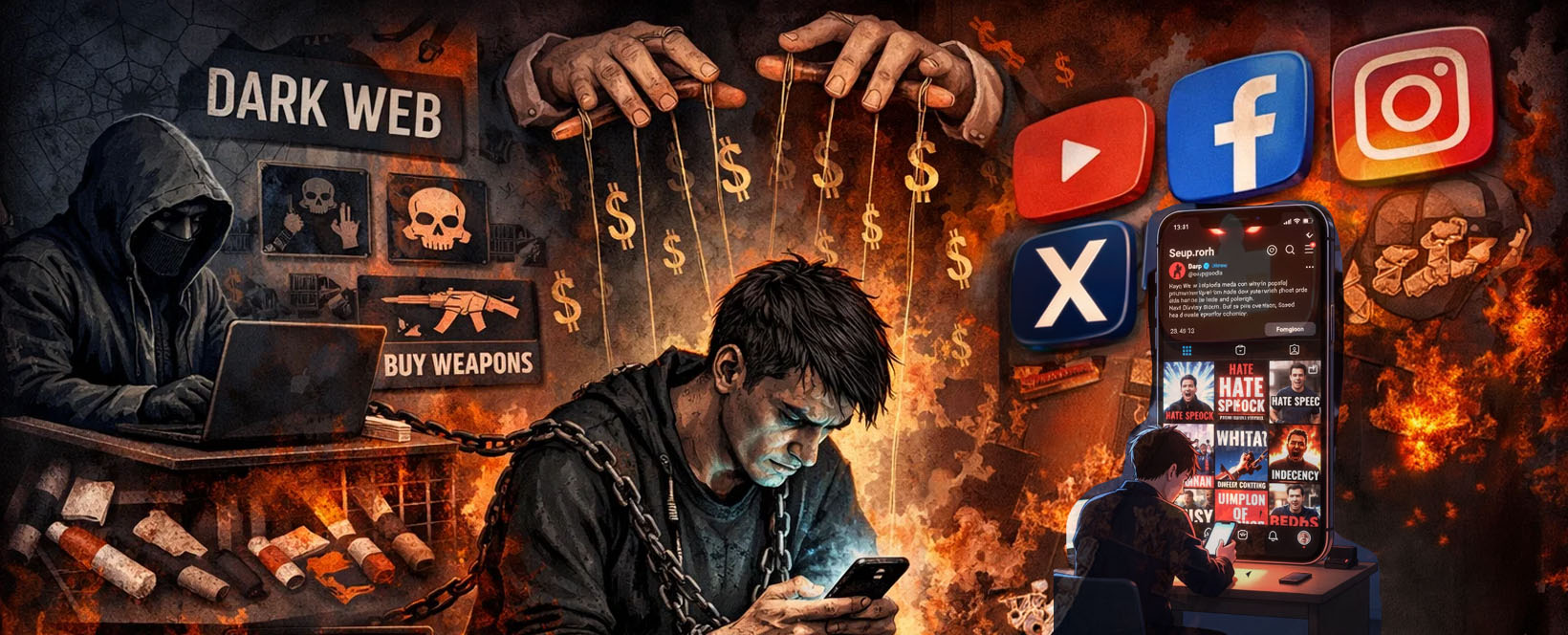
The recent ‘X’ episode with the Brazilian Supreme Court has renewed the debate over sovereignty of nation-states and freedom of speech in the international domain.
रूस-यूक्रेन युद्ध इस बात का एक बड़ा उदाहरण बनकर उभरा है कि कैसे सोशल मीडिया की सामग्रियों के माध्यम से, वैचारिक मूल्यों में छेड़छाड़ की कोशिश की जाती है।
The IT Rules 2021 seek to address cyber security concerns of the citizens without infringing on their privacy and personal liberties, while maintaining digital sovereignty at the same time.
TikTok has hooked youngsters around the world. What is worrisome is the lack of understanding about the long-term implications of such social media apps with regard to data protection and...
The WhatsApp bug brings to light the same old dilemma between safeguarding individual privacy and enabling the state to undertake surveillance in the interest of security.
Eradicating the fake news problem calls for a collective effort of individuals, governments, social media and content platforms, and innovative technology solutions.
The Cambridge Analytica episode highlights the need to expedite the process of developing a data protection framework and probably amend the IT Act in accordance with the changing realities of...