Indian Navy

Transformation of Indian Naval Aviation Post New Inductions

The need for credible surveillance over the high seas forms the bedrock and foundation of infallible maritime security, and Maritime Reconnaissance (MR) is the basic input for any successful maritime operation. For the last two decades, Indian naval aviation assets have been dependant on the Ilyushin (IL), the Tuplov (TU) aircraft, the Kamov (KM) 31 and Unmanned Aerial Vehicles (UAVs). The Fleet Air Defence has also received a fillip by the induction of the MIG 29Ks.

Outcome Budgeting for Naval Dockyards

The Indian Navy (IN) has one Naval Dockyard (ND) each at Mumbai and Visakhapatnam and one Naval Ship Repair Yard (NSRY) each at Kochi, Port Blair and Karwar. The repair and refit requirements of IN ships and submarines are collectively met by the above mentioned repair agencies. NDs have the capacity and capability to handle Major Refits (MR). The Operational-cum-Refit cycle of each ship / class of ship is promulgated by IHQ MoD (N) from time to time.

Probity in the Armed Forces

People in India have traditionally looked up to the Armed Forces. Corruption in the Armed Forces therefore militates against the spirit of service to the nation. It has to be cleansed wholesale, with effective mechanisms for protecting whistleblowers and taking swift action against the guilty put in place. Caesar’s wife must be beyond reproach.

Rumel Dahiya | November 01, 2010 | IDSA Comments

Managing Supersession in the Armed Forces: An HRM Approach

Supersession is too important an aspect of organizational existence to be dismissed lightly. It is a situation to be managed jointly by the organization and affected individual with the clear understanding that organizational interests are overriding. The Human Resources Management (HRM) approach aims to ensure that staffing manning of an organization effectively meets the quantitative and qualitative aspects at all times to ensure efficiency and effectiveness. An important element of HRM is Human Resource Planning (HRP).

Aircraft Carriers and India’s Naval Doctrine

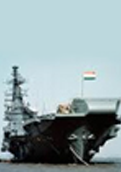
Epic sea battles between aircraft carriers have not recurred after World War II; in the post-war period, most carriers began to retire without even having participated in a battle. Many countries that possessed carriers or were aspiring to get them thus began to re-assess the military-strategic utility of such platforms in the radically altered global geo-strategic environment.