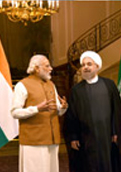
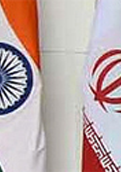
Jaishankar’s visit is a timely reminder that India’s partnership stands on its own, and Indian interests demand more rather than less engagement with Tehran.
This study examines Israel's changing perception of Iran and the underlying reasons for the current Israeli tension, anxiety, verbal acrimony and fears. In deconstructing Israel's fears vis-à-vis Iran, the study...
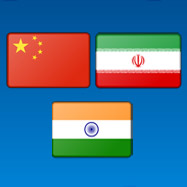
The growing ties between China and Iran can have challenges for India’s relations with Iran and interests in the Persian Gulf region. Nonetheless, it is unlikely to seriously affect India-Iran...
India has taken a cautious and balanced approach in dealing with Iran. However, the growing US-Iran confrontation continues to cast a shadow on the Chabahar project and overall bilateral ties.
While India is likely to meet the shortfall in its crude oil imports, the Trump administration’s sanctions on Iran have the potential to either seriously damage India’s ties with Iran...
Given that Iran accounts for around 10 per cent of India total oil imports, the immediate factor for New Delhi will be to look at various options to deal with...
While it is necessary to identify and shore up the convergence of interest between India and Iran, it is equally important to recognize differences and pitfalls.
Notwithstanding differences on some issues, chiefly, Afghanistan and India’s UNSC aspirations, India and Iran have decided to focus their energies on areas of concurrence such as connectivity and economic cooperation.