




East Asia

About Centre

The East Asia Centre is dedicated to studying the domestic and foreign policies of the region as well as India’s multifaceted relationships with the major countries of this region. With respect to China, the Centre’s research foci are its foreign policy, domestic politics, economy, military affairs, and India’s relations with China in all its dimensions. It monitors developments in China’s autonomous and special administrative regions. The Centre also focuses on Taiwan with reference to cross-Strait relations, ties with the US, India-Taiwan relations and domestic politics. The Centre researches Japanese and Korean affairs. Its major research focus is on their domestic politics, foreign policy and comprehensive bilateral relationships with India. It follows the developments in the Korean peninsula and inter-Korean relations. The geopolitics of the Indo-Pacific is studied at the Centre too.
 

The Centre brings out five monthly newsletters: East Asia Military Monitor, Japan Digest, China Science and Technology, Korea Newsletter, and China Military Digest.

Members:

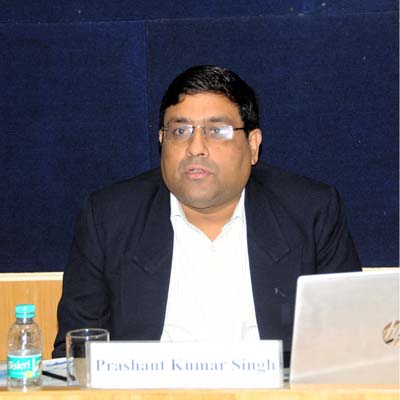
Prashant Kumar Singh Research Fellow
img
M.S. Prathibha Associate Fellow
Abhishek Kumar Darbey Associate Fellow
Ranjit Kumar Dhawan Associate Fellow
Mayuri Banerjee Associate Fellow
Arnab Dasgupta Associate Fellow

No posts of Books and Monograph.

No posts of Jounral.

Sifting Through the Himalayas

Prime Minister Modi has to think beyond the immediate circle and leverage the Himalayas as a bridge for India reaching out to wider Eurasian space the access to which has blocked by Pakistan. A way out could be to promote a regional market across the border, woven by a web of spiritual and commercial interests.

China’s Maritime Silk Route: Implications for India

China’s announcement of a 10 billion Yuan ($1.6 billion) fund to finance the “maritime silk road plan” is a clear sign that it is serious about moving ahead with its stated plans. For India, it is instructive that the sales pitch of shared economic gains does not conceal the MSR’s real purpose: ensuring the security of sea lines of communications (SLOCs) in the Indian and Pacific oceans.

The McMahon Line: A hundred years on

On 3rd July 1914 nearly a hundred years ago at Simla, Tibet and India signed the Simla Convention that gave birth to the McMahon Line separating Tibet from India in the eastern sector. Much is made by some that the Simla Convention was not a legal document but from the time of the Convention till 23rd January 1959, the Chinese government never officially, in any document, ever challenged the McMahon Line.
