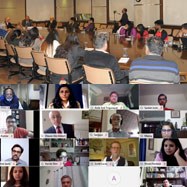
It is time that the constraints imposed by the COVID-19 pandemic are converted into an opportunity to upgrade and evolve the present method of human interaction prevalent in think tanks across the world.
Zina O'Leary, The Essential Guide to Doing Research, Vistas Publications, New Delhi, 2005, pp. 226, Rs 350
Nicholas Walliman, Your Research Project: A Step-by-step Guide for First-time Researchers, 2nd ed., Vistaar Publications, New Delhi, 2005, pp. 450, Rs 560
Clive Opie (ed.), Doing Educational Research: A Guide for First Time Researchers, Vistaar Publishers, New Delhi, 2004 (originally published Sage, London, 2004), pp. 244, Rs 340
Director General’s N.S. Sisodia’s opinion piece “The Case to strengthen Indian think tanks” published in The Hindu on May 24, 2009 is timely. The United Service Institution of India (USI) has existed since 1870 and the IDSA since 1965. In Delhi, over the last decade, a number of new think tanks working on defence issues have been established, like the Centre for Air Power Studies (CAPS), Centre for Land Warfare Studies (CLAWS), The National Maritime Foundation (NMF) and the Centre for Joint Warfare Studies (CENJOWS).