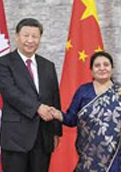
President Xi’s Kathmandu visit sets a new parameter for the China-Nepal ties, moving away from the traditional interstate relations based on simple bilateral modes of engagement. Beijing seems to be...
Regional strategic dynamics in South Asia is in a state of flux since the announcement of China’s Belt and Road Initiative (BRI). China emphasises on the economic aspect of investment...
BIMSTEC needs to build on regional synergies and work towards utilising the available resources optimally by focusing on fewer priority areas and undertaking projects that are economically feasible.
This article has two parts. The first part aims at analysing why nations are increasingly going beyond their multilateral and regional moorings to secure and advance their national interests. In...
The only way to resolve the crisis is to acknowledge Madeshis as genuine citizens of Nepal, whose respect and dignity can be protected by a clear recognition of their rights...
The Indian reaction has led to notes of caution by some major countries. China, for instance, has suggested to Nepalese leaders that they should make the Constitution broad based.
The issue of ‘consensus’ that has been at the core of writing a constitution has been eroded through majoritarianism to secure the entrenchment in power of the hill political elites.
What the country needs is goodwill and support from all stakeholders inside and outside to move the reconciliation process forward and build on the peace, and all at the right...