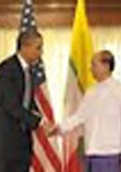
Obama’s visit strengthens the hands of President U Thein Sein and has raised expectation that it would encourage the Myanmar government to address the democratisation and ethnic challenges.
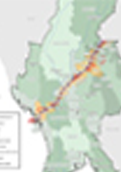
The article is an attempt to study the history of the Tedim Road, a 265 km transborder road connecting Imphal (the capital of Manipur in India) with Tedim in the Chin Hills (Chin State) in western Burma (Myanmar). It was constructed by the British solely for the purpose of facilitating military movements along the India–Burma frontier during the Second World War.
While India is not immediately affected by the Rohingya refugee migration from Myanmar, it cannot be oblivious to the regional dimensions of such human migrations based on ethnic discontent.
The current trajectory of developments is likely to lead to the point where the US and the Sein government find ways to resolve outstanding points of contention between them, leading to Myanmar moving further along the path of greater political freedom, better human rights and good governance.
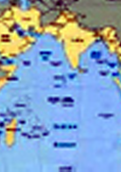
The island hopping game being played out is an indication of China’s strategy for gaining access to the IOR by developing the capabilities of “reach”, “presence” and “sustainability”.
Clinton’s visit signals acceptance by the international community that the process of transition in Myanmar has begun and opens up new avenues for Myanmar in its domestic and foreign relations.
India must revitalise, implement and act on infrastructure and economic development projects in the North East to build its relationship and harness the energy potential in Myanmar.
China’s objection to the early release of a UN report on North Korea’s compliance with UN sanctions stemmed from its misplaced confidence in international diplomacy.