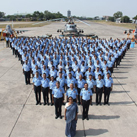
The Indian Air Force’s participation in Israel’s Blue Flag 2017 multilateral exercise adds an important layer to the matrix of cooperation between India and Israel.
The IAF is not without options, all of which are currently at some stage of realization. What is lacking is a sense of urgency on the part of all the parties concerned.
MoD can leapfrog many of the 11 stages in the procurement programme by taking the measures outlined to fulfil the urgent requirements of the Air Force.
With some innovative thinking, on-line arrangements with suppliers, including the Canteen Stores Department, could reduce the cost of storage and distribution and, more importantly, help in maintaining a high satisfaction level among troops.
Replacement of the Avro is an approved requirement. Scrapping the on-going process could delay acquisition of the transport aircraft by at least a year or two as it would inevitably involve revisiting the qualitative requirements (QRs) before restarting the tendering process.
It is difficult to understand why the MoD should bind itself by asking for request for information (RFI) that cannot be compared across all the proposals. What would constitute ‘capability’ and ‘requisite infrastructure’ to license produce the aircraft is a matter of subjective interpretation and therefore, it would become difficult for MoD to assess whether the information provided by a bidder establishes that he/she has the requisite capability/infrastructure.
Though the general elections are due this year, the need of the hour is to build a political consensus on the issue without further delay. It will be to the credit of the government if it is able to generate political consensus and appoint a Permanent Chairman CoSC or CDS.
All major democracies have opted for the CDS and India cannot ignore it any further. In the prevailing battlefield milieu of joint operations, combined operations and even coalition operations, modern armed forces cannot be successful without a well-developed and deeply ingrained culture of jointmanship.
This programme was a sincere effort by the MoD to walk the talk on participation of the private industry in defence manufacturing. The success or failure of this programme will have a long lasting effect on MoD’s efforts to strengthen the defence industrial base in the country.
The United States dominates global defence markets, but the nature of this dominance is shifting. Strategic and budgetary considerations—the latter being constantly restructured by the rising relative cost of defence labour—drive US defence production towards international collaboration. In this essay, I examine the politics of a high-calibre international collaborative programme that has made headlines in recent years: the F-35 Joint Strike Fighter (JSF). What motivated the US government to take on partners, and what influence, if any, have the partners had on the programme so far?