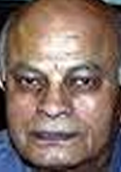
As the first national security adviser of India, Brajesh Mishra’s contribution towards building a viable national security management system will always be remembered.
This commentary looks at the characteristics of Saab’s recent investments as well as the prospect and challenges for current and future Swedish-Indian collaboration in the defence industrial sector.
Given the fact that there is a lot of noise being made to prod India into doing more on nuclear disarmament counter-intuitively suggests that India is actually doing very less on the issue. What explains India's reluctance?
Some of the provisions in the DOG do not seem to be well thought out, provide greater leeway to the foreign companies, and have a potentially negative potential on eligible manufacturing sector, particularly defence manufacturing.
India's rise as a regional and global power could potentially alter the geopolitical landscape of the Asia-Pacific. With its economic growth and concomitant investments in military modernisation, many see India as evolving into a strategic pole in Asia. David Brewster in this volume sets out to examine ‘the consequences of India's rise on the Asia Pacific strategic order’ (p. ix) and asks whether India will indeed join the ranks of major powers in the coming years.
Hardly any language in the subcontinent has a history as contested as that of Urdu. The history of Urdu is not just a story of linguistic evolution, but of the evolution of culture, of societies and of communities. Thus, undertaking the task of narrating this journey is in itself an act of courage and Tariq Rehman does it wonderfully well.
The raging controversy on social media regulation post the violence in Assam has left the government in a losing perception battle. It is time to engage with the new media and exploit its potential to communicate strategically and not shoot the messenger
The Chairman COSC will neither be the Commander of India’s Armed Forces nor will he be able to do justice to his advisory role because of the constraints that will affect his functioning in the present system.
This paper interrogates the concept of grand strategy. Its proponents argue that the absence of a publicly articulated and coherent grand strategy leads to incoherence in practice: armed forces acquire technologies without a strategy, government departments pursue their specific interests without reference to overarching national goals, and diplomats have a hard time explaining India’s behaviour to foreign interlocutors.
The leakage of the former Army Chief General V.K. Singh’s secret letter of 12 March 2012 to the Prime Minister, on large scale deficiencies in the Army, created an uproar in Parliament. While the issue of who leaked the letter and the motive behind the leak is under investigation by intelligence agencies, the bigger aspect that needs to be examined is how did we reach this level of hollowness, and what needs to be done to rectify the situation and avoid a recurrence in the future.