Maritime Dimensions of the West Asia War
- March 27, 2026 |
- Issue Brief
Summary
Despite the USs possessing overwhelming superiority over Iran in the naval domain, it has been unable to deter or prevent Iranian disruption of maritime traffic in the Strait of Hormuz. Iran’s selective restrictions on transit showcase how geopolitical alignments influence commercial navigation and international trade flows.
On 22 January 2026, US President Donald Trump announced that a massive American naval armada was heading towards Iran.[1] This came after weeks of speculation regarding the US response to the Iranian government’s crackdown on protestors. Military analysts and strategic observers identified this naval build-up as a precursor to an imminent war with Iran. The build-up of the US naval posture in the days leading up to the current hostilities clearly illustrated two critical attributes of the US Navy’s intended role. First, to spearhead offensive kinetic operations aimed at destroying strategic targets and degrading Iran’s capability to retaliate. Second, to support defensive operations across the region by strengthening air-defence grids for protecting vital US military infrastructure and its allies in West Asia.
Iran, on the other hand, despite possessing relatively modest naval capabilities, was expected to leverage its geographic positioning by threatening or attempting to block the Strait of Hormuz, thereby disrupting global energy shipping. Approximately 20 million barrels of oil per day—accounting for over 20 per cent of global consumption—pass through the Strait of Hormuz, making it one of the most critical global energy chokepoints.[2] Iran’s success in potentially blocking this chokepoint was bound to create a major global shipping crisis, thereby generating international pressure on the US and its allies in the region.
As the war has progressed beyond a fortnight, it can be observed that the hostilities in the maritime theatre have manifested largely in line with the naval strategies of both belligerents. The naval efforts of both sides have been directed towards achieving their strategic objectives that were anticipated before the outbreak of hostilities. The US, while succeeding in destroying most of Iran’s major naval assets, including several frontline warships, has not fully managed to prevent attacks on neutral shipping or the disruption of maritime traffic through the Strait of Hormuz. Iran, on the other hand, despite suffering major losses of its naval capability within the initial days of the War, has managed to exert substantial pressure on the US by relentlessly targeting shipping passing through the Strait of Hormuz. This brief assesses the evolving dynamics of the maritime theatre of the ongoing conflict.
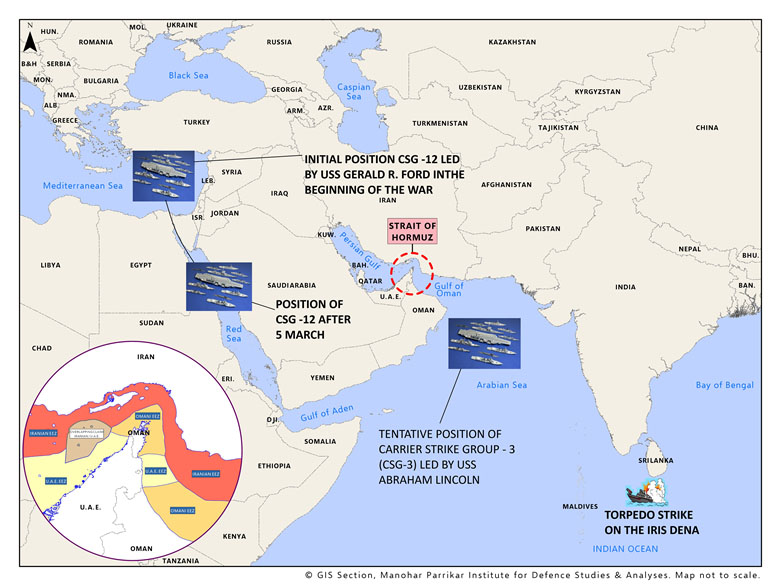
Map 1. Maritime Theatre of the 2026 Iran War
Initial US Naval Blitz
In the week following President Trump’s announcement of the mobilisation of a US naval armada towards Iran, the Carrier Strike Group–3 (CSG-3), led by Nimitz-class aircraft carrier USS Abraham Lincoln, was redirected from the South China Sea towards the Gulf of Oman.[iii] Meanwhile, Carrier Strike Group–12 (CSG-12), led by the aircraft carrier USS Gerald R. Ford, was redeployed from the Caribbean Sea to the Mediterranean Sea towards the coast of Israel.[iv] It must be noted that the USS Gerald R. Ford is the largest warship ever built. As these CSGs reached their respective operational positions by the last week of February, their intended missions became evident. The CSG-3 was to spearhead the US offensive kinetic action against Iranian naval assets in the Gulf of Oman and the Persian Gulf. The mission of CSG–12 was to support and supplement Israel’s offensive and defensive operations against Iran.
Upon the outbreak of the war, the US Navy swiftly targeted the Iranian Navy’s frontline assets and naval bases. As per initial reports from open-source media, at least 11 frontline vessels were destroyed or damaged in these early strikes. This included the Iranian Navy’s largest warships, such as its forward base ship, IRIS Makran, and its drone carrier, IRIS Shahid Bagheri.[v] Subsequently, on 4 March 2026, a Los-Angeles-class nuclear attack submarine of the US Navy, USS Charlotte, deployed in the Indian Ocean, sank the Iranian frigate IRIS Dena off the coast of Sri Lanka in international waters.[vi] This incident marked the first time since World War II that a US Navy submarine sank an enemy surface vessel in combat. On 10 March 2026, President Trump claimed that the US Navy had struck and sunk 46 Iranian warships within the first four days of the war.[vii] On the following day, the US Central Command announced that 16 Iranian naval minelaying vessels had been destroyed.[viii] Apart from US claims, independent assessments also substantiate the fact that catastrophic damage has been inflicted upon the Iranian Navy, with most of its naval assets either sunk or severely damaged.
Iran’s Naval Capabilities
While the US has been overwhelmingly successful in destroying or incapacitating most of Iran’s frontline naval assets, it remains far from fully neutralising the threat to commercial shipping posed by the IRGC’s paramilitary naval forces and shore-based maritime strike capabilities.
The Islamic Revolutionary Guard Corps Navy (IRGCN) was established in 1985 as a paramilitary maritime force with a mandate to supplement the conventional capabilities of the Iranian Navy while also conducting asymmetric warfare independently in littoral waters. As such, the IRGCN has focused on the rapid mobilisation of a voluntary seafaring militia and small, fast-attack boats suitable for littoral operations. The IRGCN was developed to spearhead Iran’s mosquito fleet strategy, to harass enemy vessels through ambushes, precision strikes, and hit-and-run tactics. It has grown to a strength of over 20,000 personnel, with a fleet comprising thousands of speedboats armed with an array of weapons, including short-range anti-ship missiles. In recent years, the IRGCN has further enhanced its capabilities by deploying aerial drones, Unmanned Underwater Vehicles (UUVs), and Unmanned Surface Vehicles (USVs).
The IRGC-Navy operates large numbers of fast-attack craft armed with missiles and rockets to conduct saturation attacks on surface vessels. Iran has also deployed shore-based missile batteries and one-way attack (OWA) drones and cluster munitions along its coastline to strengthen maritime defence. Specialised vessels such as Shahid Bagheri drone carrier, IRIS Shahid Roudaki, and IRIS Shahid Mahdavi can launch drone swarms and containerised missiles at sea targets.
The narrow Strait of Hormuz (about 33 km wide with 3 km shipping lanes) allows Iran to disrupt traffic using missiles, fast boats, naval mines, submarines and unmanned systems.[ix] IRGC Navy’s crewed and uncrewed ‘mosquito fleet’, comprising more than 1,500 small attack craft under 10 tons, is designed to convert numerical density into kinetic saturation rather than platform survivability. These vessels, capable of speeds between 50 and 110 knots, exploit acceleration and manoeuvrability to compress engagement timelines, thereby forcing advanced radar and fire-control systems aboard US destroyers to divide targeting resources under swarm pressure.[x]
Swarm density in narrow chokepoints can overwhelm sensor discrimination algorithms, compelling defenders to expend high-cost interceptors against low-cost craft in economically asymmetric exchanges. The mosquito fleet thus functions as a distributed maritime missile-launcher network optimised for rapid, widespread dispersal along Iran’s 2,400-kilometre coastline. The fleet is not peripheral but foundational to Tehran’s A2/AD architecture, converting geographic constraint into a weaponised maritime ecosystem.
Missiles such as the Nasr and Kowsar provide short-range, supersonic, precision-guided engagement envelopes of up to 25 kilometres, enabling rapid strike-and-break-contact tactics in congested waters. The Ghader missile has a range of 200–300 kilometres, allowing coastal launch platforms to target naval formations before carriers can bring their full air wings to bear.
The Zafar variant increases stand-off range, reinforcing a layered missile perimeter that forces US forces to operate further offshore or under continuous radar vigilance. The Abu Mahdi missile, reportedly exceeding 1,000 kilometres in range, represents a quantum escalation by potentially placing US facilities in Qatar and Bahrain within reach, extending the maritime confrontation into broader Gulf basing infrastructure. Zulfiqar-class boats, equipped with rapid-fire cannons and short-range surface-to-air systems like the Kosar, serve as escort screens, protecting missile boats from low-altitude counterattacks.
Iran possesses well-equipped shore-based strike capabilities, comprising an extensive network of coastal batteries that can launch Anti-Ship Ballistic Missiles (ASBMs) and Anti-Ship Cruise Missiles (ASCMs), as well as aerial and maritime drones. Since the outbreak of war, at least 13 commercial vessels have reportedly been attacked, possibly by Iran, in areas surrounding the Strait of Hormuz. On 12 March 2026, news reports indicated that six commercial vessels were attacked by explosive-laden boats or struck by sea mines, presumably laid by Iran. These developments demonstrate Iran’s ability to cause serious disruptions in the Gulf Waters through its shore-based operations.
Most importantly, Iran is likely to seek to replicate the strategy employed by Yemen’s Houthis, who have carried out sustained attacks on commercial vessels in the Red Sea since October 2023. Notably, the Houthis continued their strikes despite a massive US-led kinetic air campaign against them as part of Operation Prosperity Guardian, which lasted 17 months. As part of this operation, the US launched nearly 1,000 sorties targeting the Houthis’ shore-based launch capabilities. Yet the Houthis successfully concealed, transported and replenished their strike capabilities using extensive underground networks. As the war progresses, Iran may seek to employ tactics similar to those used by the Houthis, who are widely regarded as one of Iran’s key regional proxies. In fact, on 9 March 2026, the Houthis’ leader announced that the group was ready to enter the war in support of Iran.
Iranian Retaliation
Following US–Israeli strikes on Iran in late February 2026, ‘Operation Epic Fury’, Iran moved to restrict passage through the Strait of Hormuz, causing a near halt in international commercial shipping from 28 February 2026. The Strait is a critical chokepoint linking the Persian Gulf to global sea lanes. It accounts for nearly 20 per cent of global oil exports, particularly from Saudi Arabia, the United Arab Emirates, Kuwait, Iraq and Qatar, supplying major markets such as China and India.
Table 1. Vessels Affected by the Iranian Navy in the Strait of Hormuz
| Date | Vessel Attacked | Flag | Type |
| 01-03-26 | Skylight | Palau | Oil tanker |
| 01-03-26 | MKD VYOM | Marshall Islands | Oil tanker |
| 01-03-26 | Sea La Donna | Liberia | Oil/Chemical tanker |
| 01-03-26 | MT Hercules Star | Gibraltar | Oil tanker |
| 01-03-26 | Ocean Electra | Liberia | Tanker |
| 01/02-03-26 | LCT Ayeh | United Arab Emirates | Oil tanker |
| 02-03-26 | Stena Imperative | United States | Products tanker |
| 02-03-26 | Athe Nova | Honduras | Bitumen tanker |
| 02-03-26 | Gold Oak | Panama | Bulk carrier |
| 03-03-26 | Pelagia | Malta | Bulk carrier |
| 03-03-26 | Libra Trader | Marshall Islands | Crude oil tanker |
| 04-03-26 | MSC Grace | Liberia | Container ship |
| 04-03-26 | Safeen Prestige | Malta | Container ship |
| 04-03-26 | Sonangol Namibe | Bahamas | Oil tanker |
| 06-03-26 | Mussafah 2 | United Arab Emirates | Tugboat |
| 07-03-26 | Prima | Malta | Oil/Chemical tanker |
| 07-03-26 | Louis P | Marshall Islands | Oil tanker |
| 11-03-26 | Mayuree Naree | Thailand | Bulk-Carrier |
| 11-03-26 | Safesea Vishnu | Marshall Islands | Oil Tanker |
| 18-03-26 | Parimal | Palau | Chemical Tanker |
Source: Media Reports
Iran has indicated that only vessels linked to China would be allowed to transit the Strait of Hormuz, reflecting Beijing’s relatively supportive stance during the conflict.[xi] China, the largest buyer of Iranian crude oil, depends heavily on supplies passing through this chokepoint, making disruptions a major energy-security concern. US President Donald Trump has stated that the US Navy could escort tankers through the Strait if required to maintain global energy flows.
Maritime Engagement: Legal Dynamics
Naval engagements between states are governed by the Law of Armed Conflict at Sea, derived from the Second Geneva Convention (1949), the United Nations Convention on the Law of the Sea (1982), and customary rules reflected in the San Remo Manual on International Law Applicable to Armed Conflicts at Sea (1994). According to the UN Charter, Article 2(4) prohibits the use of force, but Article 51 allows states to act in self-defence if they face an armed attack.
Under Article 29 of UNCLOS, a warship is defined as a vessel belonging to the armed forces of a state, commanded by a commissioned officer and operated by a military crew under discipline. Such vessels retain their combatant status at all times.[xii] The law of naval warfare does not require prior warning or a demand for surrender before attacking an enemy warship. Hostilities are legally permissible on the high seas and in international waters, provided that operations do not occur within the territorial waters of neutral states, where neutrality protections apply. The use of submarines, surface combatants, or aerial platforms does not affect the legality of the engagement, as the same legal standards apply to all naval combat platforms.
The Second Geneva Convention, particularly Article 2 and Chapter 2, specifically regulates the protection of wounded, sick and shipwrecked members of armed forces at sea, thereby introducing humanitarian obligations within naval warfare.[xiii] Through Articles 29–32, UNCLOS recognises the legal status and sovereign immunity of warships and other government vessels operated for non-commercial purposes.
The Second Geneva Convention, particularly Articles 12 and 18, obligates parties to a conflict to respect, protect and collect the wounded, sick and shipwrecked following naval engagements.[xiv] These provisions require belligerent forces, where operationally feasible, to rescue survivors, provide medical assistance, and ensure humane treatment irrespective of nationality.
Distress situations arising after naval engagements, therefore, fall under international humanitarian obligations, even during active hostilities. Following the sinking of IRIS Dena, distress signals were reportedly transmitted, prompting regional SAR operations conducted by nearby maritime authorities. International maritime law also permits neutral states to conduct humanitarian rescue operations, provided that such actions remain strictly non-military and consistent with the principle of neutrality.
Conclusion
As the hostilities have continued for nearly a month, the maritime theatre is increasingly shaping the war’s strategic outcome. Despite the US possessing overwhelming superiority over Iran in the naval domain, it has been unable to deter or prevent Iranian disruption of maritime traffic in the Strait of Hormuz. This has been evident in the fact that, despite President Trump boasting of the destruction of the Iranian Navy, on 15 March 2026, he appealed to European nations and other powers to deploy their warships in the region to aid the US Navy in securing maritime traffic through the Strait of Hormuz. However, most nations, including the US’s closest allies, such as the UK and Germany, swiftly declined to participate in any such effort, aware of the complexities of securing the Strait of Hormuz militarily.
Iran’s selective restrictions on transit showcase how geopolitical alignments influence commercial navigation and international trade flows. While naval engagements in such contexts remain governed by established legal frameworks, including UNCLOS and the Geneva Conventions, the situation also reinforces the continued relevance of humanitarian obligations at sea. Understanding these complexities requires a more detailed assessment. But as predicted by several analysts, the Strait of Hormuz has indeed emerged as Iran’s strategic trump card to resist the US’s overwhelming naval superiority. This has been a key element around which Iran’s naval strategy has been developed since the 1990s.
Views expressed are of the author and do not necessarily reflect the views of the Manohar Parrikar IDSA or of the Government of India.
[1] Steve Holland, Phil Stewart and Idress Ali, “Trump Says US ‘Armada’ Heading Toward Iran”, Reuters, 23 January 2026.
[2] “Amid Regional Conflict, the Strait of Hormuz Remains Critical Oil Chokepoint”, U.S. Energy Information Administration, 16 June 2025.
[iii] “Satellite Image Confirms US Aircraft Carrier 150 Miles Off Oman as Pressure Builds on Iran”, BBC, 16 February 2026.
[iv] Howard Altman and Tyler Rogoway, “Supercarrier USS Gerald R. Ford Has Crossed Into the Mediterranean”, The War Zone, 20 February 2026.
[v] Matt Murphy, Alex Murray, Barbara Metzler and Paul, “Satellite Images Show Iranian Navy and Nuclear Sites Hit by US-Israeli Strikes”, BBC, 4 March 2026.
[vi] Gordon Arthur, “Iranian Warship Torpedoed and Sunk in Indian Ocean”, Asian Military Review, 6 March 2026.
[vii] “Trump Asked US Military Why They Didn’t Capture Iranian Ships. Their “It’s More Fun” Reply”, NDTV World, 10 March 2026.
[viii] “U.S. Military Destroys at Least 16 Iranian Mine-Laying Vessels ‘Near Strait of Hormuz’”, The Hindu, 11 March 2026.
[ix] Ahmad Ibrahim, “Carrier, Chokepoint, and Coercion: The Dynamics of Iran-US Conflict”, Global Security Review, 9 March 2026.
[x] “US Navy’s Persian Gulf Showdown: Trump’s Carrier Armada Faces Iran’s “Mosquito Fleet” as Strait of Hormuz Power Balance Teeter”, Defence Security Asia, 23 February 2026.
[xi] Katharine Gemmell and Weilun Soon, “Bulk Carrier Claiming to be Chinese Passes Through Hormuz Strait”, Bloomberg, 5 March 2026.
[xii] United Nations Convention on the Law of the Sea.
[xiii] Geneva Convention for the Amelioration of the Condition of Wounded, Sick and Shipwrecked Members of Armed Forces At Sea of 12 August 1949.
[xiv] Ibid.