When UN Peacekeeping Missions End Without Achieving Mandates
- November 17, 2026 |
- IDSA Comments
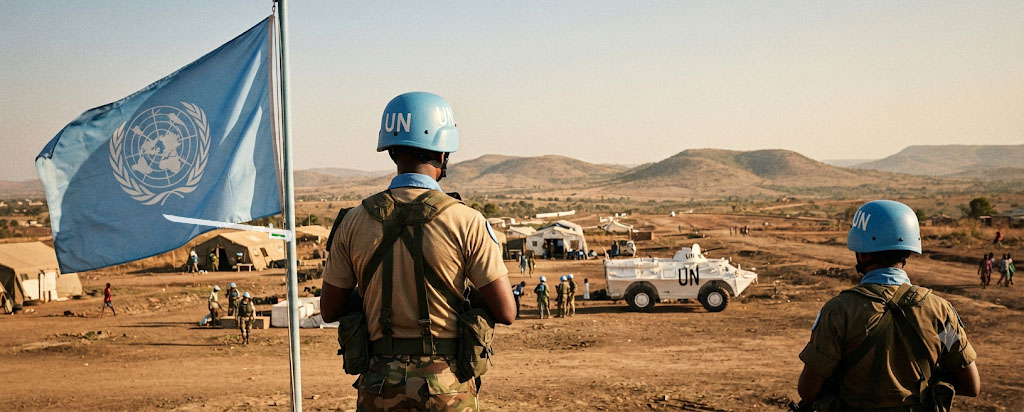
MINURSO’s closure is not an isolated development. In recent years, several longstanding UN peace operations have been terminated or withdrawn without achieving the objectives for which they were established. The closure of the UN–African Union Hybrid Operation in Darfur (UNAMID) in 2020[2] and the withdrawal of the UN Multidimensional Integrated Stabilization Mission in Mali (MINUSMA) in 2023[3] are important examples. MONUSCO provides another example. The Security Council agreed to a phased withdrawal in 2023, but worsening security conditions led to a pause. In December 2025, the Council extended its mandate until 20 December 2026 under Resolution 2808 (2025).[4]
These cases raise questions about why UN peacekeeping missions are increasingly finding it difficult to fulfil their mandates. The problem is not that every mission should continue indefinitely. Rather, decisions to withdraw need to take account of the political and security conditions on the ground. When a mission ends without an effective alternative arrangement, the problems that led to its deployment may remain unresolved.
The Growing Problem of Mission Closures
Recent UN peacekeeping history offers several examples of missions ending without achieving their principal objectives. UNAMID ended its mandate in December 2020 and completed its withdrawal from Darfur in June 2021. Established in 2007, the mission was expected to protect civilians, support the political process and contribute to stability in the region.[5] However, UNAMID was forced to withdraw before conditions for lasting peace were established in Darfur. Sudan descended into another major conflict in April 2023, and Darfur once again became a centre of violence and humanitarian suffering.[6]
MINUSMA’s experience in Mali presents a different but equally important case. Established in 2013, the mission was tasked with supporting political reconciliation, protecting civilians and helping restore state authority. A deteriorating security situation, tensions with the transitional government, and restrictions on its activities affected its operations.[7] In June 2023, Mali’s transitional authorities requested its withdrawal, and the Security Council subsequently decided to terminate the mission. The withdrawal was completed in December 2023.[8] However, Mali’s security challenges remained unresolved.
MINURSO’s closure followed a different process. The United States proposed a draft resolution extending the mission’s mandate, but Russia vetoed it despite receiving 11 votes in favour.[9] A competing Russian proposal also failed to secure the necessary support.[10] Consequently, the Security Council could not agree on either continuing the existing mission or adopting an alternative arrangement. Although the circumstances differed, all three cases ended without resolving the political or security problems that led to the missions’ deployment.
The Gap between Mandates and Capabilities
One major challenge facing UN peacekeeping is the growing gap between the responsibilities assigned to missions and the resources and political support available. Over the years, the nature of peacekeeping has changed considerably. Traditional operations primarily monitored ceasefires and maintained buffer zones between opposing forces. Contemporary missions, however, are expected to perform a much wider range of functions. These include civilian protection, political mediation, support for elections, security sector reform, institution-building and the extension of state authority.[11] While these responsibilities reflect the changing nature of conflicts, they have also made peacekeeping operations more difficult to manage. Missions are often expected to address political, institutional and security problems that cannot be resolved through military deployment or the presence of international personnel alone.[12]
MINUSMA’s experience is relevant here. The mission operated in an environment where the political transition remained uncertain, armed groups continued to operate, and the security situation deteriorated. Its responsibilities were extensive, but its ability to implement them depended on cooperation from the Malian authorities and other political actors. Restrictions on movement and disagreements over its role further affected its operations.[13] The UN’s July 2026 assessment of MINUSMA, A Peace That Was Not Enough, helps explain this problem. It recognises the mission’s contributions to political dialogue and conflict management while examining the limitations imposed by the absence of adequate political consensus and international support.[14]
Host-State Consent and Operational Restrictions
Another challenge concerns the relationship between peacekeeping missions, host governments and local populations. Consent remains a basic principle of UN peacekeeping. However, initial consent does not guarantee continued cooperation throughout a mission’s deployment. Moreover, consent cannot be understood solely as an agreement between the UN and the host government. Research on host-state consent in UN peacekeeping also shows that the quality of consent directly affects the implementation of civilian protection activities.[15]
MONUSCO’s experience in the Democratic Republic of the Congo shows that a mission may retain formal government consent while losing the confidence of the population it is expected to protect.[16] Protests against MONUSCO in eastern DRC in 2022 reflected growing public frustration over its inability to address persistent insecurity. This weakened the mission’s legitimacy and exposed the gap between public expectations and its actual performance.
Host-government cooperation has also affected UNMISS operations in South Sudan and MINUSCA in the Central African Republic. Disagreements over human rights reporting, access to certain areas and the interpretation of mission mandates have at times created tensions between these missions and national authorities.[17] Such restrictions make it difficult for peacekeepers to monitor developments, report violations and protect civilians. MINUSMA’s experience in Mali also shows the consequences when disagreements between a mission and the host government eventually lead to the withdrawal of consent.[18]
Security Council Divisions and Financial Constraints
Peacekeeping effectiveness also depends on sustained political and financial support from UN member states. The Security Council sets peacekeeping mandates, while member states provide the personnel, equipment and financial resources needed for them to function. However, divisions among the permanent members have increasingly complicated decisions on international peace and security. Between 2016 and 2025, the Security Council recorded 49 vetoes, compared with 19 in the preceding decade. The proportion of resolutions adopted unanimously also declined from 65 per cent in 2024 to 61 per cent in 2025.[19] Although these figures cover the Council’s broader work, they indicate a more difficult political environment for collective decision-making.
These divisions have direct implications for peacekeeping. During negotiations on renewing the UN Interim Force in Lebanon (UNIFIL) in 2025, the United States called for the mission’s termination, while the Security Council ultimately adopted a final extension until 31 December 2026.[20] Resolution 2790 (2025) also provides for an orderly drawdown and withdrawal beginning at the end of 2026 and to be completed within one year. The decision shows how disagreements over a mission’s future can shape its withdrawal arrangements. MINURSO’s mandate expiry provides another example of how divisions among major powers can prevent agreement on continuing an existing international operation.
Financial constraints have further weakened peacekeeping missions’ capacity. At the beginning of the July 2025 budget cycle, the United Nations faced a shortfall of approximately US$ 2 billion, representing more than 35 per cent of the approved US$ 5.6 billion peacekeeping budget. This forced the organisation to reduce mission expenditure by 15 per cent and uniformed personnel by around 25 per cent.[21] The impact was visible in the overall deployment of peacekeepers: by the end of 2025, personnel in UN peace operations had fallen by 18 per cent compared with the previous year.[22]
Although the General Assembly approved a peacekeeping budget of US$ 5.38 billion for 2025–2026, cash availability remained a serious concern. This was mainly because major contributors, particularly the United States, had delayed payments of their assessed contributions. As a result, the UN faced a liquidity crisis and lacked sufficient cash to fund approved operations. This weakened missions’ operational capacity at a time when they continue to face complex security and protection responsibilities.
Implications for the Future of UN Peacekeeping
The recent experience of mission closures highlights the need for a more careful approach to withdrawal decisions. The completion of a mandate or a host government’s request for withdrawal should not, by itself, be treated as evidence that a mission is no longer needed. The United Nations must also consider whether the political and security conditions on the ground allow it to leave without exposing civilians to greater risks. Where conflicts remain unresolved, withdrawal should be accompanied by clear arrangements for continuing essential protection, monitoring and political support.
This also calls for greater involvement of troop-contributing countries in decisions concerning mission mandates, performance and withdrawal. Countries such as India, which have extensive experience in UN peacekeeping, can bring an important field perspective to these discussions. Their views should be considered not only when mandates are formulated but also when assessing a mission’s future.
Views expressed are of the author and do not necessarily reflect the views of the Manohar Parrikar IDSA or of the Government of India.
[1] “General Assembly Scrutinizes Veto that Ended UN Mission in Western Sahara After 35 Years”, United Nations, 10 November 2026.
[2] Rajeesh Kumar, “Exit of the African Union-United Nations Hybrid Operation in Darfur (UNAMID)”, Africa Trends, July–December 2021.
[3] “Security Council Ends MINUSMA Mandate, Adopts Withdrawal Resolution”, United Nations, 30 June 2023.
[4] Rajeesh Kumar, “MONUSCO’s Early Withdrawal and the Future of UN Peacekeeping in Africa”, Commentary, Manohar Parrikar Institute for Defence Studies and Analyses (MP-IDSA), 2 January 2024; “Security Council Resolution 2808 (2025) [on Extension of the Mandate of the Un Organization Stabilization Mission in the Democratic Republic of the Congo (Monusco) Until 20 Dec. 2026]”, United Nations, 19 December 2025.
[5] Rajeesh Kumar, “Exit of the African Union-United Nations Hybrid Operation in Darfur (UNAMID)”, no. 2.
[6] “Darfur, Then and Now: A Catastrophe Repeating Itself”, European Commission, 23 April 2026.
[7] Wolseley Prah, “UN Mandate Misalignment: Crisis and Context of MINUSMA in Mali”, Africa Spectrum, 2026.
[8] Melanie Sauter, “The Mali Puzzle: International Isolation, Anti-French Sentiments, and Withdrawal of UN Peacekeepers”, Georgetown Journal of International Affairs, 17 January 2024.
[9] “Following Contentious Debate, Security Council Fails to Adopt Resolution to Extend UN Mission for Referendum in Western Sahara”, United Nations, 30 October 2026.
[10] Ibid.
[11] The Peacekeeping Mandates (PEMA) dataset identifies and records 41 distinct tasks assigned to contemporary UN peacekeeping missions. See Jessica Di Salvatore, Magnus Lundgren and Hannah M. Smidt, “Introducing the Peacekeeping Mandates (PEMA) Dataset”, Journal of Conflict Resolution, Vol. 66, Nos 4–5, 2022, pp. 924–951.
[12] “Review on the Future of All Forms of UN Peace Operations”, Report of the Secretary-General, United Nations General Assembly, 22 July 2026.
[13] Alexander Gilder, “A Lack of Strategic Vision: Robust Peacekeeping’s Unintended Consequences”, Journal of Intervention and Statebuilding, 2026.
[14] “A Peace That Was Not Enough”, United Nations Department of Peacekeeping Operations, September 2025.
[15] Allard Duursma, Sara Lindberg Bromley and Aditi Gorur, “The Impact of Host-State Consent on the Protection of Civilians in UN Peacekeeping”, Civil Wars, Vol. 26, No. 1, 2024, pp. 16–40.
[16] Anjali Dayal, “A Crisis of Consent in UN Peace Operations”, International Peace Institute, 2 August 2022.
[17] Allard Duursma, Sara Lindberg Bromley and Aditi Gorur, “The Impact of Host-State Consent on the Protection of Civilians in UN Peacekeeping”, no. 15.
[18] Anjali Dayal, “A Crisis of Consent in UN Peace Operations”, no. 16.
[19] “Highlights of Security Council Practice 2025”, United Nations Security Council, January 2026.
[20] “Developments and Trends in Multilateral Peace Operations, 2025″, Stockholm International Peace Research Institute (SIPRI), May 2026.
[21] “Funding Crisis Forces Deep Cuts to UN Peacekeeping Missions”, United Nations News, 16 October 2025.
[22] “Budget Gaps Threaten Global Peace Efforts”, United Nations Peacekeeping, 15 October 2025.