AI-Enabled Vulnerability Discovery and the PHP Incident
- November 23, 2026 |
- IDSA Comments
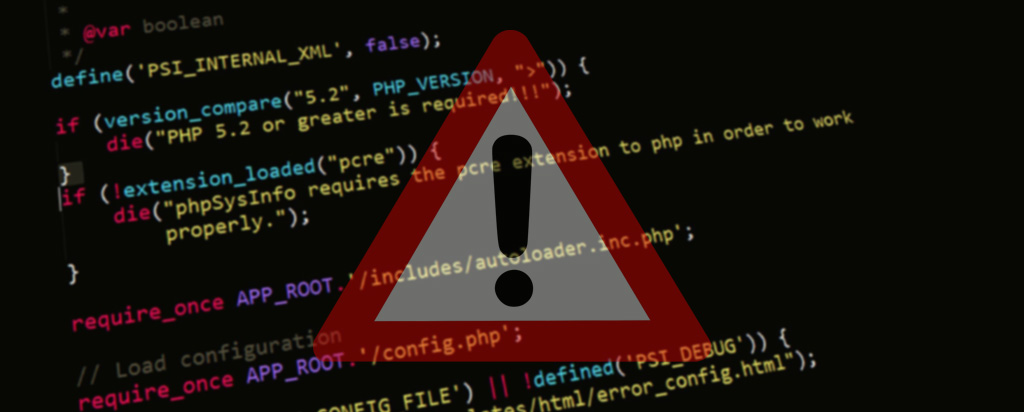
In recent months, multiple cybersecurity incidents have been reported with Artificial Intelligence (AI) in the background. As a consequential technology, AI promises to reshape cybersecurity fundamentals by identifying and addressing longstanding vulnerabilities and helping defenders secure digital infrastructure. The recent global cybersecurity alert, triggered by AI-assisted identification of critical vulnerabilities in PHP (Hypertext Preprocessor), shows how cybersecurity professionals can leverage frontier AI models to uncover underlying vulnerabilities in a widely used programming language.[1]
Following the disclosure, government and cybersecurity agencies worldwide, including India’s Computer Emergency Response Team (CERT-In), swiftly responded by issuing advisories and alerts to contain the fallout.[2] The growing use of AI to find flaws in software underpinning wider digital infrastructure is also raising concerns about similar AI capabilities in the hands of malicious actors.
PHP and Critical Vulnerabilities
The disclosure was made on 21 October 2026, when the PHP development team announced a security release fixing two critical vulnerabilities that, if left unpatched, can allow unauthenticated remote code execution (RCE) and can lead to malicious actions, including deploying malware or stealing sensitive data.[3] The vulnerabilities disclosed in PHP (CVE-2026-109618 and CVE-2026-109619), collectively known as PHP2Shell, were found by Calif, a security research team using OpenAI’s GPT-5.6 Sol model.[4] The OpenAI assessment describes the discovery as “one of the most impactful security issues in recent memory”.[5]
PHP was developed in the early 1990s as an open-source back-end programming language and currently powers nearly 70 per cent of the world’s websites.[6] As a scripting language, PHP serves multiple functions, from building web applications to supporting a wide range of databases.[7] PHP runs on all major operating systems and supports most web servers.[8] The disclosure heightened cybersecurity concerns, given the scripting language’s widespread use.
Government agencies worldwide responded swiftly to the disclosure, with several government websites taken offline as a precaution, while others were instructed to patch the vulnerability or suspend online operations. In India, CERT-In issued an advisory for organisations operating PHP-based websites, content management systems, e-commerce platforms, and third-party applications.[9] The advisory recommended several steps, including identifying PHP use across systems, applying necessary security patches, prioritising internet-facing systems, and restricting exposure where immediate patching was not possible.
Despite advisories issued worldwide, remediation remained slow. Initial assessments suggested that even 24 hours after the release of emergency fixes, as many as 99.3 per cent of the affected websites were still running the unpatched versions of PHP.[10] As news of the vulnerabilities spread, threat actors quickly exploited the situation. Within days of the disclosure, a threat actor reportedly linked to the Lazarus Group ecosystem was actively scanning for vulnerable, internet-facing PHP systems.[11]
AI-Enabled Detection
The debate around AI-enabled vulnerability discovery and software security gained momentum when Anthropic announced Project Glasswing. This initiative brought together major technology companies, cybersecurity firms and the Linux Foundation.[12] At the centre of the project was Anthropic’s then-new frontier model, dubbed Claude Mythos Preview, which illustrated advanced capabilities in identifying software vulnerabilities. The model also uncovered flaws in critical software that had remained undetected for years, including vulnerabilities in systems that underpin much of the world’s digital infrastructure.
The PHP incident highlights how AI is becoming an increasingly important tool for cyber defenders, including maintainers and security providers. Frontier AI models can help identify vulnerabilities before malicious actors exploit them, giving organisations a defender’s window to patch security flaws and strengthen security.
The PHP case is part of a growing trend of AI-assisted findings in software. In November 2024, Google revealed that its Large Language Model (LLM) agent, Big Sleep, discovered a previously unknown exploitable flaw in SQLite, a popular open-source database engine.[13] Similarly, AI assistance helped discover vulnerabilities in OpenSSL, which is a cryptographic library that secures much of the internet traffic.[14] Finding flaws or bugs in software is not new and did not begin with AI, as illustrated by the discovery of the Heartbleed bug vulnerability in 2014.[15] What changed with AI is the acceleration that lets defenders find and patch flaws sooner.
However, those same capabilities also raise concerns, as threat actors could exploit them to develop offensive tools and exploits more quickly, making it harder for defenders to stay ahead. Earlier, for instance, building an exploit required chaining multiple flaws and adapting to the target’s memory layout, followed by repeated testing and debugging.[16] With frontier models, the time and expertise required are no longer significant barriers.
With reports that the PHP Foundation, the non-profit foundation that supports PHP, is underfunded and understaffed, leveraging frontier models in cooperation with outside researchers and companies offers a significant advantage.[17] But using AI also places considerable pressure on software maintainers, as they must keep up with the growing volume of proposed code changes while simultaneously reviewing vulnerabilities and developing appropriate patches. The subsequent disclosure of these vulnerabilities also requires close coordination with government agencies and other relevant stakeholders.
Responsible disclosure at the right time matters as much as the technical work. Premature disclosure could allow threat actors to develop and deploy exploits before patches are widely available, leaving vulnerable systems exposed. Deciding the timing of disclosure therefore requires careful coordination to ensure defenders have enough time to address vulnerabilities before details become public. Disclosure also raises an important question: when private companies largely drive vulnerability discovery and disclosure, who prioritises which government receives early warning, and how quickly?
Particularly concerning is that dependence on, as well as defensive capabilities, are limited to a few labs, raising governance and access-related issues. For instance, OpenAI’s Patch the Planet programme was instrumental in bringing security engineers and maintainers together to “investigate and validate vulnerabilities, develop and test patches, and coordinate disclosure of vulnerabilities”.[18] Through the programme, advanced models were made available to the team of security researchers along with the PHP Foundation, which eventually led to the disclosure.[19]
The crisis also revived discussion of shared dependencies leading to shared exposure, as a flaw in an open-source component presented cross-border risk, regardless of whose systems are hit. Also, the growing use of AI is likely to accelerate vulnerability discovery in widely deployed legacy systems, potentially sooner than anticipated.
The incident showed how critical digital infrastructure still relies on volunteer-based, under-resourced projects and how advanced AI capabilities can find flaws faster than the ecosystem can fix and deploy. This creates a new asymmetry: vulnerabilities will be discovered faster, but the people responsible for deploying fixes will become even more overwhelmed. To reduce the burden, foundational open-source software that underpins the internet needs corrective measures and innovative mechanisms to operate seamlessly and securely. Pairing AI findings with AI-assisted fixes helps, but it’s not enough, as human review remains critical. Vulnerabilities have also traditionally been discovered through mechanisms like bug bounty programmes, which could be revived and powered with AI assistance provided directly by AI companies.
Given the shared nature of the problem, it is important to make AI-assisted audits of widely used components a shared, open programme rather than relying on a handful of vendors’ gated access programmes, such as OpenAI’s Trusted Access for Cyber for partnerships.[20] Sustaining these efforts would require comprehensive financial and technical support from a range of stakeholders, including governments, technology companies, universities and open-source foundations. A prime example of such shared efforts in action is the Open Source Security Foundation’s (OpenSSF) project Alpha-Omega, which aims to partner with maintainers, security researchers, and the global open-source community, with arrangements for adequate grants and funding.[21] Appropriate mechanisms like this that enable shared access to defensive AI and a structured plan to address legacy software would make the next incident less of an emergency.
Views expressed are of the author and do not necessarily reflect the views of the Manohar Parrikar IDSA or of the Government of India.
[1] Osmond Chia, “What is PHP and Why Did it Spark a Global Cyber-Security Scramble?”, BBC, 22 October 2026.
[2] Ibid.
[3] “PHP 8.2.35 Released!”, PHP, 21 October 2026; “What is Remote Code Execution?”, Cloudflare.
[4] “Critical Vulnerabilities in PHP Require Immediate Patching”, Cybersecurity & Infrastructure Security Agency (CISA), 26 October 2026.
[5] “Patch the Planet: Global Response Coordination as Agents Uncover Critical Vulnerabilities”, OpenAI, 21 October 2026.
[6] Liv McMahon and Osmond Chia, “What is PHP and Why Did it Spark a Global Cyber-Security Scramble?”, BBC, 23 October 2026.
[7] “What is PHP and What Can It Do?”, PHP.
[8] Ibid.
[9] “CERT-In Advisory CIAD-2026-0052”, Cert-In, 22 October 2026.
[10] Moshe Siman Tov Bustav, “PHP2Shell: 24 Hours in, 99.3% of Measurable PHP Instances Are Still Unpatched”, OX Security, 22 October 2026.
[11] “CYFIRMA Threat Advisory: Suspected DPRK Campaign Staging PHP2Shell Targeting Against Global PHP Infrastructure”, Cyfirma, 29 October 2026.
[12] “Project Glasswing”, Anthropic, 7 April 2026.
[13] Laura French, “Google’s Big Sleep LLM Agent Discovers Exploitable Bug in SQLite”, SC Media, 4 November 2024.
[14] Aaron Klotz, “AI-Assisted Cybersecurity Team Discovers 12 Openssl Vulnerabilities, Claims Humans Are The Limiting Factor — Some Vulnerabilities Have Been Around For Decades”, Tom’s Hardware, 29 January 2026.
[15] Jeremy Rowley, “Heartbleed Bug Vulnerability: Discovery, Impact and Solution”, PKI Consortium, 10 April 2014.
[16] Sagi Tzadik, Shir Tamari, Nir Ohfeld and Tomer Schwartz, “PHP2Shell: AI Uncovers Critical RCE Vulnerabilities Affecting 70% of the Internet”, WIZ, 21 October 2026.
[17] Toby Sterling, “PHP Foundation ‘Under-Funded’ With One Full-Time Staff Member, Director Says”, Reuters, 24 October 2026.
[18] “Patch the Planet: A Daybreak Initiative to Support Open Source Maintainers”, OpenAI, 22 June 2026.
[19] Tom Gerken, Laura Cress and Joe Tidy, “Websites Taken Down Worldwide as Critical Cyber-Security Update Issued”, BBC, 21 October 2026.
[20] Till July 2026, as part of OpenAI’s Daybreak cybersecurity program, the company has established Trusted Access for cyber partnerships with Australia, Canada, Japan, Republic of Korea, France, Germany, Poland, the Netherlands and EU institutions like ENISA. See “Our Approach to Government and National Security Partnerships”, OpenAI, 8 July 2026.
[21] “Alpha-Omega”, The Linux Foundation Projects.