The military dialogue seems likely to remain suspended over the arms sales issue; discord over Iran’s nuclear issue may increase and more war of words may define the relationships between...
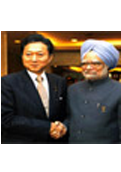
The Joint Statement catapulted India-Japan strategic and global partnership to a “New Stage” in which the bilateral relationship is going to be deepened on all fronts, embracing regional, global and...
To assuage fears, Japan might see merit to take India on board in the form of a naval cooperation framework to secure peace at sea. Developments in the past 4-5...
After Yukio Hatoyama assumed the office of Prime Minister, Japan’s foreign policy has begun to look different with an element of assertiveness and a greater focus towards Asia.
There is a growth trajectory in defence cooperation between India and Japan, complemented by the burgeoning economic relationship providing robustness to the partnership.
Notwithstanding the community formation ideas in different shapes coming from Japan and Australia, the EAS came out with as many as 42 deals on issues ranging from outstanding trade and...
The appropriate option for the Hatoyama government would be to take incremental steps aimed at building greater confidence and trust amongst Asian nations across a number of policy fronts rather...
The Futenma issue is therefore unlikely to be allowed to derail the decades-old alliance relationship, irrespective of the fact that there is now a government in Japan headed by the...
True to its planned schedule, North Korea defied warnings from the international community on 5 April 2009, launching a rocket capable of reaching Alaska and Hawaii. As was expected, it...