Breaking the 38-Year Hiatus: Defence Minister Rajnath Singh’s Visit to Sri Lanka
- October 21, 2026 |
- Issue Brief
Summary
Rajnath Singh’s September 2026 visit to Sri Lanka was the first time an Indian defence minister visited Colombo since K.C. Pant’s 1988 visit. Three MoUs were signed: one on upgrading L70 guns, one on cooperation between the National Defence Colleges, and another on cooperation between the Cadet Corps.
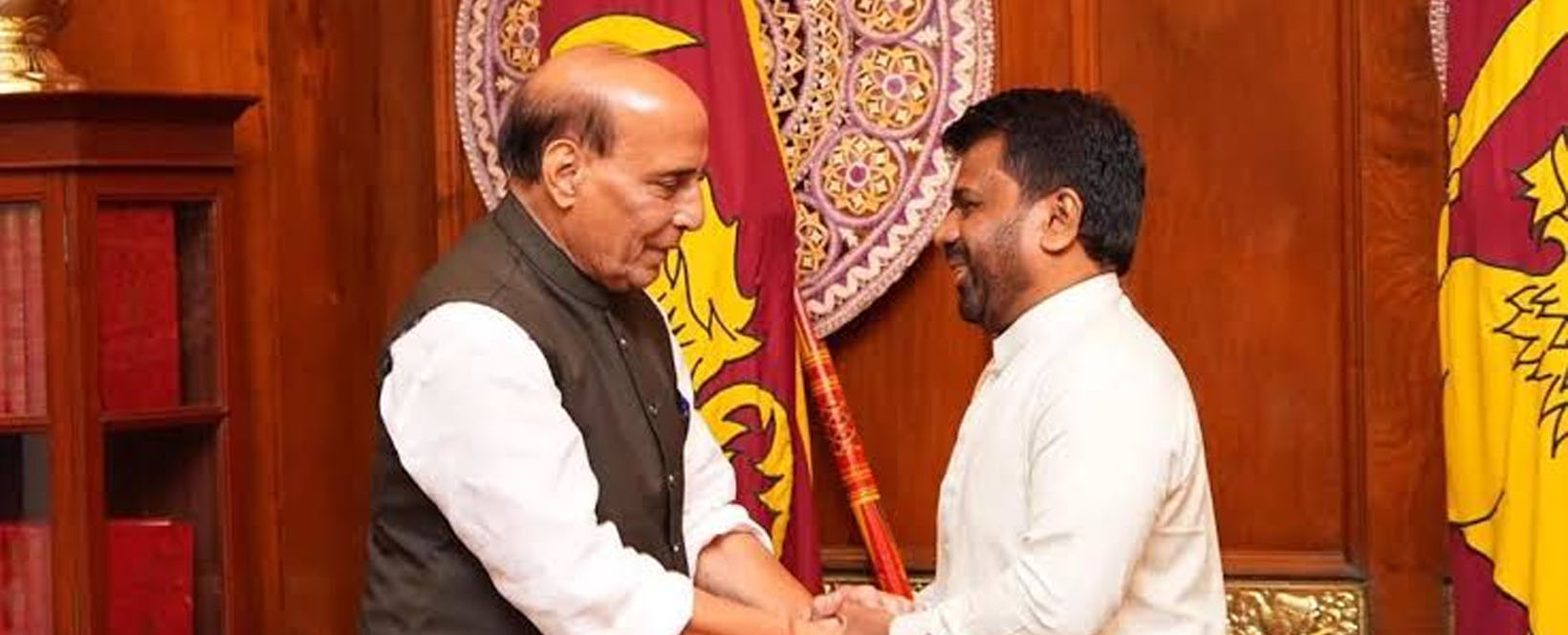
Raksha Mantri Rajnath Singh visited Sri Lanka from 8 to 10 September 2026, the first time an Indian defence minister has visited Sri Lanka since K.C. Pant’s visit in 1988. Pranab Mukherjee, Defence Minister in the United Progressive Alliance (UPA) government, visited Sri Lanka in 2005, but as part of the Indian government’s delegation attending the funeral of Sri Lankan Foreign Minister Lakshman Kadirgamar.[1] The brief discusses defence cooperation between India and Sri Lanka over the years, the objectives of Rajnath Singh’s visit, and its outcome.
Decoding the 38-Year Absence
India–Sri Lanka defence cooperation has a long history. A significant step in this cooperation was the 1987 Indo-Lanka Accord, which mandated the despatch of the Indian Peace Keeping Force (IPKF) at the request of the Sri Lankan government to keep peace in the Northern Province, where the Sri Lankan Army was locked in a war with the Liberation Tigers of Tamil Eelam (LTTE). The presence of the IPKF was opposed by some leaders within the ruling party, which joined hands with the LTTE and supplied weapons and logistics to fight the IPKF. Around 1,200 Indian soldiers lost their lives in the process. By 1989, the Sri Lankan government gave the Government of India an ultimatum to withdraw the IPKF. Within India too, particularly in Tamil Nadu, there was protest against the Indian government for its decision to send the IPKF to Sri Lanka.
Following the debacle of the IPKF mission in Sri Lanka, India decided not to get militarily involved in Sri Lanka’s ethnic conflict. However, the Sri Lankan government requested military assistance from India, as President Chandrika Kumaratunga launched War for Peace in 1995. On the other hand, there was strong objection to such assistance from Tamil Nadu on the pretext that arms and weapons would be used against the Sri Lankan Tamils. Given Tamil Nadu’s sentiment, India kept a low profile on defence cooperation. India refused to sign a formal defence cooperation agreement sought by the Government of Sri Lanka in 2003/04.
Since 2005, however, defence cooperation intensified significantly between the two countries as India agreed to provide security assistance, especially non-lethal weapons in terms of intelligence support, providing coastal security surveillance and naval blockade against the flow of weapons to the LTTE during the last phase of the Eelam War (2005–2009), but not much publicity was given. Even after the Eelam War ended, Tamil Nadu remained sensitive about India’s defence cooperation in the absence of progress on Tamil reconciliation. On top of that, several attacks on Indian fishermen caused anger against the Sri Lankan navy. As a result, there was strong opposition to any cooperation with the Sri Lankan military.
Since 2014, the NDA government, unlike the UPA coalition government, did not depend on Tamil regional parties. Chinese activities in the Indian Ocean and its naval presence in the region led India to strengthen naval cooperation with the Indian Ocean littoral states. Accordingly, India strengthened defence cooperation with Sri Lanka.
As the two governments inked several maritime security cooperation agreements, Sri Lankan opposition political parties and the strategic community opposed them, citing the concern that the agreements would allow an Indian technical team to be stationed in Sri Lankan territory and the fear that the agreements would drag the island nation into the geopolitical rivalry between India and China. Janatha Vimukthi Peramuna (JVP) led such opposition against defence cooperation projects with India.
Following Indian assistance during the economic crisis, Sri Lankan public opinion has visibly shifted. A recent Pew Research Centre survey of attitudes towards India across 36 countries found that Sri Lanka had the most favourable view.[2] After coming to power in 2024, the JVP has shown its willingness to work with India. The lack of an Indian Defence Minister’s visit to Sri Lanka can therefore be viewed in this context. In the past, the concern may have been that the defence minister’s visit would attract undue attention and affect the implementation of mutual agreements between the two governments on defence-related issues.
India–Sri Lanka Defence Cooperation: 1990–2026
The lack of a formal defence cooperation agreement, or any visit by an Indian defence minister to Sri Lanka in 38 years, did not stop defence cooperation between the two countries from deepening. Even though India decided not to get militarily involved in the armed ethnic conflict in Sri Lanka after the withdrawal of the IPKF, defence engagement continued, even if not on a large scale. During 1991–1999, defence cooperation was limited to training of Sri Lankan military personnel in India, joint exercises such as Milan and Naval Symposium, and interactions between the two militaries on multilateral platforms. In 2000, high-level military visits between the two countries increased, which resulted in the supply of second-hand offshore petrol vessels to Sri Lanka. Discussion of defence cooperation has been a key agenda item in high-level visits since 2000. Operation Review Talks were initiated and held regularly to cooperate in operational matters of mutual interest.
Since 2005, defence cooperation has intensified significantly between the two countries as India agreed to provide security assistance to the Sri Lankan government in its war against the LTTE during the last phase of the Eelam war by supplying non-lethal weapons, signing an agreement on setting up an air defence organisation and infrastructure, and sharing intelligence. Under the air defence agreement, India provided its expertise and supplied two Indra Air Search Radars in 2006 and 2007.
India also gifted 54 shoulder-launched surface-to-air IGLA Missiles to the Sri Lankan Air Force in 2007. During 2000 to 2006, India supplied advanced automatic 40mm L70 anti-aircraft guns to Sri Lanka.[3] Subsequently, India transferred several vessels to the Sri Lankan Navy and Coast Guard. India is committed to maintaining high serviceability of weapons and equipment provided to the Sri Lankan Armed Forces free of cost.[4] To ensure the operational availability of the IGLA missiles gifted by India to the SLAF, India annually does life extension checks free of cost.[5]
| Table 1. Supply/Transfer by India
|
||||
| Equipment/Weapons | Year of Order | Year of Delivery | Quantity | Comments |
| Tata Diesel Engine | 1985 | 1987–2006 | 150 | For Unicorn and Unibuffel APC produced in Sri Lanka. |
| OPV Sukanya (Sri Lankan Designation Sayura) | 2000 | 2000 | 1 | Second-hand. |
| Indra Air Search Radar | 2005 | 2006 | 2 | Possibly second-hand, Aid. |
| Indra Air Search Radar | 2007 | 2007 | 1 | Aid. |
| OPV Vikram (Sri Lankan Designation Sagara) | 2007 | 2007 | 1 | Second-hand, Aid. |
| OPV Vikram | 2008 | 2008 | 1 | Second-hand.
|
| OPV Samarth (Sri Lankan Designation Sayurala) | 2014 | 2017–18 | 2 | New. |
| ICGS Varaha | – | 2015 | 1 | It was given on lease w.e.f. 25 April 2006. It was permanently transferred to Sri Lanka on 27 August 2015 |
| ICGS Varuna | 2017 | It was permanently transferred to Sri Lanka for training and EEZ surveillance on 5 September 2017 | ||
| DO-228 MP, Maritime Patrol Aircraft | 2019 | 2022 | 1 | Second Hand |
| Source: SIPRI | ||||
In the post-Eelam War period, realising that both India and Sri Lanka face common security challenges from military and non-military sources, both countries decided to deepen defence engagement through service-specific staff talks and an annual defence dialogue between the Defence Secretaries. These operational interactions include Sri Lanka–India Naval Exercise (SLINEX), Passage Exercises, Training and Hydrography exchanges and port calls.[6] In addition to bilateral cooperation, India, Sri Lanka and the Maldives prioritised a trilateral cooperation mechanism to promote maritime security in the region in 2011, which later evolved into the Colombo Security Conclave (CSC). Both countries also participate in multilateral events such as the Indian Ocean Naval Symposium, Galle Dialogue, MILAN, Goa Maritime Conclave/Symposium and so on.
During Gotabaya Rajapaksa’s Presidency, India and Sri Lanka signed three agreements, including an agreement on the supply of Dornier aircraft, setting up of a Maritime Rescue and Coordination Centre (MRCC) and an agreement on the acquisition of a 4,000-tonne naval floating dock and posting a naval liaison officer at India’s Information Fusion Centre (IFC)-IOR, Gurugram.[7] Despite criticism from the opposition and the strategic community, the government implemented these MoUs.
The first Indian Navy Dornier aircraft was handed over to Sri Lanka on 15 August 2022, and returned to India for scheduled maintenance after one year of service. A second Dornier aircraft was then deployed with the Sri Lankan Air Force (SLAF) on lease under a Government of India grant on 16 August 2023. The MRCC was established with Indian grant assistance worth US$ 6 million and was commissioned in June 2024. As part of cooperation on Maritime Domain Awareness, Sri Lanka’s six surveillance radar stations are integrated with India’s coastal surveillance network. Data collected from these stations are fed into IFC Gurugram. Since 2022, a Sri Lankan International Liaison Officer has been positioned at the IFC.
After the JVP-led National People’s Power (NPP) formed government in Sri Lanka in 2024, the two countries signed an MoU on Defence Cooperation to enhance and institutionalise defence cooperation in a more structured manner.[8] Both countries agreed to foster cooperation in hydrography, to enhance defence platforms and assets to augment Sri Lanka’s defence capabilities, intensify collaboration through joint exercises, maritime surveillance, and defence dialogue and exchanges, extend assistance to strengthen the capabilities of Sri Lanka on disaster mitigation, relief and rehabilitation, including through training, joint exercises and sharing of best practices, enhance capacity-building and training for Sri Lankan defence forces and conduct tailor-made training programmes, wherever required and explore defence industry cooperation.[9] Since the MoU on Defence Cooperation was signed in April 2025 during Prime Minister Narendra Modi’s visit to Sri Lanka, several defence dignitaries have exchanged bilateral visits (See Table 2). The latest visit was by Defence Minister Rajnath Singh.
Table 2. High-Level Visits of Defence Officials Since May 2025
| Dignitaries | Month and year of visit |
| Lt Gen Lasantha Rodrigo, Commander of the Sri Lankan Army | June 2025 |
| Rajesh Kumar Singh, Defence Secretary of India | June 2025 |
| Adm Dinesh K Tripathi, Chief of the Naval Staff of India | September 2025 |
| General Upendra Dwivedi, Chief of the Army Staff of India | January 2026 |
| VAdm Damian Fernando, Commander of the Sri Lanka Navy | August 2026 |
Defence Minister Rajnath Singh’s Visit
Purpose
In the Joint Statement titled ‘Fostering Partnership for a Shared Future’, issued during President Anura Kumara Dissanayake’s visit to India in December 2024, the two countries agreed to engage at the leadership level to enhance bilateral ties, including security and defence cooperation qualitatively.[10] Rajnath Singh’s visit can be seen as part of the effort to enhance engagement at the leadership level.
Till 2009, defence cooperation mostly focused on issues associated with the armed ethnic conflict. Today, the geopolitical situation demands that the two countries cooperate more to develop each other’s capabilities to ensure not only domestic and bilateral security but also regional security. The sinking of an Iranian ship in Sri Lanka’s EEZ by the US, which was coming from India, necessitates that the two regional countries discuss common security concerns and the way forward.
India extended full support to Sri Lanka’s proposal to keep the Indian Ocean a Zone of Peace, which the UN adopted as Resolution 2832 in 1971. The concept was proposed in the Cold War context. The 1971 concept of the Indian Ocean as a Zone of Peace has lost relevance in today’s geopolitical context. Given these new realities, it is pertinent that regional countries discuss ways to keep the region free from the negative impact of global geopolitics.
Within South Asia, despite the sinking of the Iranian vessel in the Indian Ocean, no dialogue among the regional countries has so far been reported to ensure freedom of navigation and regional maritime safety and security. Some regional countries, such as Pakistan, Bangladesh, and the Maldives, have joined security architectures outside the region, such as the Saudi-led Multinational Maritime Defence Alliance, to address challenges emanating from the West Asian conflict.[11]
India has asserted its intention to remain an anchor of peace, stability and rule-based order in an evolving global landscape through defence diplomacy and deepening bilateral and multilateral security cooperation with friendly nations.[12] India sees Sri Lanka as an important partner and “central to any strategic discourse on maritime security in the region”.[13] Therefore, India seeks cooperation with Sri Lanka to shape a favourable and secure maritime environment to ensure “secure sea lanes, freedom of navigation, respect for international law and unhindered maritime trade…”.[14] It was stressed that, to tackle emerging challenges, the two countries need to strengthen further the longstanding India–Sri Lanka defence and strategic partnership, with special emphasis on maritime cooperation. Minister Singh’s visit therefore aimed to strengthen bilateral defence cooperation further and build the partnership to address current geopolitical challenges in the region.
Outcomes
During the three-day visit, Minister Rajnath Singh’s itinerary included meeting with President Anura Kumara Dissanayake, Prime Minister Harini Amarasurya, Opposition leader Sajith Premadasa, a visit to the Ministry of Defence of Sri Lanka, where he was received by the Deputy Minister of Defence Major General Aruna Jayasekara (Retd), a visit to the IPKF Memorial and Gangaramaya Temple in Colombo, and the Sitha Amman Temple at Nuwara Eliya, where the opposition Parliamentarian Jeevan Thondaman received him.
The Indian delegation held substantive discussions on issues spanning the full spectrum of the multi-faceted partnership between the two nations during its interactions with Sri Lankan leaders. During the interactions, Sri Lankan leaders acknowledged and appreciated India’s continuous support as a first responder during the crisis and expressed Sri Lanka’s commitment to strengthen bilateral relations further. President Dissanayake specifically reiterated Sri Lanka’s commitment that it “would never allow its territory to be used for any activities inimical to India’s security interests”[15].
To strengthen capacity-building and share experience, three new MoUs in the defence sector were signed during the visit, including: (i) agreement to upgrade L70 guns for the Sri Lanka Air Force; (ii) agreement on academic cooperation between India’s National Defence College (NDC) and Sri Lanka’s National Defence College (NDC); and (iii) agreement on bilateral cooperation between the Sri Lanka Cadet Corps and the Indian Cadet Corps.
The MoUs signed are expected to contribute significantly to the modernisation of the air force and knowledge-sharing. There has been a demand to modernise the Sri Lankan air force in the post-Eelam War period to protect airspace over the Indian Ocean and ensure national security.[16] The agreement to upgrade six L70 guns through Indian grant assistance will significantly strengthen Sri Lanka’s air defence architecture. The other two MoUs will facilitate sharing of knowledge and experience.[17] Three Bailey bridges constructed by the Indian Defence Forces on the Pansiyagama–Kurunegala, Kabellawa–Kurunegala and Palugamam–Batticaloa roads were inaugurated and handed over to the Sri Lankan public during Singh’s visit.[18]
India’s commitment to assist Sri Lanka as a first responder at the time of crisis, and the NPP government’s reassurance to be sensitive to India’s security concerns, have created a cordial atmosphere for leaders of both countries to openly discuss long-pending issues of mutual concern and explore the areas of further cooperation for mutual benefit. In this regard, cooperation was sought in the domain of combating the illicit drugs menace in the Indian Ocean, extraditing Sri Lankan drug traffickers currently serving prison sentences in India, and resolving the long-pending fishermen issue.[19]
Minister Singh stressed the need to strengthen further maritime cooperation by exploring new areas like aquaculture, protection and preservation of the maritime environment, ocean science, marine biotechnology, maritime tourism, defence manufacturing and establishment of a joint Maritime Humanitarian Assistance and Disaster Relief (HADR) system for a coordinated and rapid response to natural calamities and man-made disasters.
In his address at the Ministry of Defence of Sri Lanka, Minister Singh called for collective efforts to address regional security by further strengthening the CSC. However, it is not known whether the CSC factored into bilateral interactions between political leaders, as it was not disclosed officially. After remaining dormant for years, the trilateral maritime security grouping was revived and renamed in 2020. The trilateral grouping has also expanded to six members, including India, Maldives, Sri Lanka, Mauritius, Bangladesh and Seychelles.
The founding document, charter, and MoU on the establishment of the CSC Secretariat were signed in August 2024.[20] Colombo has been selected as the location for the CSC’s permanent Secretariat. It was also decided that the first Secretary General of the CSC will be an Indian. Accordingly, the CSC appointed the first Secretary General at the 7th NSA-level meeting in November 2025 by consensus.[21] With the signing of the MoU on establishing the CSC Secretariat in Colombo, both India and Sri Lanka hope the CSC will emerge as a collective regional security framework to address emerging challenges.
However, because of delays in procedural requirements for the Secretary-General to take up the assignment, the Secretariat is functioning through an interim arrangement. As a result, the CSC cannot function with the dedication and seriousness required.[22] There was an expectation, particularly from Sri Lanka’s strategic community, that the CSC issue would be on the agenda of bilateral discussions during Rajnath Singh’s visit.[23] However, official statements do not indicate that the issue was discussed.
Overall, the visit was considered fruitful. Unlike in the past, there was no public protest from any quarter against the new MoUs signed between the two countries. However, murmurs of concern persist in the Sri Lankan strategic community that details of these MoUs have not been disclosed to the public or even to the defence oversight committee.[24] The secrecy surrounding the newly signed MoUs is fuelling conspiracy theories. Nonetheless, opposition to the defence MoUs is now much milder than in the past. This provides ample opportunity for both countries to implement defence policy decisions with fewer obstacles.
Conclusion
India–Sri Lanka defence cooperation has significantly improved over the years, despite the absence of a defence ministerial visit from India to Sri Lanka for 38 years. Anti-India sentiment, which was prevalent in Sri Lanka in the past, has softened post-2022, particularly after the NPP government came to power. The formalisation of the defence pact last year has institutionalised the defence cooperation and exchange at the leadership level. Defence Minister Rajnath Singh’s visit to Sri Lanka after a 38-year gap signals that India sees Sri Lanka as an important stakeholder in the Indian Ocean region and is willing to play a constructive, dependable role in the shared neighbourhood.
In response, the Sri Lankan government demonstrated its full commitment to maintaining peace in the Indian Ocean region. There is a consensus that India and Sri Lanka must coordinate their efforts and leverage their collective competencies to address emerging challenges in the region together without paying lip service to each other. The new areas of cooperation explored during the visit, and the mutual commitment to resolve the long-pending issues demonstrated during the bilateral interactions, create an opportunity to deepen security and defence cooperation further.
Views expressed are of the author and do not necessarily reflect the views of the Manohar Parrikar IDSA or of the Government of India.
[1] “Briefing Points by Official Spokesperson on the Indian Delegation to Attend the Funeral of Sri Lanka’s Foreign Minister”, Ministry of External Affairs, Government of India, 13 August 2005.
[2] Sneha Gubbala, “Public Opinion of India is Mixed Across 36 Countries”, Pew Research Center, 13 August 2026.
[3] “India Ups Military Support to Sri Lanka”, Tamil Guardian, 23 October 2007.
[4] In 2021, India supplied 341 Indra Radar Spares worth LKR 200 million to augment maintenance support for four INDRA Mk-II Air Surveillance Radars, gifted to Sri Lanka Air Force by the Government of India in 2011. See “Life Extension Checks of IGLA Missiles and Gifting of Indra Mk-II Radar Spares by India”, High Commission of India, Colombo, Sri Lanka, 16 November 2021.
[5] Ibid.
[6] Navy-to-Navy Staff Talks and Army Staff Talks were initiated in 2011; the Annual Defence Dialogue was launched in 2012 and Coast Guard Staff Talks were initiated in 2015.
[7] “Induction of Indian Navy Dornier into Sri Lanka Air Force”, High Commission of India, Colombo, 16 August 2023.
[8] “Brief on India-Sri Lanka Bilateral Relations”, High Commission of India, Colombo, Sri Lanka, 11 August 2026.
[9] “India – Sri Lanka Joint Statement: Fostering Partnerships for a Shared Future”, Ministry of External Affairs, Government of India, 16 December 2024.
[10] Ibid.
[11] “Maldives Joins Saudi-Led Maritime Defence Alliance”, Corporate Maldives, 17 September 2026.
[12] The intention is highlighted in ‘RAKSHA’, the Government of India document on defence diplomacy that outlines India’s strategic roadmap and vision for global defence partnerships over the next 10 years. The document was released on 3 September 2026. See “Raksha Mantri Unveils ‘RAKSHA’ Defence Diplomacy Document Outlining India’s Strategic Roadmap & Vision for Global Partnerships Over Next 10 Years”, Press Information Bureau, Ministry of Defence, Government of India, 3 September 2026.
[13] “Secure Sea Lanes and Freedom of Navigation are Pivotal for Collective Security & Prosperity of Indian Ocean Region, Says Raksha Mantri at Sri Lankan Ministry of Defence”, Press Information Bureau, Ministry of Defence, Government of India, 9 September 2026.
[14] Ibid.
[15] “Raksha Mantri Pays a Courtesy Call on Sri Lankan President in Colombo”, Press Information Bureau, Ministry of Defence, Government of India, 9 September 2026.
[16] Boniface Perera, “Right Sizing the Sri Lanka Armed Forces is a Prompt Decision by President Anura Dissanayake”, Midpoint, 7 March 2025.
[17] “Raksha Mantri Pays a Courtesy Call on Sri Lankan President in Colombo”, no. 15.
[18] These bridges were constructed with grant assistance as part of India’s rehabilitation programme to restore essential road connectivity following Cyclone Ditwah. See “President Meets Indian Defence Minister”, news.lk, Government Official News Portal, 9 September 2026.
[19] Ibid.
[20] “7th NSA-Level Meeting of the Colombo Security Conclave (November 20, 2025)”, Ministry of External Affairs, Government of India, 20 November 2025.
[21] Ibid.
[22] “Transcript of Special Briefing by MEA on the Visit of Hon’ble Vice President of India to Sri Lanka”, Ministry of External Affairs, Government of India, 20 April 2026.
[23] Views gathered from personal interactions with Sri Lankan experts and commentators.
[24] The perspective gathered during a personal interview with Dinouk Colombage, a Colombo-based Consultant and Public Policy Expert.