Fear, Interest and Honour: The Thucydidean Trinity and India’s Asia Policy
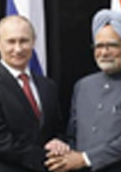
Nearly 2,500 years ago the Greek historian Thucydides noted that the foreign policy of Athens was driven by fear, interest and honour.
- S. Kalyanaraman
- July 2013
Nearly 2,500 years ago the Greek historian Thucydides noted that the foreign policy of Athens was driven by fear, interest and honour.
The temporary abeyance of ‘services’ as a valid means of discharging the offset obligation could prove to be exasperating for the foreign vendors and the prospective IOPs.
Fifteen years after the nuclear tests, it is relevant to examine if deterrence remains weak in South Asia or has consolidated towards greater stability.
In order to achieve self reliance in defence production, enhancement of indigenous private industry’s role in R&D of defence systems is inevitable. Accordingly, amendments to the DPP-2011have been approved. Along with all other stakeholders, the DGQA too needs to gear up for the challenges this new policy is going to present.
India’s admission to the NSG has, as on the previous times when the India-US Nuclear Deal and the NSG exemption of 2008 were under discussion, caused many of those opposed to the Indian nuclear programme to come out with various policy suggestions on how to get India to agree on additional conditionalities. In addition there is a move by many to use the Indian admission for membership as a means to legitimize the illegitimate nuclear commerce between China and Pakistan. All these are predicated on the assumption that India is desperate to join the NSG. India should reject any move by the nonproliferation lobby to devise a criterion-based admission procedure.
Rockets in the Maoist arsenal may seem, presently, to have nuisance value. However, the possibility of the Maoists acquiring greater capability to fire the rockets with accuracy cannot be ruled out. Many strategic and static locations would come under threat with disastrous consequences.
India: A Sacred Geography by Diana L. Eck is an important contribution to the literature on the processes that have contributed to imagining India long before the age of the nation state. Eck traces the ‘prehistory’ of the idea of India, locating it in the geographical nature of Hindu spiritual practice and pilgrimage.
A global vision based on sustainable resource use for global prosperity can also overcome trust deficit within the BRICS grouping.
By abstaining from voting on the global arms trade treaty, India has exposed the treaty’s loopholes in not addressing concerns about illegal transfer of arms to terrorist organisations, insurgents groups and other non-state actors.
This book, on a topical issue, is divided into nine chapters. The author has carried out extensive research and documented the process of the evolution of the existing models of higher defence organizations in the United States (US), Union of Soviet Socialist Republics (USSR)/Russia, the United Kingdom (UK) and China. Briefly, he has also touched upon the systems adopted by France and Germany. These are covered in the first four chapters, and supported by functional charts.