Israel, Hezbollah and Lebanon’s Strategic Dilemma
- October 21, 2026 |
- IDSA Comments
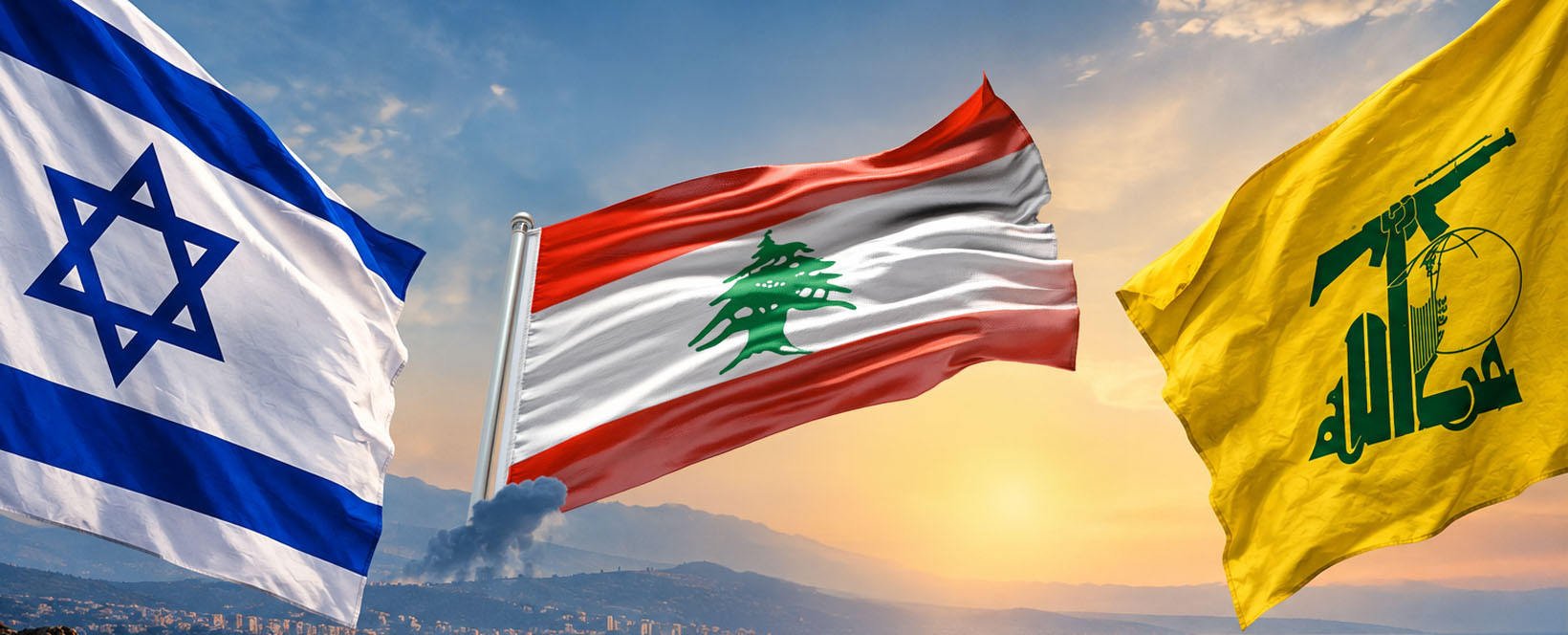
Following Hamas’ 7 October 2023 attack, Hezbollah launched around 5,185 strikes between October 2023 and November 2024 using rockets, missiles and drones towards northern Israel to tie down the Israel Defense Forces (IDF) and demonstrate solidarity with Palestinians, displacing around 90,000 Israeli citizens. After months of low-intensity conflict, Israel launched Operation Northern Arrows in mid-September 2024, killing around 176 senior Hezbollah commanders, including Secretary-General Hassan Nasrallah, degrading its military infrastructure and establishing a buffer zone at five strategic locations in south Lebanon. Between October 2023 and December 2024, Israel’s conflict with Hezbollah killed around 4,000 people in Lebanon and 128 Israelis, that is, 45 civilians and 83 soldiers.[1]
Israel secured Lebanon’s assurances to prevent Hezbollah attacks and disarm the group after the 27 November 2024 ceasefire. Hezbollah largely upheld the ceasefire and focused on replenishing its arsenal. The IDF, citing self-defence, re-armament concerns and incomplete dismantling of infrastructure, retained five positions and conducted around 900 airstrikes between late November 2024 and February 2026.[2]
The US–Israel war against Iran since 28 February 2026 re-ignited full-scale conflict between the IDF and Hezbollah, prompting Israeli ground operations and expansion of military presence from five positions into a full security zone extending around 8–10 kms by mid-March 2026. Washington facilitated seven rounds of direct Israel–Lebanon talks between April and August, along with a trilateral framework on 26 June 2026. The framework envisaged the verification of Hezbollah’s disarmament, infrastructure-dismantling, phased IDF re-deployment and transfer of territory to the Lebanese Armed Forces (LAF). Pilot zones would facilitate coordinated IDF withdrawals and LAF deployments, state monopoly over arms, reconstruction and return of civilians.[3] Hezbollah, as the principal armed actor driving the conflict, was not a party to the agreement and rejected the understanding, creating serious obstacles in implementation.
Israel’s Priorities
Despite US President Donald Trump’s call for restraint and the June 2026 trilateral agreement, Israel seeks to preserve operational freedom, an escalatory posture and its security zone in south Lebanon. Israel, viewing Hezbollah’s degradation as integral to weakening Iran’s deterrence architecture, has exploited renewed hostilities since March 2026 to target Hezbollah’s weakened military, financial and domestic stature, enforce nation-wide disarmament, and sever its strategic link with Iran. Israel’s sustained military pressure is accompanied by diplomatic engagement with Lebanon.[4]
Israel has advocated indefinite control of the security zone to protect border communities, monitor enemy movement, push Hezbollah fighters beyond missile range, and prevent infrastructure reconstruction near the border. Israel seeks to consolidate military gains and achieve peace and security through strength, using the security zone as leverage in negotiations with the Joseph Aoun government to facilitate Hezbollah’s disarmament, LAF reforms and implementation of state authority.[5]
However, the security zone risks prolonging a war of attrition, increasing logistical and financial burdens, overstretching IDF’s manpower, exposing troops to attacks, sustaining border tensions and obstructing rapprochement with Beirut.[6] The IDF’s battles on two fronts, that is, Iran and Lebanon, have increased reserve forces mobilisation from 40,000 to 110,000, costing around US$ 10 billion. The per-day cost of maintaining the security zone is estimated at US$ 33.3 million.[7]
Domestic support for wars against Iran and Lebanon remains firm as rocket attacks, border incidents, hostage crises and the memory of the 7 October 2023 attack have diminished tolerance for security failures. Netanyahu has struggled to convince the public that war goals are achieved due to the Iranian state’s survival and Hezbollah’s refusal to disarm, despite destroying 90 per cent of its rocket stockpiles.[8]
Between June and October 2026, Israel has pursued active containment through airstrikes, drone patrols, demolitions, clearance operations and delaying the implementation of pilot zones. Amid the US’ criticism of disproportionate force, Netanyahu, through continued military operations and territorial presence in Lebanon, seeks to demonstrate strategic autonomy to a domestic audience ahead of elections. Hezbollah’s deep roots within Lebanon’s Shiite community, comprising 32 per cent of the total population, make complete capitulation unlikely, prompting Israel’s recurring ‘mowing the grass’ strategy to degrade capabilities, reinforce deterrence and persuade the Israeli public that tactical military achievements across various fronts incrementally amount to total victory, which the IDF so far has failed to deliver.[9]
Hezbollah’s Disarmament
Hezbollah’s disarmament remains politically sensitive in Lebanon as the group has historically resisted it through political leverage and force. The 1989 Taif Accords mandated that all militias disarm and transition into political blocs. Hezbollah was exempted as a ‘resistance movement’ due to Iranian and Syrian interests in sustaining military pressure against Israel’s occupation of south Lebanon. Hezbollah’s defiance amid IDF’s military operations and the US’ pressure tactics has deepened the deadlock with the Aoun government and stagnated Lebanon-Israel negotiations. Hezbollah, accusing the Aoun government of weakening deterrence and compromising state sovereignty, has framed weapons as an internal Lebanese issue that excludes Israel or the US.[10]
Hezbollah fears that complete disarmament could erode its political leverage, reconfigure its identity and trigger internal fragmentation. Hezbollah, while consenting to disarmament south of the Litani River, resists relinquishing arms in the rest of the state, portraying it as an existential threat to Shiite rights. However, Hezbollah’s inability to deter Israeli attacks undermines the justification for retaining weapons while exposing Lebanon to further conflict. Critics contend that Hezbollah’s monopoly over war decisions undermines state-building and prioritises loyalty to Iran’s ‘Axis of Resistance’ over Lebanon’s national interests.[11]
Hezbollah, between November 2024 and February 2026, adopted tactical readjustment to ensure survival, avoiding retaliation against IDF’s frequent strikes and confrontation with LAF’s disarmament measures while replenishing its stockpiles through domestic production, smuggling from Syria and Iranian support.[12] Drawing lessons from IDF’s violations post-November 2024 truce, Hezbollah anticipated continued Israeli strikes in case of another peace framework. It therefore joined war efforts on 2 March as part of strategic alignment with Iran to restore deterrence, increase IDF’s costs without necessarily compelling a full withdrawal, challenge the status quo characterised by Israel’s frequent strikes, resist disarmament pressures, delegitimise the Aoun government’s diplomatic efforts and reinforce legitimacy within the Shiite community.[13]
Hezbollah has rejected direct Israel–Lebanon talks as irrelevant and non-binding while preserving political engagement with the Lebanese government through Speaker Nabih Berri. Its demands include a permanent ceasefire, unconditional Israeli withdrawal from all territories (including five positions), prisoner releases and the return of civilians, unrestricted reconstruction and the rejection of complete disarmament. Hezbollah’s current strategy reflects preparedness for a war of attrition, asserting the right to resist and sustaining reciprocal retaliation until Israel ceases hostilities and fully withdraws from Lebanon. [14]
For Hezbollah’s key ally, Iran, it sought to claim credit for incorporating cessation of hostilities on the Lebanese front in the 17 June 2026 Memorandum of Understanding (MoU), portraying itself as a defender of Lebanese interests and an indispensable regional actor. Tehran is opposed to a Lebanon–Israel rapprochement that could empower the LAF, extend state authority in south Lebanon, secure a border arrangement and a normalisation agreement and crucially, weaken Hezbollah and marginalise Iranian influence. Amid Israel’s territorial control and Hezbollah’s retaliation, Tehran benefits from prolonged low-intensity conflict, leading to the opening of multiple fronts, diverting US and Israeli resources, sustaining Hezbollah’s relevance and reinforcing Iranian influence in Lebanon. Consequently, Lebanon’s crisis remains inseparable from broader regional dynamics and any realistic approach to resolving it is tied to evolving US–Iran relations, limiting Beirut’s ability to independently shape its political trajectory.[15]
Lebanese Government’s Dilemma
The key priorities of President Joseph Aoun government are restoring state sovereignty, economic reforms, reconstruction, improving ties with Arab and international partners and crucially enforcing Hezbollah’s disarmament and state monopoly over weapons. The 60,000-member LAF, constrained by logistical, material and personnel shortages, lacks the capacity to militarily challenge Hezbollah or enforce disarmament, with an estimated strength of 40,000 fighters, predominantly in south Lebanon.[16] While Israel demands Hezbollah’s immediate nation-wide disarmament and the latter suggests partial disarmament south of the Litani River, Beirut favours phased disarmament between south of the Litani River and the Israeli border and progressing northward for nation-wide implementation based on political consensus to avoid triggering sectarian conflict. Many Shiites view Hezbollah’s weapons as protection against threats from Israel and Ahmed al-Sharaa-led Syria.[17]
The Aoun government’s interest partly aligns with Israel, as both seek to disarm and weaken Hezbollah, stabilise the border, decouple from Iran, strengthen the LAF and establish exclusive state control over weapons.[18] However, their immediate priorities diverge, with Beirut seeking a comprehensive ceasefire, cessation of home demolitions, the return of displaced civilians, border demarcation, prisoner releases and Israeli withdrawal. Israel favours tackling Hezbollah and enforcing disarmament while withholding commitments to a comprehensive ceasefire and withdrawal from south Lebanon.[19]
To placate Israel towards de-escalation and reset the rules of engagement, the Lebanese government announced a ban on Hezbollah’s military and security activities, imposed restrictions on its role in the political sphere, removed the word ‘resistance’ while referring to the group in national media on 2 March 2026, ordered Iranian ambassador-designate Mohammad Reza Shibani to leave the state on 24 March 2026 and cancelled visa exemptions for Iranian citizens.[20]
Beirut seeks greater security responsibility through LAF deployments in pilot zones to prevent Hezbollah’s regrouping, oversee reconstruction and resettlement. However, it remains dependent on external aid. It lacks a legal framework for displaced persons, adequate shelter infrastructure and political leverage over Israel to secure humanitarian access in south Lebanon and accountability for displacement. LAF and Internal Security Forces’s (ISF) abandonment of positions and local communities during the IDF’s ground operations in March 2026 raised doubts about their commitment to civilian protection and capacity to facilitate their return.[21]
The government’s failure to build a clear political consensus on negotiations with Israel, Hezbollah’s weapons status and its future role significantly constrains the state’s ability to negotiate effectively.[22] The Aoun government is therefore navigating multiple pressures to enforce Hezbollah’s disarmament, advance the diplomatic process with Israel, curb Iran’s influence, address the domestic economic crisis and avoid confrontation between the LAF and Hezbollah that could trigger civil war and undermine internal stability.[23]
Conclusion
In the Lebanese battleground, Hezbollah seeks to consolidate its political and military position and rebuild its deterrence against Israel. In this context, Iran favours arrangements preserving Hezbollah’s capabilities and Tehran’s influence over the diplomatic process. Conversely, Israel demands Hezbollah’s complete disarmament, continued operational freedom and retention of a security zone to safeguard its border communities and maintain overall strategic dominance. If current trajectory persists, the Israel–Lebanon front may remain characterised by prolonged low-intensity conflict, reciprocal Hezbollah–IDF operations and an enduring ‘friction zone’.
Israel, distrustful of Beirut’s ability to disarm Hezbollah, may hold the Lebanese government responsible for deadlock, justifying further escalation. Although Israel seeks to translate battlefield gains into lasting security and political leverage, its military presence risks weakening Lebanese institutions, deepening mistrust, and enabling Hezbollah’s resurgence. For the Aoun government, rehabilitating displaced residents, rebuilding infrastructure and ensuring the IDF’s territorial withdrawal remain critical challenges. The Lebanese government is therefore manoeuvring multiple dilemmas at the political, domestic and security levels to tackle Israel and Hezbollah.
Views expressed are of the author and do not necessarily reflect the views of the Manohar Parrikar IDSA or of the Government of India.
[1] Dana Polak, “Summary of War Data – Israel Northern Arena (2023-2024)”, Alma Research and Education Center, 27 November 2024; “Lebanon: Hostilities Wreak Havoc On Civilians”, Human Rights Watch, 16 January 2025.
[2] “UNIFIL has ‘No Evidence’ Hezbollah is Trying to Re-Establish Itself in South”, L’Orient Today, 8 December 2025; Antoun Issa, “Israel’s Killing 22 People a Month in Lebanon”, Deepcut News, 26 February 2026.
[3] “IDF Publishes Map of Updated Security Zone in Southern Lebanon”, i24 News, 18 June 2026; “Trilateral Framework Between the United States of America, the State of Israel, and the Republic of Lebanon”, US Department of State, 26 June 2026.
[4] Mohamad Shams Eddine, “South Lebanon’s War Writes Its Own Endgame”, The Cradle, 7 April 2026.
[5] Nicole El Khawaja and Renad Mansour, “Any Israeli Occupation of Southern Lebanon Will Work to Hezbollah’s Advantage”, Chatham House, 25 March 2026; Samir Ibrahimov, “Israel Vs. Hezbollah: How Will the Confrontation End?”, Caliber.Az, 27 March 2026.
[6] Ron Crissy and Lior Ben Ari, “How the IDF is Implementing the ‘Gaza Model’ in South Lebanon”, Ynet News, 18 April 2026; Stav Levaton, “Katz Says Israel Will Demolish Lebanon Border Villages, Create Gaza-Style Buffer Zone”, The Times of Israel, 31 March 2026.
[7] Yuval Azoulay, “Israel’s Defense Budget Set to Hit Record $62.8 Billion As Tensions Persist on All Fronts”, Ynet News, 18 May 2026.
[8] Jonathan Lis, “Between the Lines, Netanyahu Admitted That He Has Failed in Lebanon”, Haaretz, 18 April 2026.
[9] “2023 Report on International Religious Freedom: Lebanon”, US Department of State, 2023; Daniel Byman, “What is Israel Trying to Accomplish in Lebanon?”, Center for Strategic and International Studies, 19 March 2026.
[10] On 7 August and 5 September 2025, cabinet ministers from Shiite parties, Hezbollah and Amal Movement, staged a walkout to protest against disarmament proposals, asserting that decisions without their consent are invalid under Lebanon’s sectarian power-sharing system. See “Hezbollah Rejects Cabinet Decision to Disarm It”, The Daily Star, 7 August 2025; “Lebanon to Discuss Army Plan to Disarm Hezbollah”, The Daily Star, 5 September 2025.
[11] Kristian Patrick Alexander, “What to Know About the History (and Future) of the Hezbollah Disarmament Question”, Atlantic Council, 13 August 2025.
[12] Paul Khalifeh, “Lebanon: How Hezbollah is Rising From the Ashes”, Middle East Eye, 8 April 2026; Orna Mizrahi, “The Roaring Lion – Hezbollah’s War for Survival”, The Institute for National Security Studies (INSS), Insight No. 2118, 24 March 2026.
[13] Tamjid Kobaissy, “Inside South Lebanon: Hezbollah’s War of Attrition Reshapes the Battleground”, The Cradle, 31 March 2026; Abbey Sewell, “Hezbollah Official Says the Group Won’t Abide by Any Agreements from Lebanon-Israel Talks in the US”, Associated Press, 14 April 2026.
[14] Nagham Zbeedat, “Historic or Disgraceful? Talks With Israel Met With Hesitation and Fatigue in Lebanon”, Haaretz, 15 April 2026; Anchal Vohra, “How Hezbollah Stands to Benefit From an Israeli Invasion”, Foreign Policy, 2 April 2026.
[15] Souhayb Jawhar, “Can Lebanon Negotiate an End to War Without a National Consensus?”, Middle East Council on Global Affairs, 12 May 2026; Zvi Bar’el, “Lebanon Has Become a Strategic Front for Iran’s Proxy Policy and Israeli Ambitions”, Haaretz, 17 April 2026; “The Lebanese Front: Hezbollah’s Gamble in an Existential Conflict”, The Soufan Center, 5 March 2026.
[16] Philip Loft, “Lebanon 2025: Plans to Disarm Hezbollah”, UK Parliament House of Commons Library, 24 September 2025.
[17] “Hezbollah Says No Longer Present in South Litani, Haykal to Declare It in January”, Naharnet, 22 December 2025.
[18] Anchal Vohra, “The Lebanese State is Done With Hezbollah”, Foreign Policy, 23 April 2026.
[19] Liza Rozovsky, “Inside The Israel-Hezbollah Cease-Fire in Lebanon: The Gaps That Could Unravel It”, Haaretz, 19 April 2026; “Israel, Lebanon Extend Ceasefire As New Political, Security Talks Announced”, The Arab Weekly, 16 May 2026.
[20] Bassem Mroue, “Lebanon Orders Iran’s Ambassador Out, Escalating a Crackdown on Tehran’s Influence”, AP News, 25 March 2026; “IRGC Members ‘Flee Lebanon’ As Beirut Orders Iranian Activities Banned Amid Israeli Onslaught”, The New Arab, 7 March 2026.
[21] Thanassis Cambanis, “The US War on Iran Has Put the Lebanese Government in a Bind”, Foreign Policy, 16 March 2026; “Lebanese Army Withdraws From Villages of Rmeish, Ain Ibl, Braasheet, and Beit Yahoun in South Lebanon”, L’Orient Today, 31 March 2026.
[22] “Aid Beirut’s War on Hezbollah”, Haaretz, 14 May 2026; “Force Alone Won’t Bring Peace: Israel Should Negotiate With Lebanon”, Haaretz, 11 March 2026; Maysa Baroud, “In Lebanon, A New Wave of Displacement Exposes a Broken System”, Middle East Council on Global Affairs, 8 April 2026.
[23] Jack Khoury, “Lebanon Fears Talks With Israel Could Push the Country to the Brink of Civil War”, Haaretz, 16 April 2026; Ksenia Svetlova, “A War Will Only Backfire: Israel’s Once-in-a-Generation Opportunity in Lebanon”, Haaretz, 17 March 2026.