India, ASEAN and Biodefence Cooperation
- November 17, 2026 |
- IDSA Comments
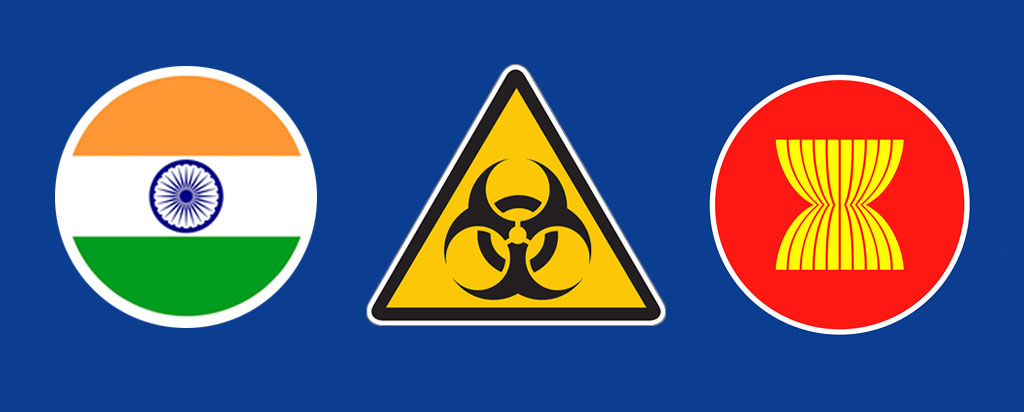
Biological threats are inherently transnational in their scope and impact. National biodefence capabilities, therefore, seldom prove efficient, making the case for collaborative biodefence capabilities. Given the transnational nature of biological threats, compounded by rapid advancements in disruptive technologies, expanding regional cooperation becomes an important step towards a coordinated biodefence strategy. India and the ASEAN nations can become strong partners in this regard, adding another significant dimension to their Comprehensive Strategic Partnership.[3]
India has strong strategic imperatives to strengthen national biodefence capabilities and transnational cooperation. The national focus on strengthening biodefence capabilities is not only significant for national security but also offers immense opportunities for strategic regional engagement and transnational networks for biosurveillance, early-warning systems, diagnostic capacities and biosecurity frameworks.
ASEAN countries also face increasing needs to improve regional and extra-regional cooperation on biodefence capabilities. The 2024 ASEAN Leaders’ Declaration on Strengthening Regional Biosafety and Biosecurity addressed growing public health vulnerabilities from emerging infectious diseases and their links to underlying factors such as climate change, urbanisation and research into high-risk pathogens.[4] Needs assessment studies in the ASEAN region also identified endemic diseases, transnational criminal networks, and terrorist activities as contributors to the overall perception of biological risk.[5]
Additionally, emerging technological challenges, advances in biotechnology, and AI integration in biological research have made gene editing and the creation of novel pathogens and toxins a reality, further increasing the need for transnational approaches that complement national frameworks and are rooted in mitigation strategies for emerging risks.
These strategic imperatives would also support the convergence of ASEAN’s Outlook on the Indo-Pacific (AOIP) and India’s Indo-Pacific Oceans Initiative (IPOI) by extending cooperation in marine biosecurity. This adds to the recognition that India–ASEAN cooperation has a strong maritime component. Hence, attention could also be paid to transboundary biological risks in maritime space. Commercial shipping through transit waterways is an important aspect of overall economic relations between India and ASEAN member states.
In this context, the constant flow of maritime trade makes the risks of transferring invasive species through hull biofouling significant. Hull biofouling refers to the accumulation of microorganisms or plants on ship hulls, particularly those that are halted for long periods.[6] The threat of invasive species transfer through hull biofouling is becoming an important concern in contested maritime spaces. A study on disrupted shipping across the Strait of Hormuz examined how hull biofouling could trigger a bio-invasion event by spreading non-native species.[7]
While this event may seem far-reaching for the Indian Ocean Region, it points to the need to develop detection and response mechanisms for transnational biological risks in the maritime domain. Efforts to establish an international legal instrument on biofouling have been underway.[8] This underscores the need for India and ASEAN member states to establish multilateral coordination to prevent biofouling and the unverified movement of species across the maritime domain through ships.
Beyond these shared imperatives, ASEAN countries are significant potential partners for India, given existing ASEAN initiatives that address various dimensions of biodefence. These include the ASEAN Post-2015 Health Development Agenda (APHDA)[9] which emphasises public health agendas, the Network of ASEAN Chemical, Biological and Radiological (CBR) Defence Experts, and the ASEAN Biosafety and Biosecurity Network (ABBN) as a Laboratory Network for improving regional detection and biosurveillance capacity.[10]
Health and biological security cooperation has primarily emerged as a subset of the wider socio-cultural cooperation in the India–ASEAN Comprehensive Strategic Partnership.[11] These parameters can, however, also become a significant dimension of the larger framework of defence cooperation by expanding the focus from public health-related matters to the overall prevention, preparedness and response capabilities against biological threats. Such frameworks could also include developing capacities to mitigate accidental biological risks by improving regional disaster preparedness. The aim of such cooperation would thus be to move from post-facto crisis management towards structural, intentional partnerships to build biodefence capacity.
Leveraging existing capacities through ASEAN’s regional cooperation frameworks can be a substantial approach for India, while also creating space to build new cooperation mechanisms.[12] This approach can also be tailored into a mutually beneficial one by addressing the structural and operational needs on both sides. While one of India’s primary objectives is to build a coordinated biodefence and biosecurity architecture, ASEAN member states have their own priorities aimed at strengthening their biodefence strategies.
In the WHO’s response preparedness assessments through its Joint External Evaluation (JEE) of ASEAN countries, Singapore emerged with strong preparedness indicators across prevention, detection and response.[13] The analysis also showed significant variations in ASEAN member states’ capacities to respond to existing and emerging biological risks. This suggests that while the ASEAN grouping has joint declarations and initiatives to address biosecurity concerns, national capacities among these states remain uneven. These variations also reflect differences in ASEAN members’ economic and institutional capacities.
Establishing robust national capacities for biosafety and biosecurity that adequately address contemporary challenges remains a priority for ASEAN member states and for India. In this regard, extending cooperation to develop transnational biosurveillance and response mechanisms is also essential to strengthen the overall capacity in the shared maritime domain.
Cooperation can also be extended towards building technological resilience and capabilities to enhance national biosafety and biosecurity standards. In this regard, joint R&D missions under India’s National One Health Mission and the BioE3 would also provide a significant avenue for advancing international cooperation for mutual benefit.
Much like joint defence exercises, joint tabletop exercises could also strengthen joint emergency preparedness and response capacities in the event of biological emergencies. These exercises can be embedded in existing joint naval patrol exercises such as the Singapore–India Bilateral Maritime Exercise (SIMBEX) and Samudra Shakti to support a safe and secure maritime space and enhance the military defence aspect of countering bio-threats.
The increasing complexity of biological threats highlights the need to prioritise integrated frameworks for regional and international cooperation, along with stronger national approaches. Effective approaches to address the transnational nature of biological threats must span public health, agriculture, animal health, military defence and maritime security.
In the context of India and the ASEAN member states, several shared imperatives underscore the potential and opportunities to enhance partnership in biodefence cooperation. A case can be made for enhancing cooperation beyond public health and health security to include shared biosurveillance networks, regional emergency preparedness protocols, and addressing transboundary biological concerns in the shared maritime domain. Existing institutional frameworks within the ASEAN grouping and India’s national frameworks can provide an essential foundation for such cooperation.
In the absence of international legal verification protocols against deliberate biothreats, shared development of transnational biosurveillance and preparedness systems is needed along with anticipatory governance approaches. Strengthening India–ASEAN cooperation in this regard could help address regional vulnerabilities and advance the model of South–South cooperation in biological risk management and governance. Therefore, recognising biodefence as a significant dimension of India–ASEAN cooperation would add to the comprehensive strategic partnership between the two partners.
Views expressed are of the author and do not necessarily reflect the views of the Manohar Parrikar IDSA or of the Government of India.
[1] “International Conference on 50 Years of BWC: Strengthening Biosecurity for the Global South (December 01–02, 2025)”, Ministry of External Affairs, Government of India, 2025.
[2] Carrie M. Long and Andrea Marzi, “Biodefence Research Two Decades On: Worth the Investment?”, The Lancet Infectious Diseases, Vol. 21, No. 8, 2021.
[3] “ASEAN-India Comprehensive Strategic Partnership”, ASEAN Secretariat, June 2023.
[4] “ASEAN Leaders’ Declaration on Strengthening Regional Biosafety and Biosecurity”, ASEAN Declaration, 2024.
[5] “Biological Priorities in Southeast Asia”, United Nations Interregional Crime and Justice Research Institute (UNICRI), 2020.
[6] Gregory M. Ruiz et al., “Global Marine Biosecurity and Ship Lay-ups: Intensifying Effects of Trade Disruptions”, Biological Invasions, 14 July 2022.
[7] Mario N. Tamburri et al., “Closure of the Strait of Hormuz May Trigger a Bioinvasion Super-spreader Event”, Biological Invasions, Vol. 28, 2026.
[8] “IMO Takes a Step Closer to a Standalone Legal Instrument on Biofouling Management”, BIMCO, 16 February 2026.
[9] “ASEAN Post-2015 Health Development Agenda (APHDA) (2021-2025)”, ASEAN Secretariat.
[10] “Establishment of the ASEAN Laboratory Network to Strengthen Regional Detection and Surveillance Capacity”, Health Development Policy Agency (BKPK), Ministry of Health, Indonesia, 12 December 2025.
[11] “ASEAN-India Comprehensive Strategic Partnership”, ASEAN Secretariat, June 2023.
[12] Julius Cesar Trajano, Jeselyn and Mely Caballero-Anthony, “From Declaration to Action: ASEAN’s Biosecurity Cooperation Enters a New Phase” S. Rajaratnam School of International Studies (RSIS)”, 25 September 2026.
[13] “Biological Priorities in Southeast Asia”, United Nations Interregional Crime and Justice Research Institute (UNICRI), 2020.