The US needs to take direct charge of the peace talks prong of strategy to meet the mid-2011 deadline of beginning its troops withdrawal as well as to enable NATO departure by 2014.
As long as the sub-conventional deterrence holds, the enunciation of the Cold Start doctrine actually introduces a degree of strategic stability in the region.
In the latest game of one-upmanship, North Korea has up the ante by announcing to the world that there is no stopping its nuclear development programme.
International security analysts must begin a discussion on how reductions in the U.S. defence budget will influence the nature of bilateral security relationships across Asia
The continuing spiral of violence in Karachi signals the slow but gradual melting of a nuclear-armed State controlled by a military allied with global terrorist networks.
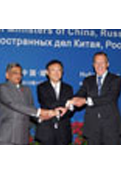
The importance of the RIC trilateral initiative lies in the fact that India, Russia and China, as countries with growing international influence, can make substantive contributions to global peace, security and stability.
As an island country deep down in the Pacific, New Zealand’s security is under no great direct threat from any external source, though turbulence in the neighbourhood would be a matter of concern.