




East Asia

About Centre

The East Asia Centre is dedicated to studying the domestic and foreign policies of the region as well as India’s multifaceted relationships with the major countries of this region. With respect to China, the Centre’s research foci are its foreign policy, domestic politics, economy, military affairs, and India’s relations with China in all its dimensions. It monitors developments in China’s autonomous and special administrative regions. The Centre also focuses on Taiwan with reference to cross-Strait relations, ties with the US, India-Taiwan relations and domestic politics. The Centre researches Japanese and Korean affairs. Its major research focus is on their domestic politics, foreign policy and comprehensive bilateral relationships with India. It follows the developments in the Korean peninsula and inter-Korean relations. The geopolitics of the Indo-Pacific is studied at the Centre too.
 

The Centre brings out five monthly newsletters: East Asia Military Monitor, Japan Digest, China Science and Technology, Korea Newsletter, and China Military Digest.

Members:

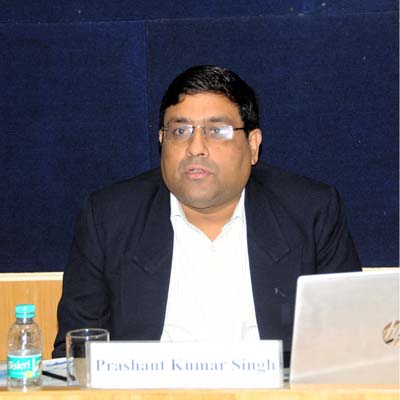
Prashant Kumar Singh Research Fellow
img
M.S. Prathibha Associate Fellow
Abhishek Kumar Darbey Associate Fellow
Ranjit Kumar Dhawan Associate Fellow
Mayuri Banerjee Associate Fellow
Arnab Dasgupta Associate Fellow

No posts of Books and Monograph.

No posts of Jounral.

Australia-China Strategic Partnership

Timely as it was, the Australian Prime Minister Julia Gillard’s five-day China visit may be considered a success on all fronts. Leading the ‘strongest Australian delegation ever’ to China, Gillard pledged to give the relationship a ‘concrete shape’, which in Chinese Premier Li Kequing’s words, is already ‘comprehensive, constructive and cooperative’. This issue brief analyses Julia Gillard’s China visit in the context of rising Australia-China bonhomie.

Examining the Prospects of South Korea “Going Nuclear”

In the aftermath of recent North Korean actions and threats, there has been in recent times some open debates and discussions about the prospects of South Korea “going nuclear” i.e. developing its own nuclear weapons. This brief argues that short of abrogating all its bilateral and multilateral treaties and obligations with heavy costs, the prospects of it doing so in the short/medium term are not that easy and may not be cost effective.

The Korean Imbroglio

North Korea’s uranium enrichment programme has made the US jittery and is not totally confident of reopening the six-party talks. Washington needs assurances regarding North Korea’s future nuclear programmes and the key to finding a solution to the present stalemate lies with Beijing.
