The South East Asia and Oceania Centre focuses on policy-relevant research with respect to the ten ASEAN states, East Timor and Oceania, including Australia and New Zealand. The Centre studies India’s bilateral and multilateral relations with states of the region with a view to providing contemporary relevance to India’s Look East policy. It has a futuristic-looking approach and examines the emerging trends in the regional security architecture. The Centre studies the potential for India’s enhanced defence cooperation (including maritime issues) and cooperation in non-traditional security issues with the region. It examines internal developments of countries in this region, especially political transitions and the role of the military, and their implications for India. The Centre seeks to promote Track-II institutional linkages with the region. Southeast Asia & Oceania Centre brings out a monthly newsletter – Insight Southeast Asia.
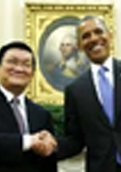
Vietnam’s president Sang’s visit to the US is historic in many ways and promises to bring in a new era of partnership through active trade relations and strategic alliance as a counterweight to China.
With increased cross-border mobility, instantaneous access to information and easy reach to small arms, terror attacks in India are finding new targets.
After years of political and economic isolation, Myanmar is opening up to investment particularly in the energy sector. There are however, accompanying uncertainties and risks.
The impact of discord and disharmony within the country has started manifesting itself in the economic sphere. Despite the US and EU relaxing their sanctions, development problems have started showing up.
Timely as it was, the Australian Prime Minister Julia Gillard’s five-day China visit may be considered a success on all fronts. Leading the ‘strongest Australian delegation ever’ to China, Gillard pledged to give the relationship a ‘concrete shape’, which in Chinese Premier Li Kequing’s words, is already ‘comprehensive, constructive and cooperative’. This issue brief analyses Julia Gillard’s China visit in the context of rising Australia-China bonhomie.
Unless the leaders of varying political hue and institutional oligarchs, including the military and, above all, Su Kyi, show political wisdom, incidents such as those in Meikhtila, Yamethin, and state military action against the Karens and Kachins will continue to recur.
While India has supplied arms and equipment quite selectively to Myanmar, the outcome, which was expected to serve India’s interests, has not been commensurate.
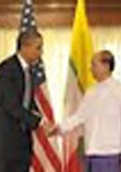
Obama’s visit strengthens the hands of President U Thein Sein and has raised expectation that it would encourage the Myanmar government to address the democratisation and ethnic challenges.
To avoid further deterioration in the bilateral relationship, both Japan and China need to now abandon their hard-line stance and stop escalating nationalistic sentiments among their people.
INS Sudarshini is undertaking the goodwill mission to commemorate 20 years of friendship between India and the Association of South East Asian Nations which falls in December 2012.