India–US Strategic Cohesion: Not at Pakistan’s Expense
- October 29, 2026 |
- IDSA Comments
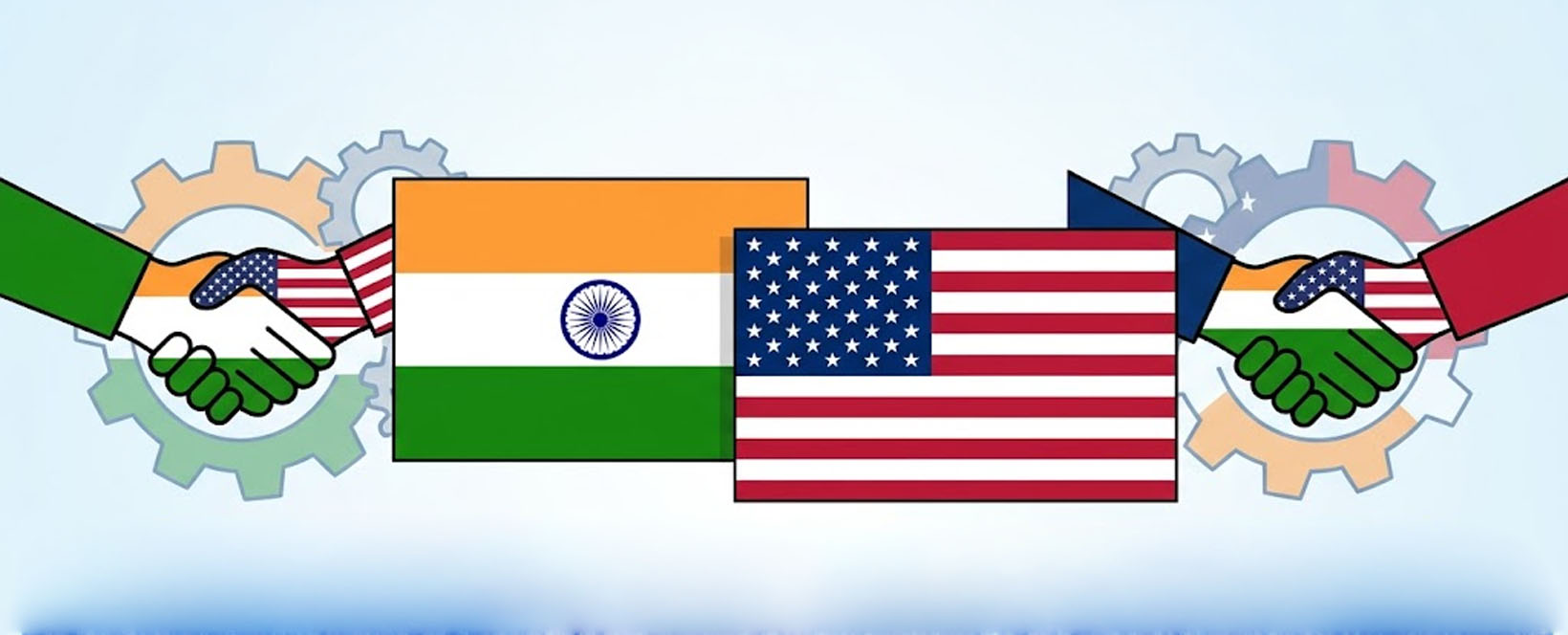
During his recent visit to India, US Secretary of State Marco Rubio insisted that Washington’s relations with Pakistan do not come at the expense of its ties with India. This was in response to a question about whether the Trump administration has overturned 25 years of consistent bipartisan outreach to New Delhi by drawing closer to Pakistan, particularly its powerful army chief, Asim Munir. In response, Rubio asserted:
Pakistan is a country we have a relationship with, and we need to have a relationship with. And, in some ways, it could be a positive thing if we could help discourage actions that could potentially lead to conflict, if we could use our influence in ways that are positive.[i]
Rubio rejected the interviewer’s proposition that the present context is a reminder of the Nixon era’s partisanship towards Pakistan, arguing that those were mostly Cold War-driven.[ii]
Interestingly, Rubio made almost identical remarks during his May 2026 visit to New Delhi. Without naming Pakistan, the Secretary of State noted that “ties with other countries did not come at the expense of India”.[iii] Rubio’s remarks also echo earlier, more recent, US statements following the resumption of military aid to Pakistan in the form of an F-16 sustainment package worth US$ 450 million. This disbursal followed a hiatus after the first Trump administration suspended military aid to Pakistan in 2018.[iv]
In September 2022, State Department Spokesperson Ned Price noted:
We don’t view our relationship with Pakistan, and on the other hand, we don’t view our relationship with India as in relation to one another. These are both partners of ours with different points of emphasis in each and both relationships stand on (its) own.[v]
This was soon after External Affairs Minister S. Jaishankar, reacting to the restoration of military aid, asked:
Very honestly, it’s a relationship that has neither ended up serving Pakistan well nor serving the American interests. So, it is really for the United States today to reflect on what the merits of this relationship are and what they get by it.[vi]
Until a few years ago, India’s growing bonhomie with the United States seemed to eclipse what had once been a key variable of its bilateral paradigm: Pakistan. As India rode high on the success of its G-20 stint, Pakistan, weighed down by economic and security challenges, looked, by contrast, more like an anxious onlooker. President Joe Biden visited India during the 2023 G-20 summit. Pakistan was yet again left off the President’s itinerary, contrary to past practice of combining visits to India and Pakistan.
Post-disengagement from Afghanistan, under the Biden administration, US–Pakistan ties lay low, albeit with basic counterterrorism cooperation and with Pakistan supplying weapons to Ukraine instead of a pending IMF (International Monetary Fund) tranche.[vii] It remained so until President Donald Trump, who had earlier cut off military aid, saying Pakistan has only given the US “lies and deceit”, decided to backstep and re-engage Islamabad.[viii]
Embrace Post Operation Sindoor
The India–Pakistan hostilities in May 2025 saw the triangular geopolitics around the US role in the subcontinent unravel. Trump’s repeated assertion that he acted as an arbiter to end the conflict has tarnished the India–US bilateral relationship. The inexplicable embrace of Pakistan post Operation Sindoor, including courting its army chief, known to foment extreme anti-India views, and friendly attempts to forge an oil deal, etc., ushered in a serious rethink in New Delhi.
Before the mediation furore subsided, Trump’s 25 per cent tariff penalty further deepened India’s adverse sentiment. The Trump Administration’s later imposition of 25 per cent tariffs on India marked a new turning point in bilateral ties. More than the tariffs themselves, President Trump’s overall tone and tenor appear to threaten and erode the relationship’s hard-earned gravity.
In contrast to his reprimanding demeanour, Trump has been exceptionally generous in praising Pakistan and its military leadership, calling Munir his “favourite Field Marshal” and a “great fighter”.[ix] He has done so while citing varying figures for the number of planes Pakistan shot down during the conflict. Trump’s repeated reference to Munir as Field Marshal seems to endorse the General’s controversial self-elevation.
Beyond the India factor, US–Pakistan bonhomie carried implications for the West Asian crisis. Pakistan has served as the US’s messenger in tough negotiations with Iran. It has also signed pacts with US allies in the Gulf, including the Strategic Mutual Defence Agreement (SMDA) with Saudi Arabia, which was extended to Turkey under the Mecca Pact.[x] Asim Munir remained central to these developments. It remains to be seen whether Pakistan extracted Washington’s strategic embrace, disconcerting India in a sensitive context, as a price for its services in West Asia.
Beyond Afghanistan
The US–Pakistan affinity ran its preliminary course during the Cold War, was cemented during the Soviet occupation of Afghanistan, and was reinvigorated after 9/11. This period also coincided with the India–Pakistan de-hyphenation around the early 21st century. However, the War on Terror gave Pakistan a frontline role. As the War on Terror peaked, making the US wary of exiting Afghanistan, successive administrations spent crucial time explaining and justifying why the US could not afford to dispense with Pakistan.
It is true that the US–Pakistan strategic relationship largely evolved during their two missions in Afghanistan. However, the present context reflects the comprehensive nature of their partnership. Therefore, whether or not Afghanistan remains a factor, the two sides remain intertwined, and the US continues to maintain its conventional ‘tilt’ towards Pakistan, its indispensable ally. Their strategic cooperation and understanding persist across varied geographical situations and conflicts, from Ukraine to West Asia.
Why Is It So?
Rather than offering what New Delhi brings to the table, Pakistan presents itself to the US as a willing partner in addressing its direct, urgent geopolitical needs. For Washington, Pakistan’s geographic/diplomatic capital has outweighed concerns over its strategic proximity to China, a strategic rival. By contrast, the India–US strategic partnership has been ambitious but vaguely defined, with shared but distant Indo-Pacific goals and mutual opposition to Chinese hegemony. Moreover, India’s purchase of Russian oil from another strategic rival hasn’t gone unnoticed. The Trump administration has made targeted attempts to deter New Delhi, including wider threats of punitive actions.
Meanwhile, the Pakistan factor in India–US ties wavered from being a key determinant to a less prominent one in their broader strategic interactions. It was never fully addressed, particularly as India-US charted broader, seemingly more realistic Indo-Pacific initiatives under the latter’s Asia Pivot or rebalancing. Therefore, Pakistan’s importance in India-US strategic interfaces may have declined; it has not disappeared.
The current India–US–Pakistan matrix reflects the return of a persistent irritant in India’s strategy: Washington’s mollycoddling of Pakistan, despite Pakistan’s track record of perpetrating terrorism. Pakistan is a problem for New Delhi, but US patronage is an even bigger one. The urgency or gravity of the US’s geopolitical needs amid evolving conflicts does not change that.
Will it Remain So?
Marco Rubio’s recent statement is therefore less than convincing. Pakistan remains an irritant for India. In his statement, Rubio also said that US ties with India are weatherproof against US relations with “Pakistan or, for that matter, any other country”.[xi] In recent years, however, old ghosts have returned to haunt India–US strategic bonhomie—not only Pakistan but also Russia—reviving the historical dyad of US–Soviet rivalry on one hand and US–Pakistan proximity on the other. This follows both sides’ efforts to rebuild ties long held hostage by Cold War rivalry since 1947, through the landmark 123 Agreement and a calibrated improvement that placed them in a mutually beneficial, administratively neutral space.
Years after the breakthroughs, recent US approaches have largely revived the third-party spectrum/lens in bilateral ties with India. Both sides continue to grapple with the fallout from a series of strategic setbacks stemming from the Trump Administration’s hasty moves and abrupt announcements before and after Operation Sindoor. If this uncertainty persists, it will constrain bilateral ties. What was until recently a discussion about preventing the relationship from plateauing could become a quest to revisit its fundamentals: how to maximise convergences despite growing divergences, particularly regarding Pakistan.
Views expressed are of the author and do not necessarily reflect the views of the Manohar Parrikar IDSA or of the Government of India.
[i] Shubhajit Roy, “India, US Weeks Away From Finalising Trade Deal, 99 % of the Work is Done: Marco Rubio | Full interview”, The Indian Express, 21 October 2026.
[ii] Ibid.
[iii] Debdutta Chakraborty, “Rubio Hints At Tactical Ties with Pakistan, Says They Are Not At Expense of Strategic Ties with India”, The Print, 24 May 2026.
[iv] “US Military to Cancel $300M in Pakistan Aid Over Terror Groups”, BBC, 2 September 2018.
[v] “India, Pak Both Partners of US With Different Points of Emphasis: Biden Administration”, The Week, 27 September 2022.
[vi] “Jaishankar Takes a Dig at American Media for ‘Biased’ India Coverage”, The Hindu, 22 September 2022.
[vii] Ryan Grim, Murtaza Hussain, “U.S. Helped Pakistan Get IMF Bailout With Secret Arms Deal for Ukraine, Leaked Documents Reveal”, The Intercept, 17 September 2023.
[viii] “’Nothing but Lies and Deceit’: Trump Launches Twitter Attack on Pakistan”, The Guardian, 1 January 2018.
[ix] “‘My Favourite Field Marshal’: 5 Noteworthy Moments from Presser Following Signing of Gaza Declaration”, Dawn, 14 October 2025.
[x] “Turkish Parliamentary Committee Approves Mecca Alliance Pact”, Daily Sabah, 27 October 2026.
[xi] Shubhajit Roy, “India, US Weeks Away From Finalising Trade Deal, 99 % of the Work is Done: Marco Rubio | Full Interview”, no.1.

Priyanka Singh
Dr.Priyanka Singh is Associate Fellow at Manohar Parrikar Institute for...
read more +