


- This event has passed.
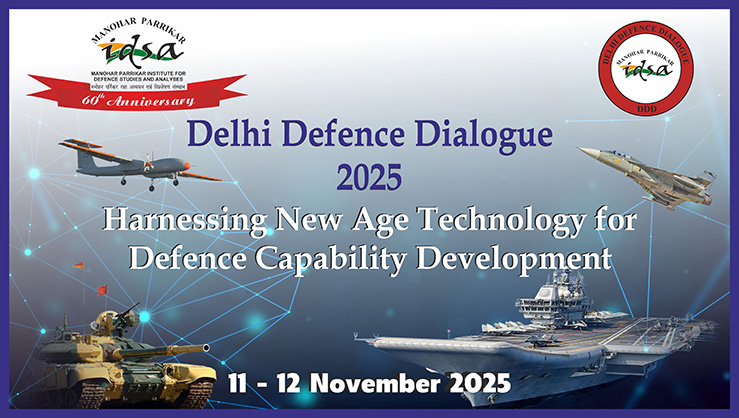
Delhi Defence Dialogue 2025

Live Streaming: Day One
Live Streaming: Day Two
The Delhi Defence Dialogue (DDD) is a premier platform instituted by the Manohar Parrikar Institute for Defence Studies and Analyses (MP-IDSA) to address the multifaceted challenges of defence and security. Organised annually, the DDD brings together a diverse range of stakeholders, including government officials, military leaders, defence experts, industry representatives and international delegates, to engage in constructive dialogue and exchange ideas. The inaugural edition of the DDD was held in 2024, and the second edition is scheduled for 11–12 November 2025, with the focus on “Harnessing New Age Technology for Defence Capability Development”. This edition will explore how emerging technologies, such as Artificial Intelligence, Quantum Computing and Unmanned Aerial Vehicles (UAVs or drones), can be leveraged to enhance defence capabilities and address evolving security challenges. The DDD serves as a platform for knowledge-sharing, collaboration, and the development of strategies to strengthen defence preparedness, contributing to the formulation of evidence-based policies and the shaping of defence and security landscape.
Previous Conference: 2024
Concept Note
Harnessing New Age Technology for Defence Capability Development
Technology has long been accepted as a driver for creating paradigm shifts in warfare. It is considered a key component of the “revolution in military affairs” (RMA) and Net-Centric Warfare (NCW). Over time, it has remained one of the most important and abiding agents of “military change”. Emphasising the relevance of new-age technology in modern warfare would be stating the obvious. The nexus between technology and military change reinforced by fast-evolving trends of the last decade that emphasise the growing impact of technology in the foreseeable future. To that extent, it is not the relevance of technology that remains a question – it is more the transformational effect that could well be different from what planners and practitioners have been used to until now.
This rapid rate of change has left strategic thinkers struggling to deconstruct “what” is the nature and scope of impact that new-age technology like AI and robotics might have on the conduct of warfare. Does this pace of change even allow for long-term planning wherein, the line between fact and fiction is being compressed by technology? Therefore, the natural corollary to understanding the impact of new-age technology is “how” planners adapt to its impact on defence planning and preparation and that too in an environment that remains constrained by time.
Within the scope of discussions during this seminar, it is proposed to focus on six key areas to help stakeholders better understand the implications and impact of the change underway. This includes technological breakthroughs, their effects on the military domain, and the development of defence capability challenges likely to emerge due to these technologies.
Evolution and Impact of New Age Technology
From a stage when information and more so intelligence about the adversary was scarce and could become the basis for suffering defeat in a battle to more recent times when “information overload” could potentially lead to “decision paralysis”, technology is yet again likely to become one of the crucial determinants for not only facilitating decision-making but also allowing autonomous decisions in the military domain. This change, despite the inherent and understandable misgivings regarding ownership and responsibility involved, is already underway. The question at this stage is no longer whether the change will occur; instead, it is more a question of when and to what extent it will influence the changing character of modern warfare.
The concept of “new-age” technology is fast evolving, given the pace and rate of development in fields like artificial intelligence (AI), robotics, and quantum computing. Policy planners and corporate leaders struggle to keep pace with this transformational change. The potential impact of these changes continues to influence all aspects of policy, business and from the perspective of this seminar, the art and science of warfighting.
Military planners face a tough choice. While, they are expected to prepare for future events, unlike any single instance in history, the human race stares at the possibility of fighting a war they may not entirely control and perhaps even fight!
The military leadership struggles to come to terms with the impact of new-age technology, two key aspects dominate the mind space concerning the “what” and “how” of the ongoing changes.
Most seminar participants who possibly preceded Gen Z, grew up admiring the information age and the wonder that Moore’s Law represented. In 1965, Gordon Moore forecasted a doubling of transistors on an integrated chip every year and later in 1975, every two years without significant additional cost of ownership. Besides powering increasingly powerful desktops, this gave rise to powerful supercomputers. Despite doubts about the continuing growth rate, recent years have witnessed this predicted pace being outstripped by GPU chips. Nvidia’s Jensen Huang illustrated this with a 1000x improvement in its AI chips over a decade. In addition, technologies like quantum computing and DNA computing have opened fresh avenues of research that are likely to have a profound impact on the military domain.
This improvement in computing power has been accompanied by the creation of algorithms that use data to replicate human decisions and actions, but also learn with successive iterations and ultimately make independent choices. The possibilities are seemingly endless and perhaps even daunting given their likely impact.
What is the likely trajectory of new-age technology with a special focus on AI and robotics? What is its possible impact on warfighting?
Adapting to Excel – Structures, Mechanisms and Challenges for Transformative Change
Transformative shifts demand a far greater degree of understanding, appreciation, adaptation and implementation of change in the military domain. Decision-making processes, mechanisms and structures honed over decades through the industrial and thereafter information age may struggle to keep pace with the rapid change. For once, defence institutions may find traditional hierarchical processes rendered redundant by the quick succession of events and the heavy cost of decision dilemmas. It is yet to be seen how this impacts decision-making. Will it lead to greater decentralisation or over-centralisation? What will be the man-machine interface? How will it influence the tenets of military leadership? Will military leaders remain leaders or become the managers of military assets? At the outset, these questions might seem far-fetched. Yet, the ongoing changes are unlike any that the infusion of technology has witnessed in military affairs. Besides, operators controlling a swarm of drones is already a reality that might be the beginning of the far more transformational shift. Accordingly, what changes in defence structures and mechanisms are needed? Are there major challenges envisaged in implementing these?
Levelling the Playing Field – Pre-requisites and Challenges of Leapfrogging
Two significant trends have dominated the march of technology and its impact on defence capability development. First, major powers with the financial muscle, talent pool and lead in advanced technologies dominate its integration into military systems. Second, and more interestingly, the relative democratisation of technology, led by open-source architecture, has allowed innovative individuals, start-ups and astute leaders to bridge this gap significantly. The emergence of open-source Large Language Models (LLMs) and India’s Mars Orbital Mission (MOM) are examples that reinforce the success of innovative low-cost solutions to complex problems.
Arguably, the case of achieving parity in a particular technology may not suggest a wider trend. Yet, it indicates an ability or at least the possibility of countries and new-age tech companies to leapfrog established players in a shorter period and lower costs than what was associated with the military-industrial complex in the past. The probability of leapfrogging in a fast-evolving technological domain where innovation and adaptation are perhaps as important as access to funding and technology becomes an important factor. Especially because of the opportunity it creates for technology leaders and others to catch up in niche areas and create an impact that far outweighs the investment – both monetary and intellectual.
How is leapfrogging likely to bridge the haves and have-nots divide, especially to create niche defence forces capabilities? Does the emergence of AI provide such an opportunity to states that may not have the same resources as more advanced and affluent countries? Does the experience of leapfrogging at the cost of indigenous technology development have lessons for implementing it in the future? How will leapfrogging be envisaged when future advancements are driven by software-defined emerging technologies/ algorithmic warfare?
Enhancing Collaboration, Co-development and Co-Production in a De-Globalising World
The potential of AI is harnessed not only through the power of its chips but also the data that facilitates learning and therefore the generation of decision models. Unlike commercial data, military-grade data will remain controlled by states. The possibility of collaboration between partners and allies can potentially expand and enhance the qualitative edge enjoyed by the side generating more realistic and reliable support systems. It can further facilitate interoperability that is hinged around technology. This highlights the potential of multinational defence networks that could gain an upper hand against potential adversaries through access to shared data resources and the combined power to exploit its inherent potential.
This potential can best be achieved through a collaborative approach that envisages co-development and co-production as its constituents. What is the scope of defence collaboration specifically for harnessing the vast potential of new-age technologies through co-development and co-production initiatives? What legal, security and operational controls would be required to enable such sharing?
Best Practices and Challenges of Defence Policy Planning, Structures and Implementation
States have recognised the challenges and opportunities associated with the influence and impact of new-age technology on defence capability planning. Predictably, it involves the desire to harness the vast potential of technology advancements. Simultaneously, there is an equally vibrant debate surrounding the abuse of its potential. This dialogue comes at a time when states and strategic analysts have a better appreciation of this debate and therefore the opportunity to assess existing policy guidelines and international frameworks. The United Kingdom MoD released its Defence Artificial Intelligence Strategy in June 2022. The Pentagon released its Data, Analytics and Artificial Intelligence Adoption Strategy in 2023 giving an impetus to research, development and early adoption of AI. The initiatives extend to machine learning and the employment of robotics to augment human involvement in combat. Israel released its policy on Artificial Intelligence Regulations and Ethics in 2023. South Korea released its National Strategy for Artificial Intelligence in 2019.
What has been India’s approach to adopting new-age technologies? A series of initiatives have been launched by the government to harness the potential of emerging technologies. The NITI Aayog released the National Strategy for Artificial Intelligence in 2018. The National Quantum Mission focusses on developing and deploying quantum computing technologies. The National Supercomputing Mission will build a network of supercomputers across India to make high-performance computing more accessible. The National Strategy for Artificial Intelligence aims to leverage AI for economic growth, social development and inclusive growth (AI for All). The Semiconductor Mission aims to develop a complete semiconductor ecosystem – design, fabrication, packaging and testing.
The Defence Research and Development Organisation (DRDO) will remain at the forefront of developing AI-based solutions for defence and security applications, including autonomous systems and robotics.
Unlike the past, most advancements in new-age technologies like AI and robotics are dual-use. This will make framing policy, creating structures, and ensuring effective implementation much more challenging, especially in light of inadequate transparency regarding the options and intentions of potential adversaries. What therefore should be the best practices for policy guidance, creating structures and implementing reforms to enhance defence capability development? What would be the role of dual-use technology licensing protocols like Wassenaar and export control agreements like International Traffic in Arms Regulation? This includes the need for government entities to have roadmaps, funding and timelines for problem statements to come up with innovative technologies.
Civil-Military Fusion – Scope, Challenges and Possibilities
The era of defence research preceding its adaptation for non-military use is fast being replaced by commercial innovations that are likely to witness implementation in the military domain. Despite this trend, the defence eco-system will need to guard its proprietary data zealously and yet collaborate with the advancements in commercial technology. The use of geographical information systems (GIS), medical treatment, weather forecasting, inventory management, collection, collation and control of multiple sensor platforms like drones are certain areas that could witness cross-pollination of talent and research efforts.
Initiatives like the Technology Development Fund (TDF) and Start-Up challenges can encourage talent in new-age technologies to complement the government’s R&D vision. This must, however, be accompanied by close monitoring of such initiatives to ensure accountability.
The possibilities generated by new-age tech are likely to find an unparalleled collaboration between businesses and state enterprises. Some cases of collaboration have already been witnessed during the Ukraine War, highlighting its immense potential. On the face of it, this can be contested since most private companies and platforms are essentially commercial ventures. While this may be true, the line between the commercial and military application of technologies like AI is likely to remain ever so diffused. Technologies that are considered application-agnostic can be modelled for military applications. Similarly, dual-use technologies will inherently remain potential tools for security agencies. This reinforces the inherent relevance of a more effective and efficient civil-military fusion model that is bound to vary from one country to another.
A related field of rapid advancement is represented by robotics. There are varying estimates of the efficacy and impact of robotics in businesses and the military. This includes a statement from Jensen Huang: “Everything that moves will be robotised” within ten years. This possible reality is already being supplemented through autonomous weapon systems (AWS) in the air, on land and at sea. It is difficult to judge if this will include robotising the battlefield. However, even as the timeline may be flexible, the writing seems to be on the wall!
What is the scope for fostering better civil-military fusion in an era where commercial technologies are likely to take the lead in the developmental cycle? How can government policy formulation, R&D establishments, the private sector across its entire spectrum and academia better collaborate to achieve higher efficiency and output?
These initiatives will specifically need to focus on legacy policies and procedures, which, while suitable for a platform-centric evaluation, testing, certification and induction, may not adequately handle the pricing, comparative evaluation and procurement of new-age technological solutions.
The Delhi Defence Dialogue not only intends to facilitate conversations and the exchange of ideas on these issues but also generate insights and policy inputs that will help policy leaders and stakeholders better grasp the new wave of military change brought about by emerging technologies.
Programme
Day One: Tuesday, 11 November 2025
|
|
|
0930-1000 |
Registration |
|
1000-1100 |
Special Address by Gen Anil Chauhan, PVSM, UYSM, AVSM, SM, VSM, Chief of Defence Staff – “Impact of Technology on Modern Warfare” |
|
1100-1140 |
Inaugural Address by Shri Rajnath Singh, Hon’ble Raksha Mantri and President, MP-IDSA |
|
1140-1200 |
High Tea |
|
1200-1300 |
SESSION-I: Impact of New-Age Technology on Modern Warfare |
|
1300-1400 |
Lunch |
|
1400-1430 |
Special Address by Dr Rituraj Kumar, Director, CAIR, DRDO- "Harnessing New Technology for Defence Capability Development" |
|
1430-1600 |
SESSION-II: Adapting to Excel – Structures, Mechanisms and Challenges |
|
1600-1620 |
Tea/Coffee Break |
|
1620-1650 |
Special Address by |
|
1650-1820 |
SESSION-III: Levelling the Playing Field – Leapfrogging Challenges |
|
1820 |
End of Day One |
Day Two: Wednesday, 12 November 2025
|
|
|
0930-1000 |
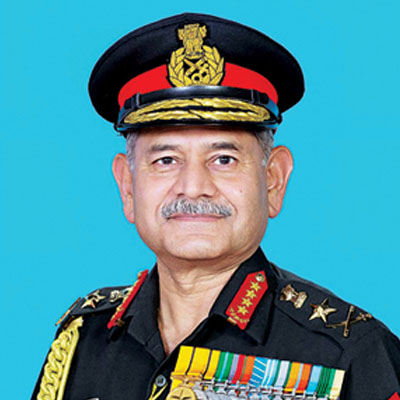
Special Address by Gen Upendra Dwivedi PVSM, AVSM, Chief of the Army Staff– "Modernisation of the Indian Army, Role of New-Age Technology" |
|
1000-1030 |
Special Address by Dr Samir V Kamat, Secretary of the Department of Defence R&D and Chairman, DRDO– "Enhancing Collaboration, Co-Development and Co-Production" |
|
1030-1045 |
Interactive Q&A |
|
1045-1100 |
Tea/Coffee Break |
|
1100-1230 |
SESSION-IV: Collaboration, Co-Development and Co-Production |
|
1230-1330 |
Lunch |
|
1330-1400 |
Special Address by Shri Sanjeev Kumar, Secretary, Department of Defence Production, Government of India- "Atmanirbharta in New Age Technology" |
|
1400-1530 |
SESSION-V: Defence Policy Planning – Best Practices & Challenges |
|
1530-1545 |
Tea/Coffee Break |
|
1545-1615 |
Special Address by Air Marshal Narmdeshwar Tiwari, SYSM, PVSM, AVSM, VM, Vice Chief of the Air Staff- “Civil-Military Fusion to Harness Emerging Technologies to Overcome Challenges posed by an Increasingly Democratised Airspace" |
|
1615-1745 |
SESSION-VI: Civil-Military Fusion – Scope and Possibilities |
|
1745-1830 |
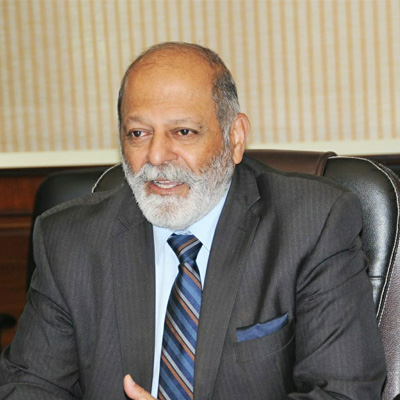
Valedictory Address by Shri Baba Kalyani, Chairman & Managing Director, Bharat Forge |
|
1830-1835 |
Vote of Thanks by Col Vivek Chadha (Retd), Senior Fellow, Military Affairs Centre, MP-IDSA |
Download [PDF]
Inaugural Session

Valedictory Address
Special Address


Moderators


Speakers











Speakers

Contact Us
Conference Coordinator
Email: conferencecoordinator[at]delhidefencedialogue[dot]net
Conference Cell
Email: cc.idsa[at]nic[dot]in


