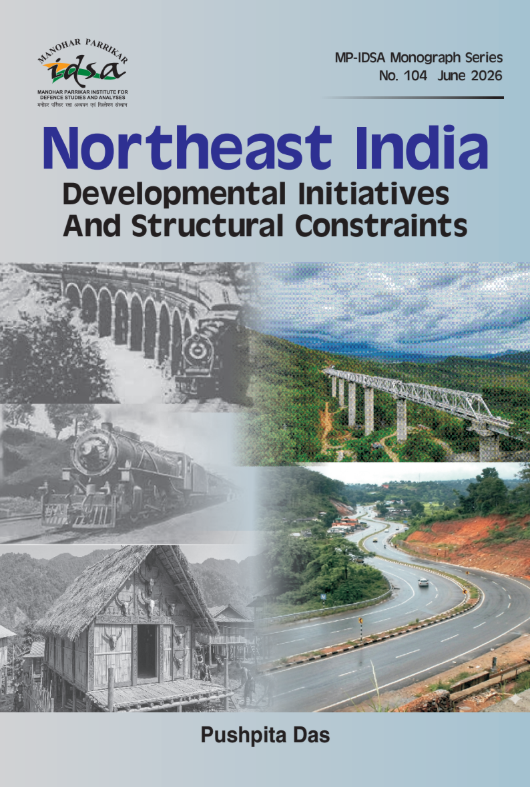
Northeast India: Developmental Initiatives and Structural Constraints
- 2026 |
- Monograph
About the Monograph
This monograph examines the development trajectory of Northeast India since Independence, arguing that the region’s economic stagnation stems from deep structural and historical constraints rather than inadequate policy support or public expenditure. It traces how colonial extraction, Partition-induced isolation, and postcolonial planning fostered dependence on Union government transfers through mechanisms such as Article 275(1), Special Category Status, and Finance Commission grants. Adopting a political economy perspective, it analyses how restrictive land systems, labour market limitations, scarce capital, weak entrepreneurship, and limited cross-border cooperation have hindered diversification and industrialisation. The findings challenge the view that the Northeast’s underdevelopment can be resolved solely through greater investment, connectivity, or financial support. It argues that sustainable development requires deeper structural and institutional reforms sensitive to the region’s unique social, political, economic, and ecological realities, as development is fundamentally shaped by contests over land, identity, power, and opportunity.