China–Pakistan Military Exercise Karakoram 2026
- November 12, 2026 |
- IDSA Comments

The nine-day China–Pakistan joint army exercise, Karakoram 2026, was held in Korla, Xinjiang, from 14 October to 22 October 2026.[1] The exercise brought together regular army formations, armoured vehicles, drones, robotic systems and joint command arrangements. Although officially designed for counterterrorism operations in high-altitude areas, several capabilities demonstrated have wider applications in conventional warfare.
The choice of Korla as the exercise venue is significant. The city hosts established military training facilities and has previously hosted International Army Games events involving foreign military contingents, armoured vehicles and engineering units.[2] Its location in Xinjiang also places the exercise within China’s broader regional security concerns, particularly those relating to terrorism and separatism. However, the contrasting security environments in China and Pakistan merit closer examination. According to Chinese official accounts, Xinjiang has not experienced a terrorist incident since late 2016. However, Beijing’s counterterrorism policies have drawn international criticism over severe restrictions and the mass detention of Uyghur Muslims.[3]
Pakistan, meanwhile, continues to confront persistent militant violence, including attacks targeting China–Pakistan Economic Corridor (CPEC) projects and Chinese nationals. Its security challenges have been compounded by recurring armed confrontations along the Afghanistan border, resulting in casualties among security personnel and civilians. The security situation deteriorated sharply in 2025, with the Pakistan Institute for Conflict and Security Studies (PICSS) recording approximately 3,400 combat-related fatalities nationwide, making it one of the country’s deadliest years in recent history.[4] China has tried to mitigate the conflict, but its efforts have not borne fruit.
These facts raise questions about the strategic objectives of Karakoram 2026, particularly its emphasis on conventional military capabilities under the cover of counterterrorism cooperation. For India, the significance lies in the growing operational familiarity between the People’s Liberation Army (PLA) and the Pakistan Army. The May 2025 India–Pakistan military confrontation sharpened concerns over China’s military support to Pakistan. Karakoram 2026 raises a further question: how effectively can Pakistan absorb Chinese battlefield technologies and operating practices?
China and Pakistan have conducted counterterrorism exercises under the Warrior series since 2013. The series resumed in 2024 following a five-year hiatus. Karakoram 2026, however, marked an expansion of cooperation from specialised units to regular army formations. Chinese military expert Zhang Jueshe described this development as a widening of bilateral military engagement.[5]
According to Chinese military reporting, the exercise involved mixed formations operating under unified command. Troops conducted reconnaissance, coordinated strikes and clearance operations. China supplied the equipment, including Type 191 rifles, Type 201 machine guns, Type 11 armoured assault vehicles, Type 08 infantry fighting vehicles (IFVs), artillery, and unmanned and counter-unmanned systems.[6] This equipment lineup allows Pakistani personnel to gain practical exposure to Chinese platforms, operating procedures and maintenance requirements. Such familiarity may also influence future procurement decisions.
The exercise reflects China’s wider efforts to absorb lessons from contemporary conflicts. A 2026 study by the Center for Strategic and International Studies (CSIS) found that Chinese military analysts identify emerging battlefield techniques within approximately four months (see Figure 1).[7] Translating these lessons into equipment, training and organisational changes generally takes a year or longer. This observation is particularly relevant in the context of Pakistan’s experience during the May 2025 conflict with India, which may have provided insights into emerging operational requirements. Against this backdrop, Karakoram 2026 could offer China and Pakistan an opportunity to exchange battlefield lessons and explore their application through joint training and operational coordination.
Figure 1. How Fast China Absorbs Drone Warfare
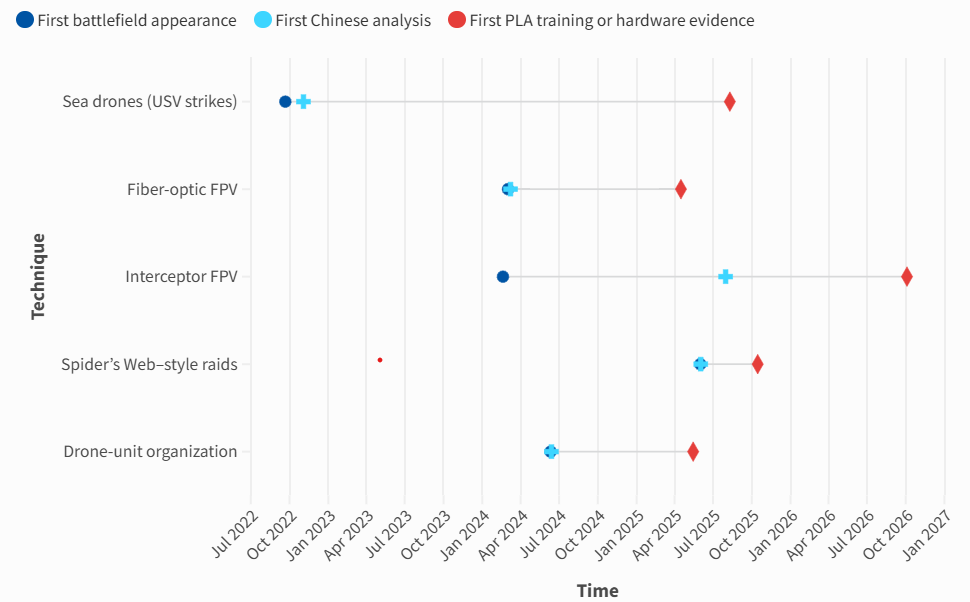
Source: Lilly Min-Chen Lee and Kateryna Bondar, “Learning Without Bleeding: China’s Lessons from the Russia-Ukraine Drone War”, CSIS, 7 October 2026.
Key Highlights
Robotic Reconnaissance
One notable feature in Karakoram 2026 was the deployment of quadrupedal robots, commonly called robot dogs, during building-clearance operations. Chinese military footage showed these systems entering structures ahead of soldiers to inspect potential threats and reduce personnel exposure (see Image 1).
Image 1. Robot Dog Inspecting Battleground
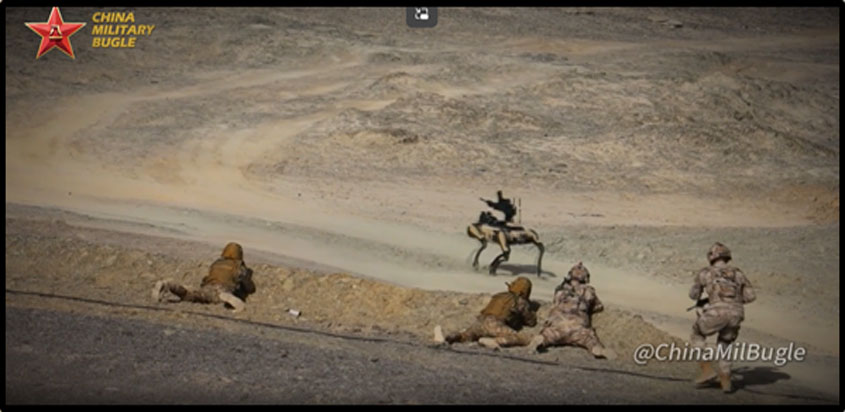
Source: “China-Pakistan ‘Karakoram-2026’ Joint Army Training Concludes”, Ministry of National Defense, People’s Republic of China, 23 October 2026.
Their deployment reflects the PLA’s growing interest in integrating ground-based robotic systems into infantry operations. In 2025, China hosted the inaugural World Humanoid Robot Games, which attracted participants from 16 countries, including Pakistan.[8] The second edition, held in September 2026, reportedly showcased significant advances in robotic mobility, including humanoid robots capable of completing a 100-metre sprint faster than Usain Bolt’s world-record time.
Significantly, following the event, the PLA’s official newspaper, PLA Daily, called for accelerating the transfer of cutting-edge robotic technologies from research laboratories to military training grounds to facilitate the development of robotic “combatants”.[9] According to BofA Global Research, Chinese manufacturers accounted for approximately 95 per cent of global humanoid robot shipments in 2025.[10] These developments indicate China’s expanding technological capabilities and growing interest in the military applications of robotics. Beyond reconnaissance, such systems could eventually support surveillance, logistics, casualty evacuation and other high-risk battlefield tasks.[11]
For Pakistan, the immediate advantage lies in gaining exposure to Chinese robotic systems and understanding their tactical employment in operational environments. At the same time, Pakistan’s experience in counterterrorism operations could provide valuable operational feedback to Chinese personnel, particularly on deploying unmanned ground systems in complex terrain and built-up areas. Notably, in October 2025, Pakistani media reports referred to the alleged deployment of Chinese-origin ‘Robo-Wolf’ systems in counterterrorism operations, purportedly aimed at reducing direct human involvement in high-risk engagements.[12] However, these claims remain unverified, with no official confirmation regarding the deployment, operational capabilities or extent of their use by the Pakistan Army.
Armoured Vehicles and Counter-Drone Protection
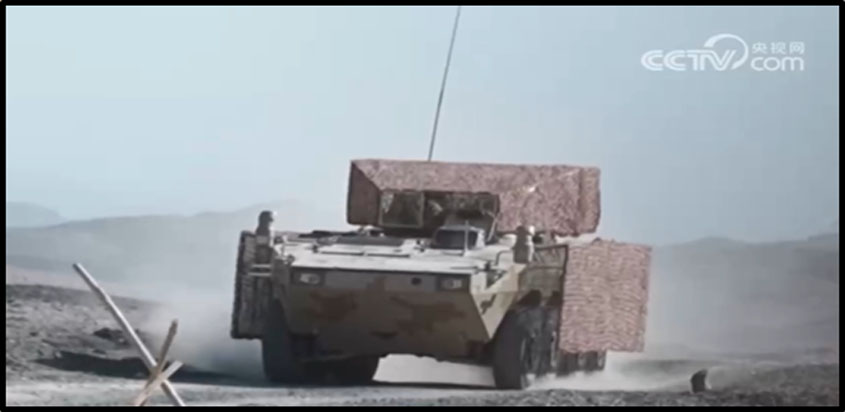
The Type 08 IFVs participating in Karakoram carried protective roof cages and side grilles (see Image 2). These modifications were intended to provide additional protection against drone attacks. Chinese military analyst Song Zhongping linked the modifications to lessons from the Russia–Ukraine war and conflicts in West Asia, where relatively inexpensive drones have exposed vulnerabilities in armoured vehicles.[13]
Nevertheless, cages offer limited protection against certain types of attacks and cannot substitute for layered counter-drone defences. For Pakistan, exposure to these modifications could influence future armoured vehicle protection measures, particularly as drones become increasingly prominent along contested borders.
Image 2. IFVs with Counter-Drone Protection
 joi
Source: “China–Pakistan ‘Karakoram-2026’ Joint Army Training: Enhancing Joint Counterterrorism Capabilities”, CCTV News, 21 October 2026.
Integrating Reconnaissance and Target Engagement
The third notable feature of Karakoram 2026 was the coordinated employment of drones, reconnaissance vehicles, snipers and armoured formations. According to Chinese military reporting, aerial and ground-based sensors identified simulated enemy positions, following which snipers and other strike assets engaged designated targets.[14] Armoured vehicles subsequently transported infantry personnel to conduct clearance operations. This sequence reflects the growing emphasis on integrating reconnaissance, targeting and strike capabilities to compress the kill chain. It also aligns with China’s broader approach to the intelligentisation of warfare, which emphasises integrating unmanned systems, advanced sensors, and networked command structures into battlefield operations. Through joint exercises such as Karakoram 2026, China is exposing Pakistan to these evolving operational concepts and practices.
The PLA has increasingly emphasised such integration in its military training. In September 2026, China also established specialised military education institutions focused on unmanned and intelligent systems, reflecting its efforts to institutionalise emerging technological capabilities and incorporate them into military doctrine, training and operational practices.[15] Repeated exposure to these practices is particularly relevant to the Pakistan military’s visible efforts to improve kill chain capabilities.
Drones Swarm Operations
Karakoram also featured groups of attack drones engaging simulated targets before infantry advances. Chinese reporting described these coordinated attacks as drone-swarm operations.[16] This development fits China’s broader investment in massed unmanned operations. In March 2026, China’s Ministry of National Defense publicised the Atlas drone-swarm operations system developed by China Electronics Technology Group. Its Swarm-2 launch vehicle can deploy 48 fixed-wing drones, while a command vehicle can reportedly control up to 96.[17] The system illustrates China’s efforts to integrate reconnaissance, electronic warfare and strike functions through coordinated unmanned platforms.
Implications for India
Karakoram 2026 points to a gradual expansion of China–Pakistan Army cooperation, particularly in unmanned operations, battlefield surveillance, and combined-arms coordination. For India, three priorities emerge.
First, the Indian Army must strengthen its ability to operate under persistent drone surveillance. Concealment, dispersal, electronic warfare and counter-drone protection should become integral components of tactical training. India has already made progress in this direction. Exercise Vayu Samanvay-II in October 2025 tested drone and counter-drone capabilities in an electronically contested environment.[18] Exercise Akhand Prahar in November 2025 meanwhile demonstrated combined-arms manoeuvres integrating unmanned systems and electronic warfare.[19]
Similarly, the successful testing of Akash Prime against aerial targets in Ladakh in July 2025 marked progress in high-altitude air defence.[20] More recently, procurement approvals for counter-UAS platforms, surveillance drones and integrated surveillance-and-strike systems in October 2026 reflected India’s efforts to adapt to emerging battlefield requirements.[21] However, these developments must be translated into sustained operational preparedness.
Second, building on these initiatives, Indian military exercises should place greater emphasis on testing reconnaissance-to-strike coordination under degraded communications, electronic interference and simulated equipment losses. Such training would help assess formations’ ability to maintain operational effectiveness in increasingly contested battlefield environments.
Third, India must continue to closely monitor Pakistan’s evolving procurement patterns, doctrinal developments and military training practices. These indicators would provide a more reliable assessment of China–Pakistan operational integration than any single exercise. Indian defence think tanks can play an important role in systematically analysing these developments. Closer collaboration among think tanks, the armed forces and defence research organisations could facilitate scenario-based assessments, red-teaming exercises and evidence-based policy recommendations.
Views expressed are of the author and do not necessarily reflect the views of the Manohar Parrikar IDSA or of the Government of India.
[1] “China-Pakistan ‘Karakoram-2026’ Joint Army Training Concludes”, Ministry of National Defense, People’s Republic of China, 23 October 2026.
[2] “Korla Section of International Army Games Opens – Ministry of National Defense”, Ministry of National Defense, People’s Republic of China, 15 November 2022.
[3] Carl Minze, “China’s Repression of Uyghurs in Xinjiang”, Council on Foreign Relations, 3 October 2025.
[4] Shomalia Mumtaz, “Pakistan’s 2025 Counterterrorism Toll Surges 74 per cent as Militancy Hits Multi-year Highs”, Pakistan Institute for Conflict and Security Studies (PICSS), 5 January 2026.
[5] “China, Pakistan to Hold First Joint Army Training, Leveraging ‘Complementarily’ in Counter-terrorism: Expert ”, Global Times, 11 October 2026.
[6] “China-Pakistan ‘Karakoram-2026’ Joint Army Training Concludes”, no. 1.
[7] Lilly Min-Chen Lee and Kateryna Bondar, “Learning Without Bleeding: China’s Lessons from the Russia-Ukraine Drone War”, CSIS, 7 October 2026.
[8] Denny Gille, “Sprinting, Fighting, Winning: World Humanoid Robot Games in China” heise online, 15 August 2025.
[9] Ma Si in Haikou and Yang Cheng, “Robot’s Swift progress”, China Daily, 24 August 2026.
[10] “China Accelerates Research into Military Humanoid Robots”, Humanoid.guide, 7 September 2026.
[11] Saba Sahar, “The Miniaturization of Robots”, Small Wars Journal, 23 October 2026.
[12] Kasim Abbasi, “Army Adopts Cutting-edge Technology to Counter Terrorism, Minimise Casualties“, The News, 15 October 2025.
[13] Liang Rui, “China-Pakistan Drill Features Type 08 IFV with Roof Cage, Grills”, Global Times, 21 October 2026.
[14] “China-Pakistan ‘Karakoram-2026’ Joint Army Training Concludes”, no. 1.
[15] Liu Zhen, “China’s PLA Sets up New Military Academy Colleges for AI, Drones and Discipline”, SCMP, 2 October 2026.
[16] “China-Pakistan ‘Karakoram-2026’ Joint Army Training Concludes”, no. 1.
[17] “China’s Atlas Drone Swarm Completes Full-process Demo”, CGTN, 26 March 2026.
[18] “Indian Army Conducts ‘Vayu Samanvay-II’, a Major Drone and Counter-Drone Exercise in Desert Sector”, Press Information Bureau, Ministry of Defence, Government of India, 1 November 2025.
[19] “Forging Strength through Synergy”, Press Information Bureau, Ministry of Defence, Government of India, 11 November 2025.
[20] “Successful Trial of Akash Prime at High-Altitude”, Press Information Bureau, Ministry of Defence, Government of India, 17 July 2025.
[21] “DAC Clears ₹2.12 Lakh Crore Push for Drones, Guns and Missile Defence”, The Economic Times, 27 October 2026.