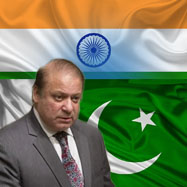
The assertions of the new Pakistan government of Nawaz Sharif to de-radicalise the society by engaging the Radical Islamists (RIs) in a dialogue and accommodation with them in reality means, to many observers, a meek surrender to Islamic radicalism of Deobandi variety.
It will be unrealistic to expect any drastic change in the foreign policy orientation of Pakistan, because Pakistan’s geopolitical interests will not allow the new government to bring about radical change
Nawaz Sharif’s sentiments for better relationship with India are laudable in spite of being still premature. There are constituencies within Pakistan for whom Kashmir continues to remain the core issue but the bigger challenge is whether Sharif will be able to bring the army on board.
Nawaz Sharif having expressed his intentions of improving relations with India will try to give trade a big push. Yet, one should not expect policy changes related to terrorism targeted at India or its aversion to India’s presence in Afghanistan.
The new government to be led by Nawaz Sharif will have to tread a very difficult path to manage, if not solve, the monumental problems that confront the Pakistani state and society.
This article seeks to study the post-partition and especially post-1971 experimentation with history writing in Pakistan and focuses on how the revisiting of the partition has led to a reinvention of
What we are seeing in Pakistan is the ushering in of an anti-democratic Islamic order through the ballot box. What is more, the Pakistan Army has decided to also indirectly ensure that Islam is never “taken out of Pakistan”.
With an expected fractured poll results, Pakistan is further heading towards uncertainty. The question is not so much as to who forms the next government but more importantly on how it functions. Chances are that the May 11 elections could well end up making Pakistan further ungovernable.
This monograph undertakes a descriptive analysis of the water sector in Pakistan and underlines issues related to Pakistan’s water policies, politics and management practices. It argues that domestic water management is perhaps one of the key areas which requires urgent attention in Pakistan.
Like all its predecessors, the government that just completed its tenure miserably failed to promote what a democratic state is supposed to first and foremost, namely, foster the multi-faceted development of all its citizens.