China–Pakistan Information Corridor: An Analysis
- November 23, 2026 |
- IDSA Comments
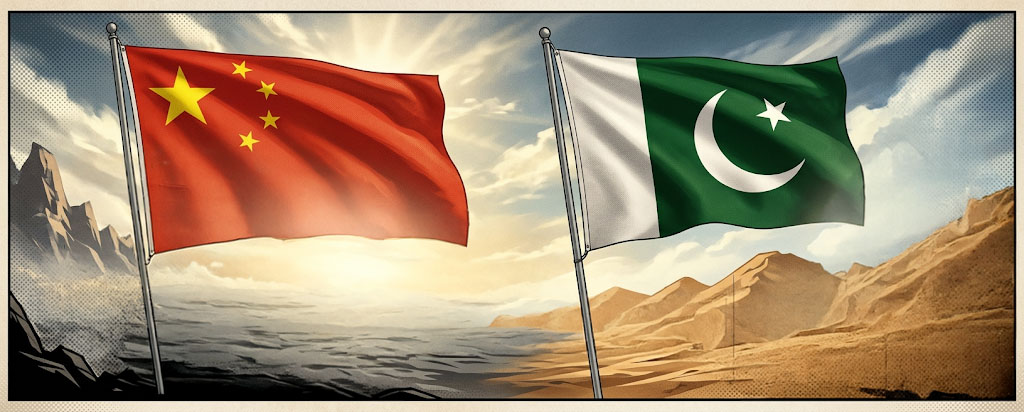
The China–Pakistan strategic partnership is expanding beyond military and economic cooperation into a domain increasingly central to modern conflict: information. The launch of the China–Pakistan Information Corridor (CPIC) in Islamabad on 26 October 2026 marks an effort to institutionalise bilateral cooperation to shape public perceptions, manage narratives, and influence international opinion. For India, this development is particularly significant in the aftermath of the May 2025 military confrontation, during which, as former Chief of Defence Staff General Anil Chauhan noted, information emerged as a critical instrument of strategic competition alongside conventional military operations.
Launched by Pakistan’s Ministry of Information and Broadcasting, CPIC brings together media organisations, think tanks, businesses and cultural institutions from both countries. Its media component comprises 18 Pakistani and Chinese organisations, including Xinhua, China Media Group and People’s Daily. Pakistan’s Information Minister, Attaullah Tarar, said a dedicated fact-checking mechanism would identify and counter misleading narratives, and that the Pakistan–China Institute would facilitate collaborative research and publications. He also described the corridor as CPEC’s “voice”.[1]
The CPIC is neither an isolated initiative nor an entirely new undertaking. Its origins trace back to the China–Pakistan Media Corridor proposed in 2021 and subsequent discussions in March 2024 aimed at countering criticism of the China–Pakistan Economic Corridor (CPEC). Over the years, CPEC has attracted scrutiny from international financial institutions and independent organisations over concerns about debt sustainability, governance, transparency and local communities’ rights. In its 2022 assessment of Pakistan’s debt sustainability, the International Monetary Fund (IMF) acknowledged the potential economic benefits of CPEC’s second-phase investments but cautioned that associated financial obligations could further strain Pakistan’s already vulnerable debt position.[2]
In a 2018 report, the International Crisis Group (ICG) highlighted the political and social challenges associated with CPEC, particularly the lack of meaningful consultation with provincial governments, businesses and local communities. It noted that the development of Gwadar threatened traditional fishing livelihoods, while projects in Sindh raised concerns over displacement and environmental degradation.[3] Such grievances, coupled with perceptions of unequal economic benefits, risked fuelling local resentment and anti-Chinese sentiment. These tensions have formed part of the broader security environment in which Chinese personnel working on CPEC-related projects have faced repeated attacks, although the motivations behind individual incidents vary.
Concerns regarding the corridor’s social implications were also raised by the Unrepresented Nations and Peoples Organization (UNPO). In its January 2022 submission to UN human rights experts, UNPO highlighted the alleged adverse effects of CPEC on indigenous and marginalised communities, particularly the Baloch, Sindhis and inhabitants of Gilgit-Baltistan. These included allegations of land dispossession and increasing militarisation in Gwadar, environmental degradation and threats to livelihoods in Sindh, and inadequate political representation and local consultation in Gilgit-Baltistan.[4]
A 2023 US State Department report highlighted Chinese efforts to establish a jointly operated mechanism to monitor and influence Pakistan’s information environment.[5] The report highlighted a 2021 Chinese proposal to establish a jointly operated “nerve centre” under the China–Pakistan Media Corridor. The proposed centre envisaged institutional coordination among think tanks, opinion leaders, and CPEC study centres, media organisations, Chinese companies and Confucius Institutes. Its functions included producing Urdu-language content to influence public opinion, disseminating Chinese Embassy reports through Pakistan’s official communication channels and monitoring and responding to criticism of China. The proposal also envisaged a bilateral mechanism for countering alleged rumours and a newsfeed application to disseminate approved content.[6]
For India, CPIC must be examined against the May 2025 India–Pakistan military crisis. Following Operation Sindoor, competing narratives concerning aircraft losses, military effectiveness and battlefield outcomes circulated rapidly across traditional and social media. Chinese state-affiliated media outlets, particularly Xinhua[7] and Global Times[8], gave prominence to claims made by Pakistan’s Inter-Services Public Relations (ISPR)[9] regarding Indian aircraft losses, with related reporting also appearing on People’s Daily Online. The dissemination of these claims prompted the Indian Embassy in Beijing to publicly challenge Global Times on 7 May 2025, urging it to verify its sources before circulating unsubstantiated information.[10]
Pakistani claims also gained traction on Chinese Social Media platforms, including Douyin and Weibo, further expanding their reach and visibility.[11] Pakistan’s deployment of Chinese-origin J-10C aircraft and PL-15 missiles generated considerable international attention. Subsequently, Chinese narratives highlighting the alleged superiority of Chinese military technology circulated alongside claims questioning the effectiveness of India’s French-origin Rafale aircraft.[12] The US–China Economic and Security Review Commission’s 2025 report highlighted that Chinese actors employed fabricated imagery and coordinated online campaigns to undermine confidence in the Rafale fighter aircraft while promoting Chinese alternatives.[13]
Unlike ad hoc information campaigns, an institutionalised corridor could facilitate sustained content production, cross-platform dissemination and coordinated responses to emerging narratives. By connecting state-backed media organisations with private outlets, research institutions and digital platforms, China and Pakistan could develop a more integrated information ecosystem capable of reaching audiences across multiple languages and geographical regions. Such cooperation is not emerging in isolation.
Chinese and Pakistani think tanks have already established extensive institutional linkages, including partnerships between Pakistan’s Institute of Strategic Studies Islamabad (ISSI) and the China Institutes of Contemporary International Relations (CICIR), the Institute of Peace and Diplomatic Studies (IPDS) and China’s Academy of Contemporary China and World Studies (ACCWS), and Pakistan’s Sustainable Development Policy Institute (SDPI) and China’s Soochow University. These established networks provide a foundation for deeper cooperation in policy research, strategic communication and narrative-building. CPIC could leverage this institutional architecture to move beyond episodic information exchanges towards more sustained, coordinated engagement in the information domain.
Implications for India
For India, three implications deserve attention. First, CPIC could strengthen Pakistan’s ability to internationalise its preferred narratives during future crises. Coordinated messaging through Chinese and Pakistani media platforms could influence how international audiences interpret military developments, particularly when independently verified information remains scarce. The objective need not always be outright disinformation. Selective presentation, repetition and strategic amplification of technically accurate but incomplete information can also shape perceptions.
Second, the corridor could reinforce China–Pakistan strategic convergence beyond the military domain. Their cooperation already encompasses defence production, military exercises and technological exchanges. Institutionalised information cooperation adds another layer through which both countries may align their diplomatic and strategic messaging. This does not establish that future information operations will be jointly directed, but it creates an infrastructure that could facilitate such coordination.
Third, the inclusion of think tanks warrants closer scrutiny. Research institutions contribute to policy debates through publications, expert commentary and international engagements. Collaborative research under CPIC could help legitimise preferred narratives by presenting them through ostensibly analytical platforms. The distinction between independent research and state-sponsored advocacy could consequently become harder for international audiences to identify.
However, India should not treat every Chinese or Pakistani publication as a coordinated influence operation. Such assumptions risk undermining analytical credibility. The challenge lies in identifying demonstrable patterns of coordination, selective amplification and manipulation through rigorous evidence. India’s response must therefore extend beyond reactive fact-checking. The May 2025 crisis demonstrated the importance of timely, credible and verifiable official communication. Delayed disclosures and gaps in publicly available information can create opportunities for speculation and competing narratives. Institutional mechanisms connecting military public information, diplomatic communication and independent verification should consequently be strengthened.
Indian think tanks can play an important role by systematically monitoring Chinese- and Pakistani-language media, tracing the circulation of strategic narratives and examining how military claims migrate across news outlets, research publications and social media. Collaborative work involving strategic analysts, regional specialists, data researchers and independent fact-checkers could help identify emerging information campaigns before they acquire wider international traction.
Ultimately, CPIC should be understood as part of the broader architecture of China–Pakistan strategic cooperation, not merely a media-exchange initiative. For India, the lesson is clear: operational preparedness must be matched by informational preparedness. As China and Pakistan institutionalise their ability to shape narratives, India must strengthen its capacity to establish facts, communicate them credibly, and contest misleading interpretations. In future crises, the struggle to define what happened may be almost as consequential as the military engagement itself.
Views expressed are of the author and do not necessarily reflect the views of the Manohar Parrikar IDSA or of the Government of India.
[1] “Pakistan, China Launch Information Corridor ‘CPIC’ to Counter Misleading Narratives, Promote Cultural Exchange”, Dawn, 27 October 2026.
[2] “Pakistan: Seventh, and Eighth Reviews of the Extended Arrangement under the Extended Fund Facility”, IMF Country Report No. 22/288, 1 September 2022, p. 50.
[3] “China-Pakistan Economic Corridor: Opportunities and Risks”, Asia Report No. 297, International Crisis Group, 29 June 2018, pp. i–iii.
[4] “Violations of Minority and Indigenous Rights in Pakistan Caused by Foreign Debt Financed Projects along the So-called China-Pakistan Economic Corridor”, Submission to the UN Independent Expert on Foreign Debt and Human Rights, Unrepresented Nations and Peoples Organization (UNPO), 31 January 2022.
[5] “How the People’s Republic of China Seeks to Reshape the Global Information Environment”, Special Report, Global Engagement Center, US Department of State, 28 September 2023, p. 28.
[6] Ibid.
[7] “Pakistan Shoots Down 5 Indian Jets as India Launches Strikes”, Xinhua, 7 May 2025.
[8] “Pakistan Shoots Down 5 Indian Jets as India Launches Strikes: Sources from Pakistani Military”, Global Times, 7 May 2025.
[9] “DG ISPR Details 5 Indian Jets Brought Down by Pakistan Air Force”, Dawn, 7 May 2025.
[10] “Indian Embassy Asks China’s Official Daily to Verify Messages Before Posting Them on Social Media”, Press Trust of India (PTI), 7 May 2025.
[11] Yuanyue Dang, “Chinese Nationalism Surges across Social Media as Viral Video Mocks Downed Indian Jets”, South China Morning Post, 12 May 2025.
[12] Sana Hashmi, “How China is Seeing Operation Sindoor”, The Print, 7 May 2025.
[13] “2025 Annual Report to Congress”, US–China Economic and Security Review Commission, November 2025, pp. 97, 109.