Brig Gurmeet Kanwal (Retd.) is Distinguished Fellow at the Institute for Defence Studies and Analyses (IDSA) and former Director, Centre for Land Warfare Studies, New Delhi. Click here for details profile [+}
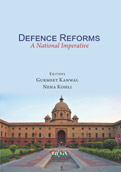
Despite being faced with myriad and complex challenges to national security, India's defence structures have not kept pace with changing times. The defence reforms that were undertaken periodically were reactive in nature and, in many cases, responses to crises as well as being sporadic, piecemeal and often ad hoc. The most recent review of security challenges undertaken occurred close to two decades ago, in the aftermath of the Kargil conflict of 1999.
Distinguished Fellow, IDSA, Brig Gurmeet Kanwal’s article on the Trump doctrine, titled ‘Arms Race Returns’ was published in The Deccan Herald on March 7, 2018.
The article analyses the three important documents released by the US government recently - The US National Security Strategy (NSS), released in December 2017, followed by the National Defence Strategy (NDS) and the Nuclear Posture Review (NPR).
Distinguished Fellow, IDSA, Brig Gurmeet Kanwal’s article on Indian Army’s Infantry modernisation plans, titled ‘DAC clears $2b Indian Army proposal for Assault Rifles’ was published in the February 2018 issue of India Strategic.
The article analyses the modernisation plans of India’s cutting edge infantry battalions, aimed at enhancing their capability for surveillance and target acquisition at night and boosting their firepower for precise retaliation, both in conventional conflict, and against infiltrating columns and terrorists holed up in built-up areas.
Distinguished Fellow, IDSA, Brig Gurmeet Kanwal’s article on US-Pak ties, titled ‘For Lies and deceit’ was published in the February 2018 issue of Defence and Security Alert. Brig Kanwal, in the article, argues that USA’s continuous support to Pakistan Army emboldens it to interfere in decision-making well outside its domain, undermines civilian control over the military and, consequently, weakens Pakistan’s fledgling democracy.
Distinguished Fellow, IDSA, Brig Gurmeet Kanwal’s article on strategy to deal with Pakistan, titled ‘Four-pronged Strategy is Necessary to Checkmate Pak’s Deep State’ was published in The Economic Times on February 12, 2018.
Distinguished Fellow, IDSA, Brig Gurmeet Kanwal’s article on the defence budget, titled ‘Jaitley’s Defence Budget Grossly Inadequate to Modernise the Army’ was published in the The Quint on February 3, 2018.
Distinguished Fellow, IDSA, Brig Gurmeet Kanwal’s article on Pakistan army’s policy towards India, titled ‘It is time for Pakistan Army to give peace with India a chance’ was published in Hindustan Times on February 1, 2018.
Distinguished Fellow, IDSA, Brig Gurmeet Kanwal’s commentary on India’s Missile Arsenal, titled ‘India’s Missile Arsenal: An Overview’ was published by The Vivekananda International Foundation (VIF) on January 31, 2018.
Distinguished Fellow, Brig Gurmeet Kanwal’s article on India facing threat from China and Pakistan, titled ‘Fighting a two-front war’ was published in Deccan herald on January 19, 2018.
Distinguished Fellow, IDSA, Brig Gurmeet Kanwal’s year-end review of the regional security environment, titled ‘What India must worry about in 2018’ was published in Rediff.com on January 1, 2018.