Sharif’s does not have any manoeuvring space to cut any comprehensive deal with the Taliban. He may not be averse to conceding their demand to shariatise Pakistani structures, yet he can’t do so unless he has the nod from the Army. On its part the Army does not want to decimate the Radical Islamists because it still sees in them a force multiplier and important strategic asset.
Pakistan owes its origin to the ‘Two Nation Theory’ in the sub-continent’s polity. Leaders of the Pakistan Movement were convinced that Muslims were a separate nation from the Hindu nation and the two could not live together.
The Pakistan army is caught in a cleft stick on the issue of dealing with the Radical Islamists. A section of the military establishment sympathizes and empathizes with the sectarian agenda of the RIs due to its own religious predilections.
For tackling terrorism Pakistan’s civil and military establishments have to relook at their own attitudes towards religion and jihad and reform themselves.
The assertions of the new Pakistan government of Nawaz Sharif to de-radicalise the society by engaging the Radical Islamists (RIs) in a dialogue and accommodation with them in reality means, to many observers, a meek surrender to Islamic radicalism of Deobandi variety.
What we are seeing in Pakistan is the ushering in of an anti-democratic Islamic order through the ballot box. What is more, the Pakistan Army has decided to also indirectly ensure that Islam is never “taken out of Pakistan”.
India must develop comprehensive and workable proposals to not just tone down the present Indo-Pak standoff on the glacier and the international attention it may be inviting, but also to ensure reasonable security arrangements against treachery by any third country.
Unity of purpose and synergy between state institutions required to deal with sectarian violence is largely missing and, as a result, the Pakistani state is responding to the growing Taliban threat in Karachi in a knee-jerk manner.
What is worrying is that the Army is clearly abandoning its earlier pretence of readiness to take the Islamic zealots head on and sections of the establishment seem more willing now to be just silent accomplices.
The Pakistani leadership has apparently come to the point where it realises that for the survival of the country and its structures created by Jinnah, it must buy peace for the present with its arch-enemy India.



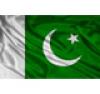


The mirage of peace in Pakistan
Sharif’s does not have any manoeuvring space to cut any comprehensive deal with the Taliban. He may not be averse to conceding their demand to shariatise Pakistani structures, yet he can’t do so unless he has the nod from the Army. On its part the Army does not want to decimate the Radical Islamists because it still sees in them a force multiplier and important strategic asset.