Since its enactment in October 1998, the International Religious Freedom Act has become a major instrument to further the American foreign policy agenda in the Middle East and elsewhere. While the annual reports are a great source of information on lesser-known facts and shifts concerning religious minorities, they also underscore an inherent bias in favour of Christian missionaries, politicization of the minority question and American exceptionalism.
During his first term, Modi had invested considerable political capital in cultivating critical players. The second term should enable him to reap the fruits of his political investments and elevate his engagements to a higher level.
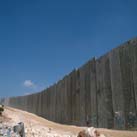
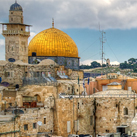
Rather than frittering away its limited leverage on issues such as refugees, settlements or borders, the international community should focus on borders as a means of resolving the Israeli-Palestinian conflict by posing a simple question to Israel: where do you begin, and where do you end?
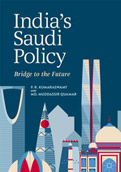
The book traces India’s Saudi Policy and locates the current state of bilateral relations and the challenges it faces. It argues that during the Cold War the relations were largely shaped by the Pakistan factor which in turn inhibited both sides from exploring the importance and value of one another. As a result, the relations were largely transactional and marginal. The end of the Cold War coincided with two interesting developments, namely, significant growth in India’s economic power and influence and the de-hyphenation of Pakistan from its Middle East policy. This resulted in greater political engagements between India and Saudi Arabia and was strengthened by the growing energy trade ties. For long expatiate population and haj have been the backbone of the relations, and they have been new instruments as India looks to enhance its engagements with the Kingdom through investments opportunities, political contacts, shared security concerns and strategic cooperation. India’s Saudi policy, however, face many challenges most importantly the regional instability, the Iran factor, low oil price and the international dynamics. The book will be the first comprehensive work on the India-Saudi relations. Though targeting a wider audience, it will be academically grounded and based on primary sources collected from India and Saudi Arabia.
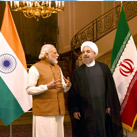
While it is necessary to identify and shore up the convergence of interest between India and Iran, it is equally important to recognize differences and pitfalls.
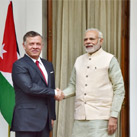
An unstable Jordan will undermine India’s newly found nuanced and balanced approach towards the Israeli-Palestinian conflict and push it back to the insipid, ineffective and routine of yester years.
Indian assistance to the Palestinians could not be routed through Israel without political controversy both at home and abroad, and India cannot help the Palestinians constructively without coordinating with Jordan.
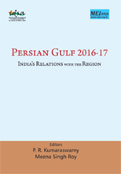
The Persian Gulf-2016-17 is fifth in the series published by MEI @ ND and first in collaboration with the IDSA. It Examines India’s bilateral relations with the region and focusses on developments during 2015 and 2016. It gives a comprehensive account of the strategic, political, economic and cultural aspects of bilateral developments and also provides in depth analysis of internal dynamics of the Persian Gulf countries.


Modi’s Agenda 2.0 for the Middle East
During his first term, Modi had invested considerable political capital in cultivating critical players. The second term should enable him to reap the fruits of his political investments and elevate his engagements to a higher level.