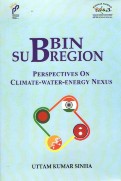
Bangladesh, Bhutan, India and Nepal (BBIN) are home to 21 per cent of the world’s population. With projected economic growth in the BBIN countries, a consequent increase in the demand for electricity and heavy dependence on fossil fuels are expected despite the pitch for renewable energy. The region also faces unprecedented climate change, particularly in the Hindu Kush Himalaya, the cradle of major sub-continental rivers, and where melting glaciers, unpredictable weather conditions, and rainfall patterns are affecting the life of millions and instigating frequent natural disasters. Since 2014, India has tried to maximise sub-regional interaction with the aim of promoting cooperation in the economic, social, cultural and scientific fields. This has opened new thinking and opportunities, complementing the pace of globalisation and liberalisation. The fear, of course, is that this approach can easily dissipate in the face of security complexities and political difficulties.
The climate-water-energy nexus is now a familiar concept in the resource management debate requiring long-sighted approaches that help avoid maladaptive pathways and, as a tool, to anticipate the tilt and balance of the nexus resources and the nature of their interactions. The nexus as a policy approach brings together the concept of ‘security and sustainability’. However, the framing of the nexus around a scarcity crisis narrative often pushes states towards control and possessiveness of the resources rather than driving them towards stability and durability solutions. Beyond this framework, a more nuanced political–economy understanding of the BBIN sub-region is essential.





Critical Minerals for Energy Transition: Linchpin or Risk?
The race to climate neutrality must be guided by responsible practices and environmental stewardship is paramount.