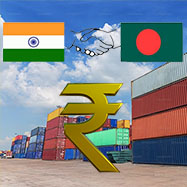
With India and Bangladesh agreeing to settle the payments for their international trade partly in Indian rupee, it can reduce pressure on Bangladeshi dollar reserves.
Prime Minister Sheikh Hasina’s visit underlines the fact that India and Bangladesh are successfully leveraging their geographical location to advance mutually beneficial economic ties.
In a fast-emerging multipolar Asia, and in the fast-shifting geopolitics of the area where ostensive national interests are being pursued with growing military-driven intensity, enhancing strategic ties between close and historic neighbours like Bangladesh and India has assumed greater urgency. The region also faces major socio-economic challenges, which were exposed brutally by the Coronavirus pandemic and its effects on lives and livelihood.
Bangladesh’s emergence, as a new nation at the height of the Cold War, in 1971, re-drew political borders in the Indian subcontinent. It was one of the most significant geopolitical events of the latter half of the 20th century. India’s ties with Bangladesh have taken great strides in the last decade in comparison to the first 40 years, expanding and strengthening across a wide template of sectors.
Sheikh Hasina and her India-friendly policies are not liked by her domestic and international opponents. The Awami League government should remain vigilant to the designs of forces inimical to it, and not let them undo the progress in India–Bangladesh relations.
Given the assertive foreign policy followed by China and the desperation of Pakistan after the abolition of Article 370, India has to follow a proactive foreign policy. It is only India’s proactiveness that can keep both China and Pakistan in check in Bangladesh.
The execution of Bangabandhu’s killer is likely to lift the morale of the pro-liberation forces while weakening that of the anti-liberation groups who were already in disarray.
The issue of illegal migration in India-Bangladesh relationship cannot be swept under the carpet. It will be better if both sides look at the issue dispassionately especially when the trust levels are high.
Bangladesh and India are enjoying increasingly close relations in the latter’s northeastern region. This represents a transformation in the two countries’ past relationship, which was characterised by suspicion, distrust and insecurity. This recent change, which began with the arrival of Bangladesh’s current regime in 2009, has resulted in a sense of cooperation, mutual interest and connectivity. This article aims to explain this transformation.





Bangladesh Violence: Minorities and Anti-Liberation Forces
Sheikh Hasina and her India-friendly policies are not liked by her domestic and international opponents. The Awami League government should remain vigilant to the designs of forces inimical to it, and not let them undo the progress in India–Bangladesh relations.