Research Fellow, Manohar Parrikar IDSA, Mr Vishal Chandra’s commentary, “UNSC Delivers Strong Message to Proponents of Taliban and ‘Emirate’”, was published by All India Radio (AIR), on August 13, 2021.
Research Fellow, IDSA, Mr Vishal Chandra’s commentary, ‘Need for Strategic Clarity on Terrorism in Afghanistan’, was broadcast by the External Services Division of All India Radio (AIR) on April 26, 2017.
Associate Fellow, IDSA, Mr Vishal Chandra’s commentary titled ‘Pakistan opposes ‘pre-conditions’ for Kabul-Taliban talks’ was broadcast by Air World Service, the External Services Division of All India Radio, on January 13, 2016.
Associate Fellow, IDSA, Mr Vishal Chandra’s chapter ‘Where is Afghanistan Headed?’ was published in the edited volume The Political Future of Afghanistan: Issues and Perspectives by Maulana Abul Kalam Azad Institute of Asian Studies (MAKAIAS), Kolkata, India.
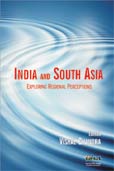
Perceptions play a very significant role in South Asian politics. They have largely shaped and influenced state policies and politics among the South Asian countries, especially in relation to India, over the years. State policies have at times been hostage to negative or adversarial perceptions, well-entrenched in the popular psyche. The perception formation in South Asia is an extremely dynamic process and has evolved differently in different countries. Perceptions are not static and often change with the shift in domestic as well as regional and global politics.
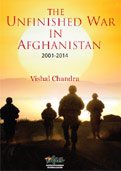
This book makes a modest attempt to contribute to the ongoing debate on future challenges for Afghanistan as the largest ever coalition of Western forces prepares to withdraw. It seeks to examine key political developments within Afghanistan over the last one decade in response to the US-led Western military and political intervention.
Fears about the Beijing-Rawalpindi axis scripting Kabul politics and thereby causing the complete marginalisation of New Delhi in the region appear far-fetched given the political dynamics of Afghanistan.
As all the votes cast in the run-off election are audited and recounted under international supervision, the final outcome could be a close finish with winning candidate leading by a much narrow margin. The process of constitutional amendment can only be initiated after the new parliament is formed as parliamentary elections are due in 2015.
It is not merely about change in leadership; it is about ushering the country into a ‘decade of transformation’. The most immediate challenge before the incumbent government and the relevant election and security institutions is to sustain and strengthen the people’s engagement in the process.
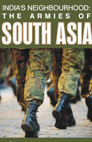
This book is an attempt to examine the role, relevance and status of the armies in the ever dynamic socio-political milieu of the countries in India’s South Asian neighbourhood. The book deals with the national armies of seven South Asian countries bordering India, namely Afghanistan, Bangladesh, Bhutan, Nepal, Maldives, Pakistan and Sri Lanka. The contributors to the volume also trace out the likely trajectory of the future role and position of the armies in the given or evolving national and geo-political settings.




Need to Take a More Confident View of Kabul
Fears about the Beijing-Rawalpindi axis scripting Kabul politics and thereby causing the complete marginalisation of New Delhi in the region appear far-fetched given the political dynamics of Afghanistan.