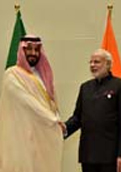
The key focus areas during the visit of MBS to India were terrorism, investment, energy, skill development, security and Indian diaspora in Saudi Arabia.
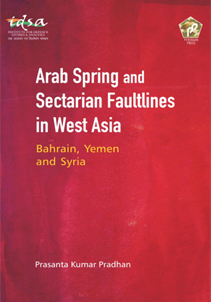
Publisher: Pentagon Press Since the outbreak of the Arab unrest, sectarian politics has become more pronounced throughout the West Asian region which is reflected in the growing polarisation of society...
The nostalgia among a section of the AKP to recreate the Ottoman past through economic and geopolitical integration has been the driving force behind Turkey’s recent assertive postures in regional...
The view from West Asia of India–Israel ties has been interlinked not only with the region’s negative perception of Israel but also with Israel’s evolving position in the West Asian...
Publisher: Pentagon Press The West Asian region is undergoing a phase of massive turbulence since the outbreak of the Arab Spring. This period has been marked by popular protests, internal...
White House has sought to assuage the West Asian states’ feelings that the ties with Asia-Pacific would not be at their expense. On the other hand, there are strong prescriptions...
As we move into the second winter of the Arab Spring, this Issue Brief attempts to take stock of the progress of the Arab Spring and examine whether the aspirations...
The two recent malware attacks on energy companies in West Asia are particularly worrisome since they represent a rapid escalation in capabilities and intent on the part of the perpetrators.
Overthrowing Bashar is likely to result in an Islamist regime, which might turn out to be far worse for the country’s Kurdish, Christian, Druze and Armenian minorities.