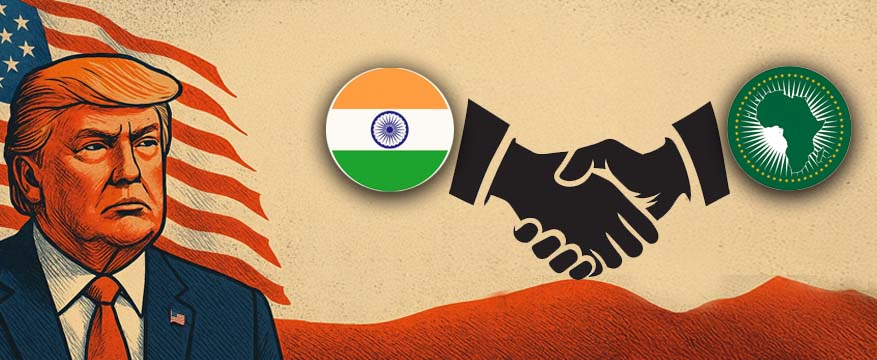
United States of America (USA)

Strategic Currents: China and US Competition for Influence

In the aftermath of the Cold War, the resurgence of Russia and the swift ascent of China have reignited an era of intense great power competition. The United States’ National Security Strategy 2017, which formally identified Russia and China as strategic competitors, marked a pivotal moment in the crystallization of this moment. The pursuit of technological supremacy is at the heart of the competition, with the US and China moving beyond bilateral disputes to exert global influence through alliance formation, setting technological standards, and competing for control in key regions like the Indo-Pacific, Southeast Asia, the Korean Peninsula, and South Asia. Bernard F. W. Loo and James Char’s Strategic Currents: China and US Competition for Influence presents a timely and empirically grounded analysis of the US–China strategic rivalry, with a particular emphasis on Southeast Asia’s adaptive responses within an increasingly contested international order.

The Race for Tech Supremacy between US and China: Implications for the World, US and India

The unravelling race for tech supremacy, as a microcosm of the macro trade war between US and China, can be depicted as Tech Race 2.0. In some ways, this is akin to the Space Race that unfolded between the US and the erstwhile USSR in the 1950s and 1960s, which eventually turned in favour of the US, given its fundamentals being firmly grounded in democracy, freedom of speech and robust innovation and business ecosystems. Since China shares some of the key elements that the Soviet Union had, it is likely that history can be repeated provided the US is fully aware of the challenges emanating from China and takes necessary steps by investing in the state-of-the-art technologies. The implications of the US losing the race could be far-reaching not only for the US, but also for the entire global order built on the liberal principles and values. The same is applicable for India since it shares a border with China and the border conflict continues to persist. Therefore, it is imperative to save the global community from the dangers of authoritarian leaders and countries winning the race.