The power of crowdsourcing budgetary support, technology, training, and logistic wherewithal, while at war, has emerged as an important lesson in the Ukraine war.
Starlink, a satellite internet constellation owned by Elon Musk, provides satellite-based internet connectivity to consumers globally, and has been actively involved in guiding Ukrainian military drones and missiles against Russian military positions, thus becoming party to the ongoing Russia–Ukraine conflict and a bonafide military objective. Russia had also accused Starlink of helping the Ukrainian forces to guide and modify fire of the two Neptune missiles, which led to the sinking of the Russian warship Moskva.
India needs to strengthen its existing bilateral relations with all the Arctic countries and continue to re-emphasize its call for peaceful resolution of Arctic disputes.
Export controls or strategic trade technology control has been used as a significant tool to impose sanctions on Russia, for its military operations in Crimea and Ukraine.
Ukraine’s security predicament in the face of the Russian military onslaught brings into focus the vacuity of big power security assurances in the absence of legally binding security guarantees and treaty commitments.
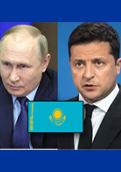
The Russia–Ukraine conflict has put Kazakhstan’s foreign policy to a severe test. Though there are similarities between Ukraine and Kazakhstan, the NATO factor doesn’t exist in the case of the latter. In Kazakhstan’s approach to the Russia–Ukraine conflict, it is possible to discern a distinct tilt towards Russia.
With the war in Ukraine moving towards an uncertain resolution, there is a danger that the influx of heavy weaponry and foreign fighters could bring in a new set of imponderables into an already vicious and escalating conflict.
While the end state of the Russia–Ukraine conflict is still afar, an analysis of the conflict and war fighting so far, shows that there are enough early lessons for the strategic and military practitioners to decipher and take note of.
While the US, Japan and Australia have taken an overtly critical stand towards Russia at the UN, India has abstained from all the UN resolutions condemning Russia. Will divergent views over the Ukrainian crisis weaken the Quad, is a pertinent question being examined in this issue brief.