ISIS eyeing India in comeback plan
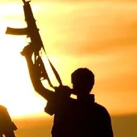
The Sri Lanka Easter bombings has allowed ISIS chief Abu Bakr Al Baghdadi to launch a public relations offensive and enunciate a dangerous new strategy.
- Adil Rasheed
- May 06, 2019
The Sri Lanka Easter bombings has allowed ISIS chief Abu Bakr Al Baghdadi to launch a public relations offensive and enunciate a dangerous new strategy.
Trump seems to have reconciled himself to the fact that Afghanistan may become an ‘Islamic Emirate of Taliban’ with Sharia Law being imposed with or without the consent of the people.
The Indian strategic community has for long debated aspects of jihadist radicalisation in the country—particularly over its origins, causes, extent, trajectory and possible counter-measures. This article posits that in the absence of clear perspectives, the incipient threat of jihadist radicalisation has the potential to metastasise and snowball quickly, as has been witnessed in other parts of the world in recent times.
Pakistan’s desperation to keep itself off the list of defaulting countries maintained by the Financial Action Task Force (FATF) underlines the increasing effectiveness of the organisation, which has become the spearhead against global efforts combating the financing of terrorism (CFT).
From the days of their inception, remotely piloted aero models (known popularly as drones) have been feared as a means of spreading terror. Recently, the use of drones by terrorist outfits like the Islamic State of Iraq and Syria (ISIS), also known as the Islamic State (IS), has seen an increase and this has brought those fears to the fore. Experts fear that the drones have given terrorists a near-perfect solution for spreading terror and a major terror act may be around the corner as legal and illegal drone activities are on the rise.
It is perhaps time to regulate incendiary sermons which radicalise vulnerable sections of society.
The distancing of every segment of Kashmiri politics, population and even separatists from the Amarnath pilgrim attack is a clear indication of anger and frustration building up against senseless acts of terrorism.
The Imam Shamil Battalion has claimed responsibility for the April 3 metro bombing in St. Petersburg and conveyed that the attack was retaliation against Russia’s targeting of jihadis in Syria, Libya and Chechnya.
The revival of Jaish indicates that Pakistan will continue to utilise terrorism as an instrument to advance its geo-strategic agenda in South Asia.
The international law on the use of force against terrorists has experienced a radical revision since the rise of transnational jihad of Al-Qaeda. It has sufficiently expanded to accommodate actions against terrorists in foreign territory in the wake of terrorist attacks, particularly when the foreign State is hosting terrorists and not cooperating with the victim State. However, the new legal framework does not give carte blanche to States to use force against terrorists. While using force States must strictly follow the law.