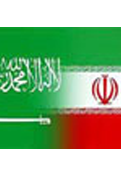
Qatar Crisis Sharpens Regional Faultlines
The decision to target Qatar clearly indicates that the region is now divided into two camps and that the Arab Gulf countries are in no mood to accept neutral players.
- Md. Muddassir Quamar
- June 08, 2017
The decision to target Qatar clearly indicates that the region is now divided into two camps and that the Arab Gulf countries are in no mood to accept neutral players.
Riyadh’s military intervention has neither forced the Houthis to the negotiating table nor has it restored the Hadi government in Sa’naa.
It is early days to speculate on the likely outcome and possible trajectory in Saudi-Israeli engagement, but Eshki’s visit has so far been the clearest indication of Saudi willingness to engage with the Jewish state.
Unless addressed, the escalation of tension between Iran and Saudi Arabia can have serious adverse consequences for regional stability and peace and also for ongoing efforts to bring to an end the war in Yemen and the wars in Syria.
Modi’s visit to UAE needs to be seen in the larger context of strengthening ties and further widening the scope of India’s engagement with the Gulf region.
While both Saudi Arabia and Iran vie for power and influence, Yemenis continue to suffer and the country seems to be slipping into further instability.
Since assuming the throne on January 23, 2015 following the death of King Abdullah, Saudi Arabia’s new monarch, King Salman, seems to have set about the task of shaking up the ultraconservative kingdom. The punishment or pardoning of Raef Badawi became the litmus test of the new Saudi monarch’s reign as the blogger’s sentence coincided with the last days of the ailing King Abdullah and King Salman was compelled to face his personal past as promoter of Islamic fundamentalism abroad.
Saudi Arabia has joined the war against the IS and it supports more boots on the ground to tackle this challenge. Although it is employing all the options available to it, the success of anti-IS operations depends to a significant extent on the ground situation in Syria and Iraq.
The PAC-3 missile defence deal is a win-win package for both the United States and Saudi Arabia in terms of both their bilateral relations and the enhancement of regional security.
Riyadh anticipates that in the long run a nuclear Iran will be challenging Saudi’s proxy conflicts with Iran in states like Palestine, Bahrain, Yemen and Syria. Amidst such concerns, Riyadh’s rejection of a UN Security Council seat in October 2013 followed by the revelation of the BBC news about possible nuclear weapons cooperation between Saudi Arabia and Pakistan in November 2013 has raised questions whether Riyadh aspires to acquire nuclear weapons capability.