Publisher: Norwegian Institute for Defence Studies
International Order at Sea is a workshop series chaired by the Norwegian Institute for Defence Studies (IFS) in partnership with the Institute for Defence Studies and Analyses (IDSA), New Delhi; China Foundation for International and Strategic Studies (CFISS) and China Institute for Marine Affairs (CIMA), Beijing; and the Center for Naval Analyses (CNA), Alexandria, VA.
The workshop series examines seapower and the future of the global commons. It explores how international order at sea is established, maintained, changed and challenged, and it focuses on the interaction and cooperation among leading, emerging and smaller naval powers to maintain order at sea
The impending removal of the piracy High Risk Area off the coast of Somalia presents an ideal opportunity for India, in partnership with the wider Indo-Pacific maritime community, to delegitimise China’s naval presence and strengthen regional mechanisms for ensuring maritime security.
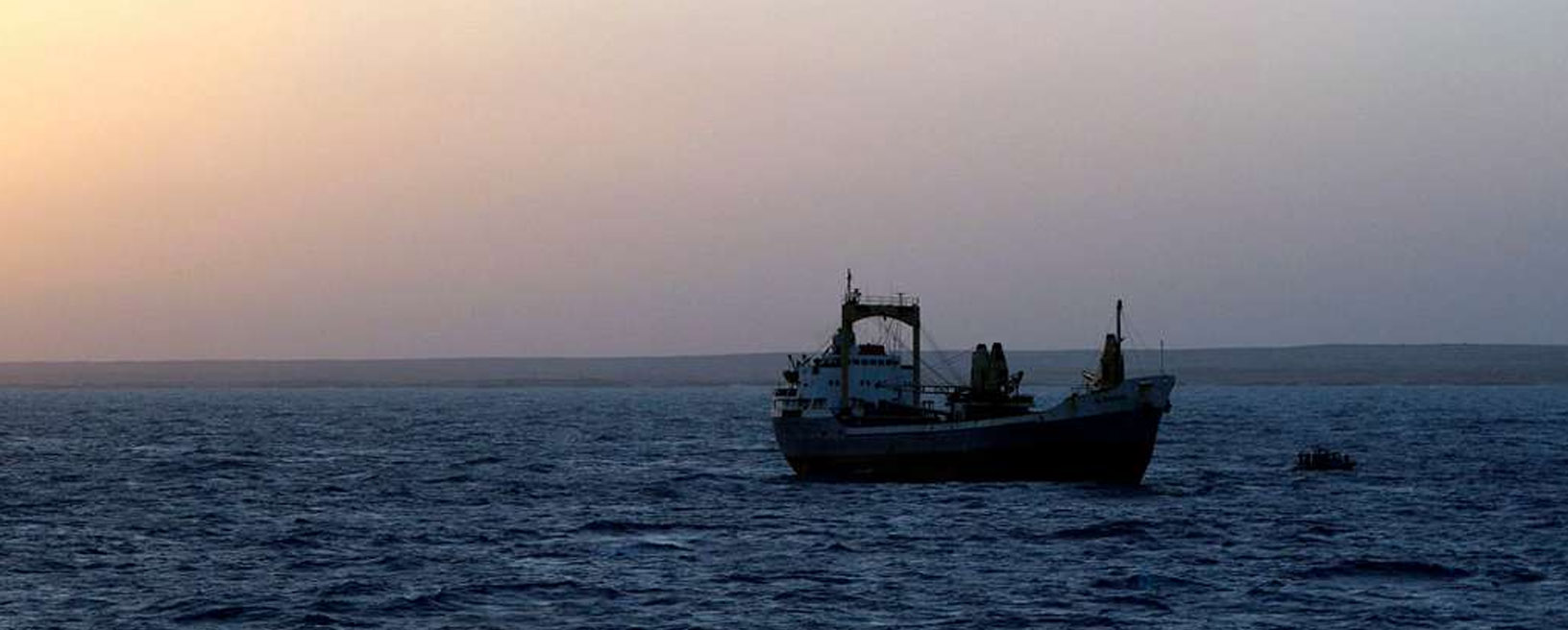
The pirates of Somalia constitute one one of the greatest threats to maritime security in modern time.Their operations started amidst the political instability, economic crisis and state collapse that characterised the fall of the Siad Barre regime in Somalia in 1991.
Piracy over the years has been driven by geography, political instability and the availability of safe havens. Apart from these established factors, economics too play a role. This article reviews and examines Somali piracy, which has flourished due to the international community ignoring the growing instability in Somalia, the rampant illegal fishing and toxic waste dumping. It examines the international response, the legal and economic factors and advocates that piracy be viewed as a form of economic terrorism and be combatted as such, as well as by land-based operations.
India must actively engage the island nations in the Western Indian Ocean and enhance the scope and deployment of the Indian Navy and its air aim in these waters.
Rampant piracy off the Somalia coast has brought the strife-ridden country back into attention. Economic hardship, and a deep resentment and anger against foreign exploitation of Somalia's maritime resources, have inspired the pirates to declare themselves 'coast guards of Somalia'. However, the growing attacks by the pirates have had an adverse impact on global commercial shipping. The international community has responded to this predicament by massive naval deployments in the Gulf of Aden.
Since the overthrow of its last ruler Siad Barre in 1990, Somalia's conditions have worsened and, barring a few islands of peace, are degenerating rapidly; its waves of insecurity surge beyond its shores. Piracy off Somalia is a consequence of its present volatile insecurity on shore, and 20 years of conflict resolution efforts have come to naught. As piracy increases and anti-piracy operations intensify, efforts at finding lasting peace on shore have run aground.
A fresh look is required at the international level to deal with this scourge effectively. It is time for India to take the lead and push for a change in tack both regionally and in international fora.