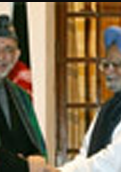
Afghanistan was a test case for our foreign policy resolve, an arena where while leveraging other tools of foreign policy, use of instruments of force and military diplomacy/intelligence should have been predominant.
The Indian armed forces appear to be driving defence budgets rather than a cold calculation of the country’s desire for ‘adequate’ military capability.
If Pakistan succumbs to American pressure, it will continue to be engaged in a long war of attrition on its western borders. If Pakistan resists American pressure, it will be isolated in the world and the international community will have to fall back upon India to put a firewall around the AfPak region.
In a fundamental shift in its position on the global nuclear non-proliferation regime, Pakistan has made it known that it will join the NPT only as a recognised nuclear weapons state.
The latest arrests underline the lack of cooperation among security agencies in South Asia and the support base that exists in Bangladesh for terrorist groups.
India is justified in seeing the US move to go ahead with the sale of the F-16s as an attempt to balance America’s strategic partnership with India by once again propping up Pakistan as a regional challenger.
This is a good time for India to review its Afghan strategy taking into account increasing war weariness of the Western forces and President Karzai’s policy of reintegrating the ‘good Taliban’.