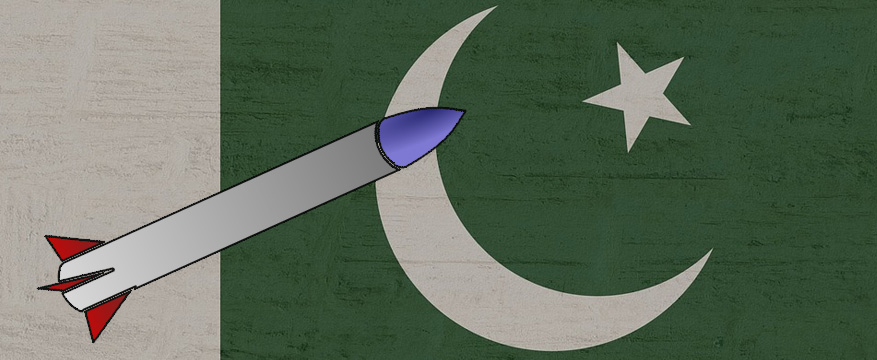
Pakistan no longer gains a substantial strategic advantage from its nuclear posturing, even as it continues to view the display of a nuclear threat as a strategic tool in conflict scenarios.
The article aims to analyse the developments and challenges in the India– US defence cooperation in the face of the ongoing decay of the nuclear order. While the defence cooperation has grown manifold, it is pertinent to understand the pathways in which India and the US can cooperate towards building a stable nuclear order. The effort should be to minimise the risk of any accidental nuclear war in the wake of heightened tensions and heated conventional warfare in the current geopolitical landscape, incorporating missile forces, weapons of mass destruction, tactical nuclear weapons, and others. The article begins with an outline of the India–US defence cooperation followed by an understanding of the Indian stance on disarmament and nuclear treaties; the evolution of the India–US nuclear cooperation; an overview of the changing global nuclear order and its impact on the conventional warfare; the perceptions of India and the US on nuclear stability; prospects and challenges in defence cooperation against threats to nuclear stability; and the way forward to cooperate on building deterrence and nuclear stability.
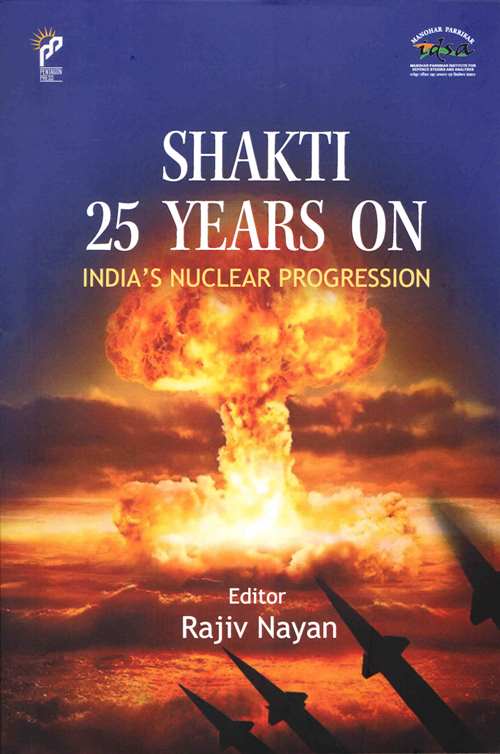
The May 1998 Shakti-series tests marked India`s emergence as a nuclear weapons state. These tests faced initial global resistance, but over time, this opposition gave way to understanding and reconciliation. India actively engaged with the international community to explain the security rationale behind its nuclear weaponization. The existing nuclear world order, anchored in the Nuclear Non-Proliferation Treaty, did not adequately address India’s security concerns. To reinforce its commitment to responsible nuclear behaviour, India undertook measures to demonstrate restraint and reliability.
This book examines India’s nuclear journey over 25 years. It explores the evolution of India’s nuclear policy, dispelling myths surrounding its nuclear weapons programmme and highlighting the diplomatic efforts that led to its gradual integration into the global nuclear order. Over time, the international non-proliferation regime has developed a constructive relationship with India, recognizing its nuclear force as a security necessity rather than a tool for power projection or intimidation.
The book also delves into India’s nuclear doctrine, its confidence-building measures—both self-initiated and those proposed by global civil society—and its participation in global nuclear governance. Despite its nuclear weapons programme, India has remained committed to the peaceful applications of nuclear science and technology, emerging as a key player in global nuclear research and development. While nuclear disarmament remains a distant goal, it continues to be a fundamental aspiration for nuclear India.
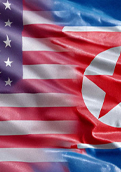
Despite President Trump’s desire to improve relations with the Kim regime and denuclearise North Korea, the relationship between Washington and Pyongyang remains strained.
India needs to accelerate the development of emerging technologies and integrate them with the weapon systems deployed on the ground in the light of the Chinese challenge.
The US, UK and Australia agreement for cooperation in Naval Nuclear Propulsion (NNP) presents a viable legal framework under which NNP technology can be transferred to Australia.
With the last surviving arms control treaty, the 2010 New START, under suspension with no sign of a successor treaty, the post-Cold War nuclear order is under stress.
This essay seeks to collate, sort through, and organise the reams of publicly available information and speculation to provide a systematic assessment of Pakistan’s nuclear security.