In the latest game of one-upmanship, North Korea has up the ante by announcing to the world that there is no stopping its nuclear development programme.
China’s objection to the early release of a UN report on North Korea’s compliance with UN sanctions stemmed from its misplaced confidence in international diplomacy.
The power transition in North Korea is bound to produce more political intrigue in the coming months, with the junior Kim concentrating more on military modernization and nuclear programme to strengthen his position.
India has to calibrate its relationship with China, the US, and countries of East Asia with great circumspection in the wake of the resurfacing of tensions in the South China Sea.
The UNSC statement is more a testimony to Sino-US compromise arrived at after nearly a month and half of negotiations rather than being a “diplomatic victory” as has been hailed by North Korea.
The Nuclear Posture Review (NPR) emphasis two realities, first the challenge of nuclear terrorism and proliferation; and second, it affirms the end of the Cold War rivalries. But the “resetting” of relationship with Moscow had created an enemy vacuum for the U.S. To fill this gap, North Korea has been constructed as an enemy which justifies the continuity of the “nuclear umbrella” in the Northeast Asian region. But as an asymmetrical, surrogate enemy it is actually the pretext to maintain ‘critical bases’ in Northeast Asia which functions as hubs for U.S. global military power projection.
The issue at stake is the US upholding and expanding its role as the key shaper of geopolitics in Northeast Asia, and China unwilling to be sidelined by the United States.
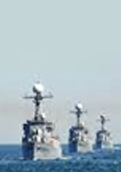
The one country that has not condemned North Korea’s role in the sinking of the Cheonan is China, which has its own strategic and economic compulsions to back North Korea.