India needs to chalk out a new paradigm of engagement with the emerging Nepal in which economic and border management issues are prioritised over political issues.
India should clarify through actions and words that it has no intention of interfering in Nepal, that it respects Nepal’s sovereignty and that it is ready to work with any dispensation in Nepal for furthering mutual security and economic concerns.
Integration of Maoist combatants into the Nepal Army (NA) has become a contentious issue. Although the stakeholders have agreed on the integration process, they are yet to arrive at a consensus on how to attempt it. They have changed their positions frequently over the issue, which has complicated matters further. The NA holds the view that the lack of conventional training of Maoist combatants, as well as their ideological orientation, would have a serious effect on its professional standards.
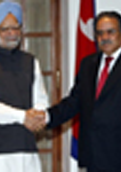
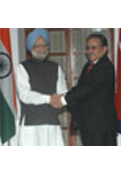
Nepal Prime Minister Madhav Kumar Nepal, who heads a twenty-two party coalition government, chose India for his first official foreign visit after assuming office two months back. This ‘goodwill’ visit was undertaken against the background of Nepal’s increasingly fragile peace process. The bilateral agenda was just a pretext. What brought him to New Delhi were several domestic factors. While this is not to say that there are no urgent bilateral issues between the two countries, the most crucial factor today is India’s support for Nepal’s coalition government.
The political crisis that triggered off in Nepal with Prime Minster Prachanda’s resignation yet again indicates not only the trials and tribulations of a fledgling democratic process but also points to the geopolitical vulnerability of the country sandwiched as it is between the two Asian giants. While India considers Nepal a part of its sphere of influence, it is increasingly being challenged by China’s inroads into Nepal. In fact, the growing Nepal-China nexus should be seen in the context of India-China power competition in Asia.