The internal security situation in India reflected a marked improvement in 2012-2013 relative to previous years. This Issue Brief offers an assessment of the major trends in 2013 for Jammu...
Compared to the worst Maoists-affected state of Odisha, in the neighbouring states of Andhra Pradesh, Chhattisgarh and Jharkhand, the level of violence has come down substantially. In the coming years,...
Publisher: Pentagon Press The ten years of Maoist insurgency followed by the political vacuum after the abolition of the monarchy and the delay in the drafting of the Constitution has...
In a document entitled ‘Our Financial Policy’, the Maoists mention that they have three types of economic needs, viz. the needs of war, political propaganda and the people. To cater...
This article seeks to make a preliminary assessment of the surrender and rehabilitation policy being adopted towards Naxalites. The examples/experiences cited in this paper refer largely to cadres and leaders...
The Urban Movement has a defined role in the political strategy and military strategy of the CPI (Maoist). The Maoists envisage that they would mobilise and organise the industrial workers.
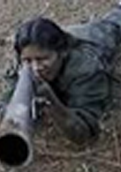
Women join as fighters and participate in raids and attacks on police. The military training they receive is as rigorous and strenuous as their male counterparts.
The paper sketches the trajectory of the Maoist movement in India, keeping in view the CPI (Maoist)’s history (including organisation and proliferation), ideology, strategy and tactics.
The Chasi Mulia Adivasi Sangh (CMAS), an association of peasants, bonded labours and the tribal, is a classic case of a popular movement being hijacked by the Maoists to get...
As a nation, we have a tendency to react once a crisis overtakes us. This holds good in the case of natural disasters like the annual floods in the North-East,...