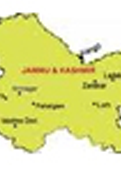
The demand for autonomy in Jammu and Kashmir (J&K) followed by heated discourses on the subject has been appearing and fading intermittently. The demand as well as discourses, articulated by...
The spate of rioting which plagued Jammu and Kashmir (J&K) from June 2010 is testimony to the mismanagement of developments by both the state and central governments. This is all...
Countering ideological narratives, effective communication of developmental measures to the people, and adherence to the principle of judicious use of force should form integral elements of India's strategy to counter...
China’s moves concerning Kashmir evoke apprehension regarding retrogressive changes in its Kashmir policy, designed to give it a hold over India. The best case scenario for China is that the...
It is time that the Indian government through its yet-to-be appointed interlocutors clearly laid the limits and boundaries of the autonomy debate to all the stakeholders.
A recent New York Times report that 11,000 soldiers of the Peoples’ Liberation Army have been stationed in the Gilgit-Baltistan region of the PoK, carries important implications for India. For...
The coexistence of contending realities in Kashmir is a natural corollary of the transition from conflict to peace. A successful transition to peace is not only a test of Indian...
The Report lends itself to all kinds of interpretations, does not attempt to correlate responses to questions in the same section, and certainly does not provide the ‘paths to peace’.
A survey of media reports in newspapers based in Jammu and Kashmir for 2010 reveals that although violence levels are down there are multiple levels at which militancy affects the...
The survey in J&K and ‘Azad Kashmir’ indicates that people consider unemployment as a major problem, followed by corruption, poor economic development and human rights abuses.