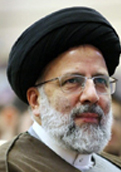
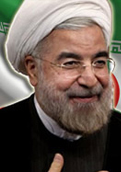
The tenure of Ebrahim Raisi as Iran's President is not likely to be a smooth sail, considering the immense challenges that lie ahead on both domestic and foreign policy fronts.
The expected victory of a hardline, conservative candidate in the forthcoming Iranian presidential elections could become a hindrance to fulfilling the country’s economic agenda and lead to greater domestic instability.
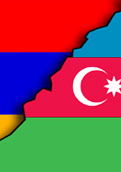
Armenia and Azerbaijan have come to blows over disputed Nagorno-Karabakh after a quarter of a century. There are numerous geo-strategic interests at play in the conflict that will impact regional peace and security.
On May 8, 2018, President Trump withdrew the US from the Joint Comprehensive Plan of Action (JCPOA). Since the JCPOA is endorsed by a United Nations Security Council Resolution and supported by the international community, Trump has had to justify this controversial decision. Based on data extracted from Trump’s Twitter account and taking advantage of Theo van Leeuwen’s (2008) discursive construction of the legitimation model, this article addresses the following question: How has Donald Trump attempted to delegitimize the JCPOA?
The pandemic continues to amplify the crisis in West Asia, making it hard for governments to cope with it individually. In the absence of a coordinated effort at the regional level, the road to economic recovery will be long and uneven.
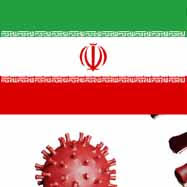
While it is unlikely that the Iranian regime will be able to weather the COVID-19 crisis without the support of the international community, its efforts at seeking international support largely remain a work in progress.
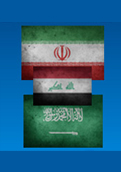
The situation in Persian Gulf has been on the boil with several tit-for-tat actions raising the chances of a direct confrontation. However, Iran will be cautious in choosing an all-out war given its vulnerabilities against the US military might.