Healthcare and National Security: Territorial Army Medical and Dental Corps Revitalisation
The revitalisation of the Territorial Army Medical and Dental Corps is a strategic imperative in the current geopolitical climate.
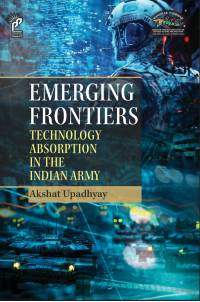
In the 21st century, power on the battlefield is no longer defined by size or legacy, but by speed of adaptation. The world’s most advanced militaries are no longer just acquiring weapons; they are absorbing innovation at the pace of disruption. Emerging Frontiers confronts one of the most urgent challenges facing armed forces today: how to integrate technologies never built for war but rapidly redefining it. AI, drones, quantum computing and cyber systems now emerge from private labs and startups, not defence PSUs or primes. The race is no longer just for firepower - it is for technological fluency.
The book delivers:
But more than that, it delivers a powerful argument: India’s armed forces must not just adopt technology - they must lead it. Absorption is not a matter of buying more. It is about building the capacity to experiment, adapt, co-create and lead in an environment where yesterday’s solutions are obsolete tomorrow. The book is essential for those who believe that the future of national security will belong to nations that learn faster, adapt smarter and move first. It calls for organisational ambidexterity, cultural agility and a shift in mindset, where military personnel are not only end-users but also innovators, collaborators and strategic technologists.
This article examines the two-front war challenge for India against China and Pakistan. It highlights difficulties nations have faced in managing simultaneous wars, emphasising the complexity such a situation imposes on national defence. The article explores collusion and collaboration between China and Pakistan and the resultant enhancement in military cooperation and interoperability, nuclear collusion, and infrastructure connectivity between the two countries. It also evaluates recent advancements in military modernisation by China and India’s corresponding efforts in enhancing its defence capabilities and border infrastructure. The analysis suggests that while the threat of a two-front war is real, it remains a possibility rather than an inevitability. The article concludes that India must maintain high vigilance, continue strengthening its military posture, and simultaneously engage in proactive diplomacy. A calibrated strategy that balances robust defence preparedness with sustained diplomatic engagement offers the most effective means of safeguarding national security and regional stability.
Critiques of the Indian Army's counterinsurgency practice have overlooked a critical aspect of “organisational innovation and operational learning” formalised as Op Sadhbhavana. These initiatives have had a limited but salutary impact in transforming the conflict in Jammu and Kashmir.
The stress-related issues in a soldier's life are closely linked with welfare and need to be addressed most sincerely by all agencies concerned with the welfare of soldiers.
On an average we have been having about 100 suicide cases a year in the past four to five years, so this year has been the same. Mainly it is in insurgency-hit areas, but suicides are also happening in areas where there is no insurgency.
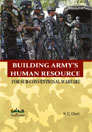
This paper is an attempt to understand the peculiarities of the operational environment in sub-conventional warfare scenario in Indian context. It recommends measures which need to be taken at various levels by concerned agencies to sustain and enhance the motivational level of troops.
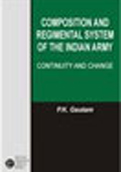
The Indian Armed Forces are intimately linked to Indian society. Their role in national integration is a fascinating inquiry. The book traces the historic evolution of the Indian Armed Forces and then relates it to the extant composition and regimental system of the Indian Army.
This book portrays how the peculiarities of subconventional warfare impact the soldiers and what needs to be done to address the ill effects by various agencies at macro as well as micro level. Specifically, it brings out the methodology to sustain motivation of troops in this special warfare and suggests measures to optimise their stress levels. Through this book, the author has brought out various issues which cause extraordinary stress among army personnel operating in sub-conventional warfare environment.
Military readiness is perhaps one of the least studied and understood concepts in the field of strategic studies. In the absence of any significant literature in the public domain, defence policy makers and practitioners worldwide tend to define military readiness in several different ways.