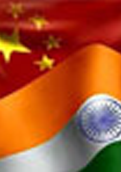
India-China Relations

Sifting Through the Himalayas

Prime Minister Modi has to think beyond the immediate circle and leverage the Himalayas as a bridge for India reaching out to wider Eurasian space the access to which has blocked by Pakistan. A way out could be to promote a regional market across the border, woven by a web of spiritual and commercial interests.

P. Stobdan | August 14, 2014 | IDSA Comments

China’s Maritime Silk Route: Implications for India

China’s announcement of a 10 billion Yuan ($1.6 billion) fund to finance the “maritime silk road plan” is a clear sign that it is serious about moving ahead with its stated plans. For India, it is instructive that the sales pitch of shared economic gains does not conceal the MSR’s real purpose: ensuring the security of sea lines of communications (SLOCs) in the Indian and Pacific oceans.

Abhijit Singh | July 16, 2014 | IDSA Comments

Shanghai Cooperation Organization and India

Over the years, the scope of SCO has widened to include the interests of countries beyond the Eurasian space. For India to capitalise on the SCO it must have a clear pro-active policy, otherwise it may risk becoming a focal point of criticism by the Central Asia states like the way India is often targeted by the SAARC members.

P. Stobdan | July 14, 2014 | Policy Brief

The McMahon Line: A hundred years on

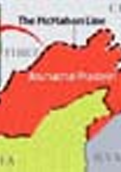
On 3rd July 1914 nearly a hundred years ago at Simla, Tibet and India signed the Simla Convention that gave birth to the McMahon Line separating Tibet from India in the eastern sector. Much is made by some that the Simla Convention was not a legal document but from the time of the Convention till 23rd January 1959, the Chinese government never officially, in any document, ever challenged the McMahon Line.

R. S. Kalha | July 03, 2014 | IDSA Comments

Contemporary India–China Dynamics: From an Orthodox to an Autonomous Course?

This review essay examines the significance of India–China relations against the background of the current phenomenon of a multipolar world in the light of four recent publications on the subject. Tien-sze Fang’s and Jeff M. Smith’s works discuss the current facets of India–China relations, while William Antholis’s and Carl J. Dahlman’s works deal with the character and standing that India and China bring to their regional and global discourse.

China’s Second Coast: Implications for Northeast India

Myanmar’s 2,276 km long coastline in the Bay of Bengal has the potential to provide the ‘second coast’ to China to reach the Indian Ocean and achieve strategic presence in the Bay of Bengal and the Andaman Sea. Especially transportation logistics to the ‘second coast’ from landlocked south west Chinese provinces like Yunnan have both economic and strategic benefits

Namrata Goswami | June 19, 2014 | IDSA Comments

Settling differences with China

A re-look of the intentions of the Chinese is important because according to long-term economic trends around 2030 Asia will be the world’s powerhouse just as it was prior to 1800. China is expected to surpass the US by 2016 to become the largest economy, and India’s GDP is expected to exceed that of the US by 2060.

Mukul Sanwal | May 07, 2014 | IDSA Comments